U.S. F-22 Pilot Controls MQ-20 Avenger Drone in Historic Test Over Nevada Range
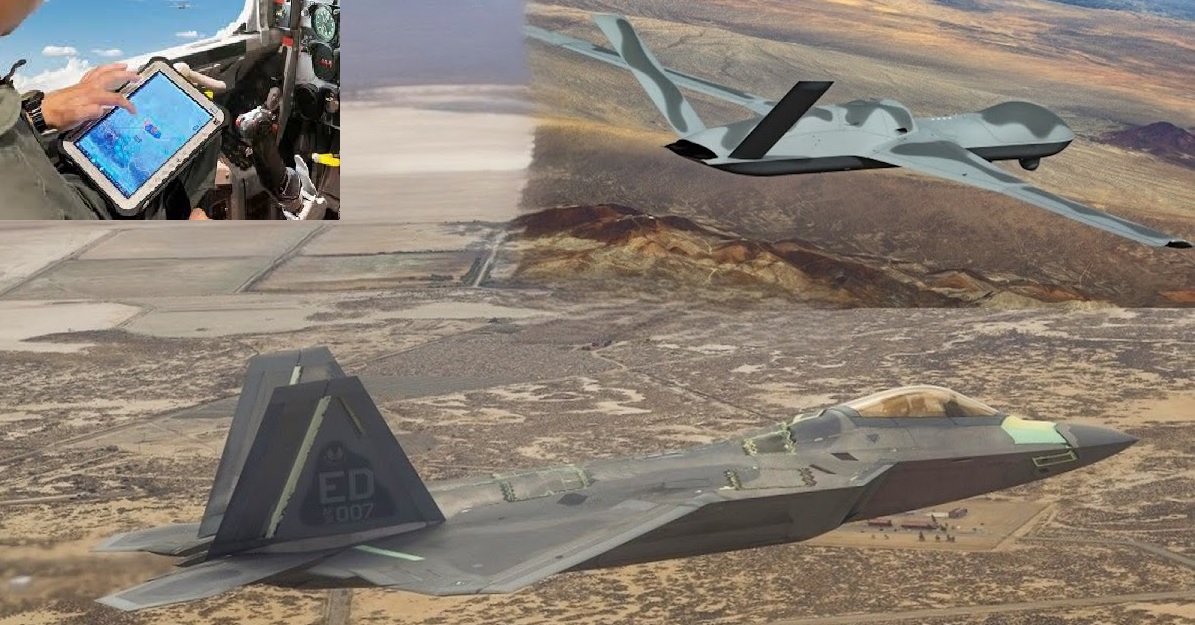
In a landmark step toward the future of air combat, a U.S. Air Force F-22 Raptor pilot has, for the first time, directly controlled a General Atomics MQ-20 Avenger stealth drone from inside the fighter’s cockpit during an operational flight. The breakthrough demonstration, confirmed Monday by General Atomics, Lockheed Martin, and L3Harris, marks a pivotal advance in America’s push toward crewed-uncrewed teaming.
First-of-Its-Kind Test on the Nevada Range
The test took place over the Nevada Test and Training Range, where an F-22 pilot used a ruggedized tablet inside the cockpit to issue real-time commands to the MQ-20.
The interface—powered by open-architecture software from Lockheed Martin and secure datalinks developed by L3Harris—allowed the pilot to control the drone’s flight paths, sensor tasks, and mission functions without relying on ground operators.
General Atomics described the event as “a significant step toward operational autonomy,” demonstrating that frontline stealth fighters can command loyal wingman drones during high-threat missions.
How It Worked: A Cockpit Tablet as a Drone Command Center
Instead of complex new cockpit hardware, the test relied on a plug-and-play tablet interface that connected to the F-22’s mission systems.
According to engineers familiar with the system:
-
The pilot could assign the MQ-20 surveillance routes
-
Redirect the drone toward simulated targets
-
Task its onboard sensors for reconnaissance
-
Maintain secure bidirectional communication through encrypted datalinks
This lightweight approach is designed to allow older fighters such as the F-22 and F-16 to integrate drone control rapidly, without extensive redesigns.
Boost for the Air Force’s CCA Program
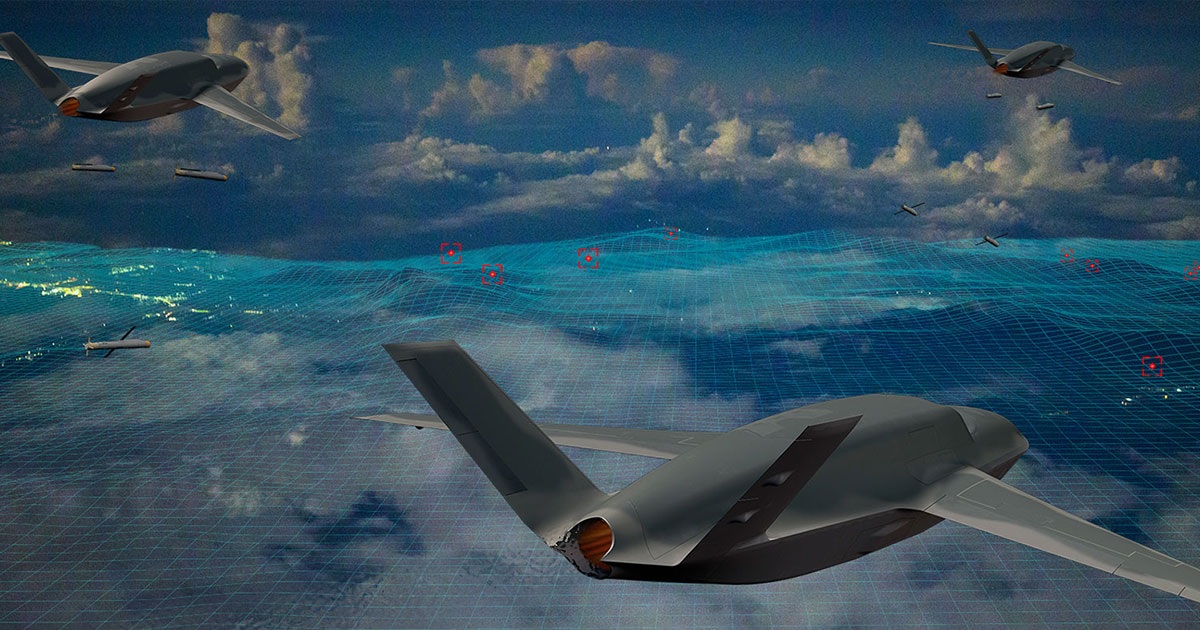
The demonstration is a major component of the Air Force’s emerging Collaborative Combat Aircraft (CCA) initiative, which aims to field autonomous “loyal wingman” drones capable of:
-
scouting ahead of crewed aircraft
-
carrying additional weapons
-
providing electronic warfare support
-
acting as decoys or jammers
-
absorbing risk during early strikes
The MQ-20 Avenger, with its jet engine, internal weapons bay, and low-observable design, is widely expected to be a frontrunner among platforms considered for CCA experiments.
Air Force leadership has repeatedly emphasized that fifth-generation jets like the F-22 and F-35 will increasingly operate alongside AI-enabled drones to break through contested air defenses.
Industry Collaboration Accelerates Progress
General Atomics said the test validates years of investment in open mission systems, allowing different defense companies to integrate components without proprietary roadblocks.
Lockheed Martin engineers added that these modular designs will help the Air Force scale future drone-fighter teaming much faster than previous modernization programs.
L3Harris, responsible for the datalink, noted that the demonstration proved secure communications even in conditions simulating electronic warfare—a crucial requirement for operations against near-peer adversaries such as China or Russia.
A Glimpse Into Future Air Warfare
Defense analysts say this test marks the “beginning of a new era” in U.S. airpower, where a single pilot may eventually direct multiple AI-driven drones in complex missions.
Future fighters like the Next Generation Air Dominance (NGAD) will likely be built around the concept of leading drone teams, using them to overwhelm enemy defenses and extend the reach of U.S. forces.
With Monday’s milestone, the Air Force has taken one step closer to that vision—where human pilots retain strategic control, and autonomous systems execute the dangerous tasks that would otherwise put lives and expensive aircraft at risk.
About the Author
Aditya Kumar:
Defense & Geopolitics Analyst
Aditya Kumar tracks military developments in South Asia, specializing in Indian missile technology and naval strategy.