U.S, Europe and Ukraine Discuss Korea-Style Plan to Stop the War
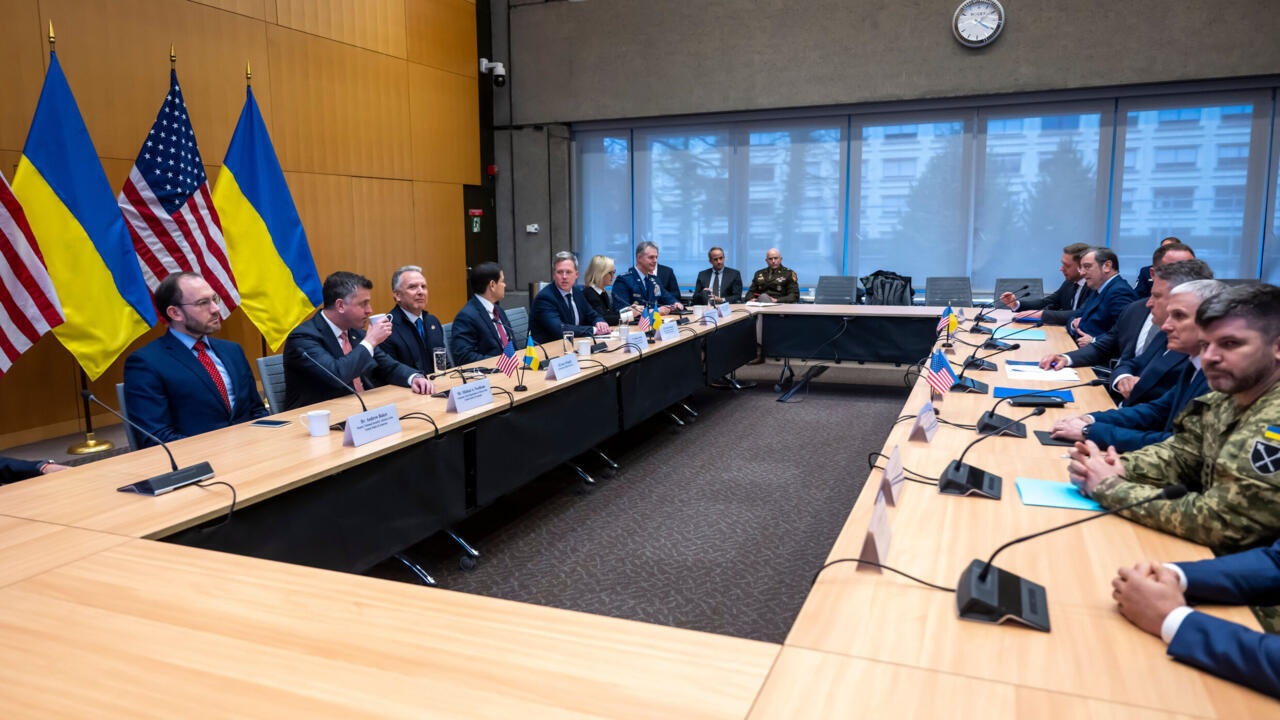
A sweeping diplomatic effort is under way as the United States, Ukraine, and key European governments intensify negotiations on a comprehensive, multi-layered peace architecture aimed at freezing front lines, formalizing Western security guarantees, and unlocking long-term reconstruction financing. According to officials familiar with the talks, the developing framework spans three major documents: a political peace agreement, a security guarantees treaty, and an economic recovery and investment plan.
The emerging proposal marks the most ambitious attempt yet to outline a pathway toward ending large-scale hostilities while preserving Ukraine’s strategic autonomy and enabling its integration with Western institutions.
A Ceasefire Built Around a “Korean-Style” Line of Separation
Central to the discussions is a “Korea-style” model, in which a line of separation would be established along current forward positions, running approximately from Donetsk through Zaporizhzhia to Kherson. The arrangement would not resolve questions of sovereignty but would freeze the battlefield, creating space for diplomacy to continue over the political status of contested territories.
Negotiators are evaluating a demilitarized zone on both sides of the line, with a thicker outer buffer where artillery, armor and missile systems would be prohibited. Western officials say the model is intended to prevent rapid escalation and reduce the risk of renewed offensive action. However, disagreements persist over border checkpoint arrangements, monitoring mechanisms, and the extent of international oversight—potentially involving the OSCE, UN, or a new multinational monitoring body.
Zaporizhzhia Nuclear Plant and U.S.-Led Oversight
One of the most sensitive components of the peace proposal involves the Zaporizhzhia Nuclear Power Plant, which has remained under Russian control since early 2022. Draft scenarios circulating among negotiators would place the facility under international or U.S.-led technical management to guarantee safety and prevent militarization of the complex. The United States has signaled willingness to provide civilian oversight teams and enhanced radiation-monitoring systems, while the IAEA would retain regulatory authority.
Moscow’s position remains opaque, though Russian negotiators have privately indicated flexibility if the arrangement does not imply political concession on territorial status.
Kyiv’s EU Accession and Pressure on Hungary
European diplomats say Ukraine’s target EU accession date of 2027 is being built into the peace architecture, both as a political guarantee and an economic roadmap. Washington has increased pressure on Hungary—currently blocking accession steps—to lift its veto, arguing that Ukraine’s integration would stabilize internal reforms, expand trade corridors, and reassure investors ahead of reconstruction.
The EU is expected to present an updated accession timetable in early 2026, tied to anti-corruption benchmarks and judicial reforms already underway in Kyiv.
Security Pact Modeled Partly on Article 5 but With U.S. Ratification
A second major document under negotiation outlines long-term security guarantees, potentially more binding than the G7’s 2023 commitments. Ukraine is pressing for a U.S.-ratified treaty to ensure that any future administration cannot unilaterally withdraw support or recognize Russian territorial claims.
The guarantees may include:
-
Rapid military assistance mechanisms similar to NATO’s Article 5 consultation clause
-
Pre-positioned U.S. and European equipment inside Ukraine
-
A long-term training mission involving NATO partners
-
Air and missile defense integration with Western systems
Debate continues over force-size caps. Some Western negotiators have floated a cap at 800,000 Ukrainian troops, up from the current 600,000, to stabilize defense spending and reduce mobilization burdens. Kyiv has firmly rejected hard limits, insisting that the size of its army must remain sovereign, flexible, and responsive to Russian force levels.
$100 Billion Asset Plan, Reconstruction Fund, and Private Investment Push
Economic reconstruction is emerging as the third pillar of the peace plan. The Trump administration has proposed deploying $100 billion in frozen Russian assets immediately for infrastructure, energy networks, and demining—an idea gaining traction in the EU as legal debates narrow. European governments are exploring mechanisms to convert interest from seized Russian central bank assets into long-term Ukrainian recovery bonds.
At the same time, the United States is drafting a Ukrainian Development Fund, structured with BlackRock, the World Bank, and other financial partners. The concept envisions $300–$400 billion in mobilized investment, combining public guarantees with private capital targeted at energy modernization, technology, logistics, and agriculture.
Sources involved in the talks say the Trump administration is also examining whether a parallel investment framework for Russia could be introduced later—conditional on ceasefire compliance—to encourage long-term regional stability.
Contentious Negotiations With Uncertain Timelines
Diplomats caution that the talks remain highly fluid, with major political obstacles unresolved. Ukraine insists that any agreement must not prevent it from pursuing the return of occupied territories through legal or diplomatic means. Russia has publicly rejected the idea of a demilitarized buffer and opposes international control of the Zaporizhzhia plant, though back-channel discussions reportedly show more nuance.
European officials say the three-document structure is designed to allow partial implementation even if political negotiations stall, ensuring that security assistance, EU integration, and reconstruction planning continue regardless of territorial disputes.
What remains clear is that the proposed framework—if finalized—would represent the most comprehensive political, military, and economic settlement attempted since the war began. Whether it becomes a durable pathway to peace or merely a temporary freeze depends on the ability of all sides to bridge the remaining gaps in the months ahead.
✍️ This article is written by the team of The Defense News.