U.S. Establishes First Kamikaze Drones Squadron in the Middle East
On December 3, 2025, CENTCOM announced formation of a new task force — Task Force Scorpion Strike (TFSS) — to oversee the U.S. military’s first squadron of one-way-attack drones (Kamikaze Drones) deployed in the
The task force comprises a squadron built around LUCAS drones, currently positioned at an undisclosed base inside CENTCOM’s area of responsibility. CENTCOM says the move comes only four months after a push by Pete Hegseth — identified as “Secretary of War” in CENTCOM’s announcement — to accelerate acquisition and fielding of affordable drone technology.
What Is LUCAS And Why It Matters
LUCAS, which stands for Low-Cost Uncrewed Combat Attack System, is produced by U.S. defense contractor SpektreWorks.
The platform was designed with cost and scalability in mind — roughly US$35,000 per drone, a fraction of legacy UAVs or missiles.
LUCAS is a modular, open-architecture system built with adaptability in mind. While its “one-way attack” (kamikaze / loitering-munition) configuration is being deployed now, LUCAS was originally conceived to support a variety of mission profiles, including intelligence, surveillance and reconnaissance (ISR), communications relay, and tactical strike.
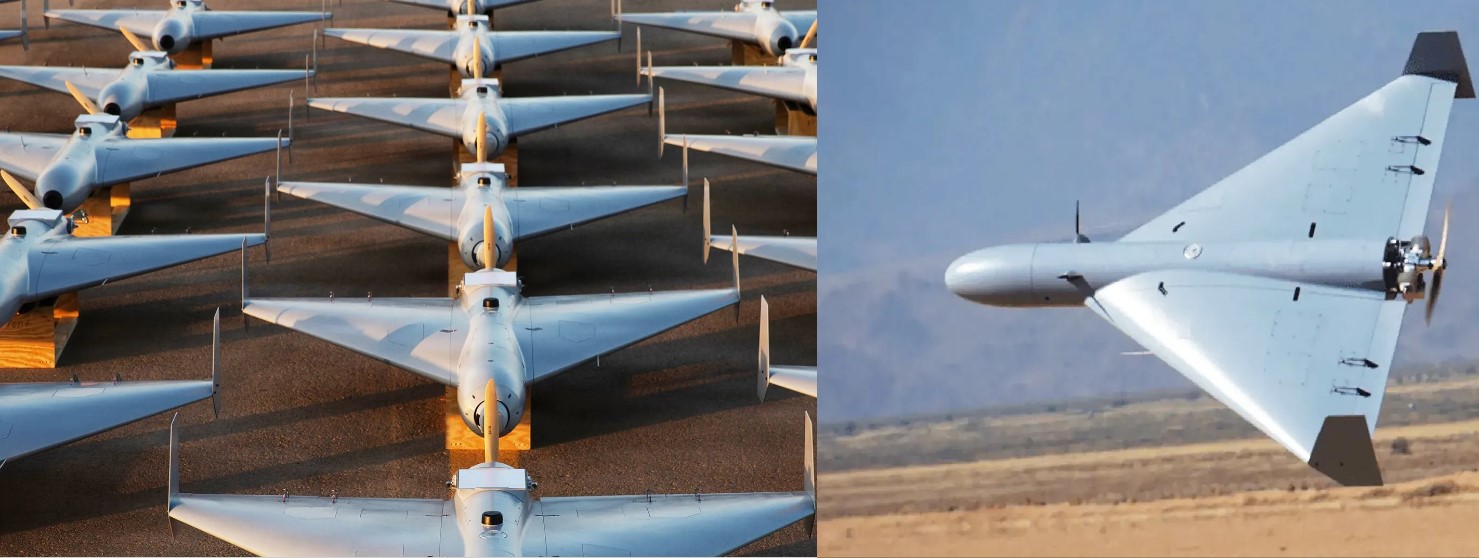
The drone’s physical design — delta wings, lightweight composite structure, minimal logistical footprint — and its ability to launch without traditional runways (via catapult, rocket-assisted takeoff, or vehicle-based systems) make it well suited for deployment in austere or contested environments.
Officials say LUCAS drones have “extensive range” and are capable of autonomous operation, reducing reliance on large support crews or infrastructure.
Why CENTCOM Is Betting on Cheap, Attritable Drones
The deployment of TFSS and LUCAS reflects a broader shift in U.S. military thinking away from traditional high-cost platforms toward scalable, low-cost, mass-produced weapon systems. Analysts say this comes in response to the widespread use, by adversaries such as Islamic Revolutionary Guard Corps-linked forces, of inexpensive, often mass-produced drones in conflicts across the Middle East.
According to CENTCOM, TFSS’s creation builds on earlier innovation efforts launched in September, under a separate group, Rapid Employment Joint Task Force (REJTF). The REJTF — guided by CENTCOM’s chief technology officer — was established to fast-track deployment of emerging capabilities across three focus areas: capability, software, and “tech diplomacy.”
TFSS is led by personnel from Special Operations Command Central (SOCCENT), signaling that the new drone squadron is being positioned as a flexible, rapid-response tool potentially suited for special operations as well as more conventional missions.
Defense and security observers note that LUCAS and TFSS mark a milestone: for the first time, the U.S. has committed — at a formation level — to deploying low-cost, “attritable” one-way drones in the Middle East, shifting from expensive platforms to a model emphasizing quantity, speed, and flexibility.
Potential Implications for Regional Security and Signals to Adversaries
The deployment sends a clear signal to regional adversaries — especially those relying heavily on mass-produced drones — that U.S. forces are adapting to the evolving landscape of drone warfare. By fielding inexpensive, scalable drone capabilities, CENTCOM aims to restore deterrence and reduce vulnerabilities inherent in traditional force structures. Adm. Brad Cooper, CENTCOM’s commander, said the task force “sets the conditions for using innovation as a deterrent.”
Because LUCAS drones can be launched without runways, operate with minimal logistical overhead, and be dispersed widely, they could enable rapid, distributed operations — complicating adversaries’ attempts to target U.S. support infrastructure or rely on static frontlines.
At the same time, the rise of “attritable” drones raises difficult questions about escalation and the threshold for kinetic use. Cheap, expendable drones could lower the bar for strikes, potentially leading to more frequent engagements — especially in volatile zones across the Middle East. Analysts warn that adversaries might respond with their own drone swarms or counter-drone measures, prompting a new kind of arms competition.
Moreover, the adaptation of a drone inspired by foreign designs — namely the widely used Shahed-136 — underscores a shift in U.S. strategy: rather than solely seeking high-end, precision assets, the Pentagon appears willing to embrace lower-cost, mass-produced systems that may trade some sophistication for scalability and denial-of-service value.
What Remains Unclear and What to Watch
Despite the public announcement, many key details remain unconfirmed or opaque. CENTCOM has not disclosed the exact number of LUCAS drones, the full size and composition of TFSS, its command structure, where it is based, or the operational doctrine under which the drones would be used. The location of the squadron remains “undisclosed.”
Defence-industry experts caution that while LUCAS is billed as low-cost and flexible, earlier evaluations suggested it may lack some performance characteristics of the systems it imitates, especially in payload, endurance, and navigational sophistication.
Observers will be watching closely whether TFSS remains a limited demonstrator force — or whether it expands rapidly, scaling up LUCAS production and deployment across the CENTCOM theater. Such an expansion could significantly alter the calculus of regional deterrence and U.S. power projection.
The launch of Task Force Scorpion Strike and the deployment of LUCAS drones represent a clear turning point: the U.S. military is now embracing low-cost, attritable drone technology at scale, potentially reshaping how it projects power, responds to threats, and deters adversaries in the Middle East and beyond.
About the Author
Aditya Kumar:
Defense & Geopolitics Analyst
Aditya Kumar tracks military developments in South Asia, specializing in Indian missile technology and naval strategy.