U.S. Drone Strike Hits Venezuelan Port Facility in Escalation of Counter-Narcotics Operations
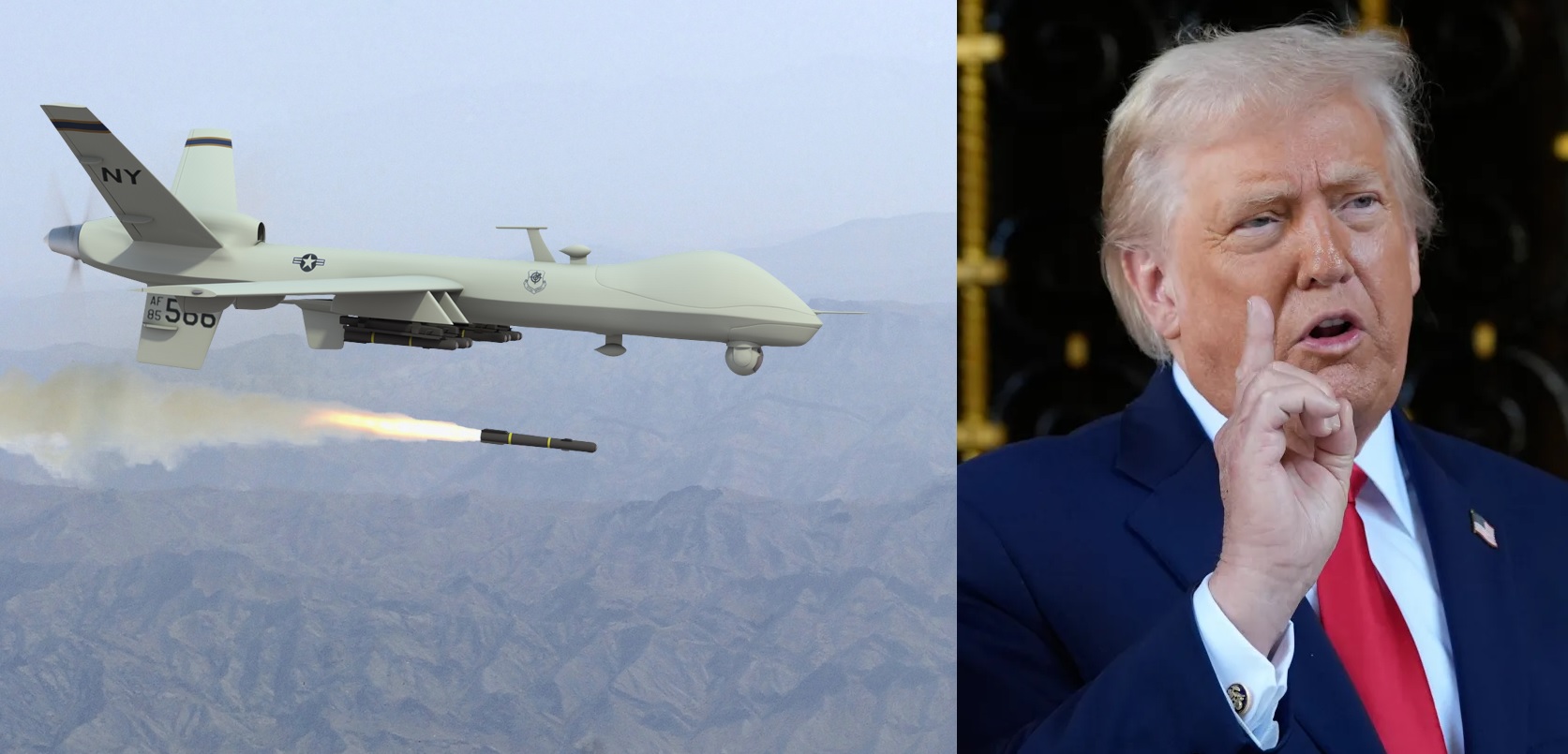
Washington / Caracas: The United States has quietly carried out what appears to be its first known drone strike inside Venezuela, targeting a coastal port facility believed to be linked to drug-trafficking networks, according to multiple sources familiar with the matter. The operation, attributed to the Central Intelligence Agency, marks a significant escalation in Washington’s counter-narcotics posture in the Caribbean region and introduces new diplomatic and legal questions in an already strained U.S.–Venezuela relationship.
Sources cited by CNN said the drone strike took place earlier this month against a remote dock facility on Venezuela’s coastline, believed by U.S. authorities to be used as a logistics node for maritime drug shipments. The facility was reportedly associated with the Tren de Aragua, a transnational criminal organization that U.S. officials have increasingly linked to narcotics trafficking and organized crime across the Americas.
Conflicting Accounts on Military Involvement
Two individuals familiar with the operation told CNN that U.S. Special Operations Forces provided intelligence support, underscoring continued American involvement in counter-drug activities near Venezuelan territory. However, that claim was publicly denied by Col. Allie Weiskopf, a spokesperson for U.S. Special Operations Command, who stated that Special Operations did not support the mission, “to include intel support.”
The denial highlights the opaque nature of the operation, with no formal acknowledgment from the Pentagon or the CIA, and no release of imagery, strike footage, or after-action details.
Trump Statement Triggers Scrutiny
Public attention intensified after Donald Trump made a brief but striking claim on December 29, 2025, saying the United States had “hit” and destroyed a dock or coastal loading area in Venezuela, describing a “major explosion.” The president did not disclose the location, the platform used, the type of munition, or whether the strike was conducted by the U.S. military or another government agency.
That statement, coupled with subsequent media reporting, has been interpreted as tacit confirmation of a U.S. lethal action on Venezuelan soil, something Washington has previously avoided even amid years of sanctions, covert pressure, and maritime drug interdictions.
Target, Tactics, and Likely Weapons
According to CNN’s reporting, the dock was unoccupied at the time of the strike, resulting in no casualties. U.S. officials believed the site was used to store narcotics, refuel boats, and transfer drug consignments onto small vessels for onward shipment through Caribbean trafficking routes.
Military analysts note that such remote boat-loading docks present compact, high-value aimpoints, including pier decking, fuel storage, and small craft, making them suitable for precision engagement. A medium-altitude, long-endurance armed drone is considered a plausible platform, given its ability to conduct extended surveillance and strike when a site is clear of civilians. A precision missile, such as a Hellfire-class weapon, would align with the reported level of destruction, with the described “major explosion” potentially caused by secondary fires or fuel ignition rather than the warhead alone.
However, U.S. officials have not confirmed the platform or munition used, and all assessments remain informed inference, not verified fact.
Legal and Diplomatic Implications
The strike represents a sharper and more unilateral turn in U.S. counter-narcotics enforcement. Conducting a covert drone strike inside Venezuela, a country with which the United States has no formal security cooperation, raises questions under international law, particularly regarding sovereignty and the use of force outside active armed conflict zones.
Caracas has not issued a detailed public response, but any confirmed U.S. attack could further inflame tensions with Venezuela, whose government has long accused Washington of covert aggression and regime-change operations.
A Broader Shift in U.S. Counter-Narcotics Strategy
The operation suggests a potential expansion of U.S. drone use beyond traditional theaters such as the Middle East and Africa, into the Western Hemisphere. While the United States has routinely conducted maritime interdictions, surveillance flights, and partner-nation operations in the Caribbean, direct kinetic action inside Venezuela would represent a notable policy shift.
For now, the strike remains unacknowledged in official channels, but its implications are significant: a signal that Washington may be prepared to act unilaterally and covertly against perceived drug-trafficking infrastructure, even inside politically hostile states.
As more details emerge, the incident is likely to face intense scrutiny from lawmakers, legal experts, and regional governments—testing the boundaries of U.S. counter-narcotics authority in the Americas.
✍️ This article is written by the team of The Defense News.