U.S. Deployed Two Aircraft Carriers as China Conducted Live-Fire Blockade Drills Around Taiwan
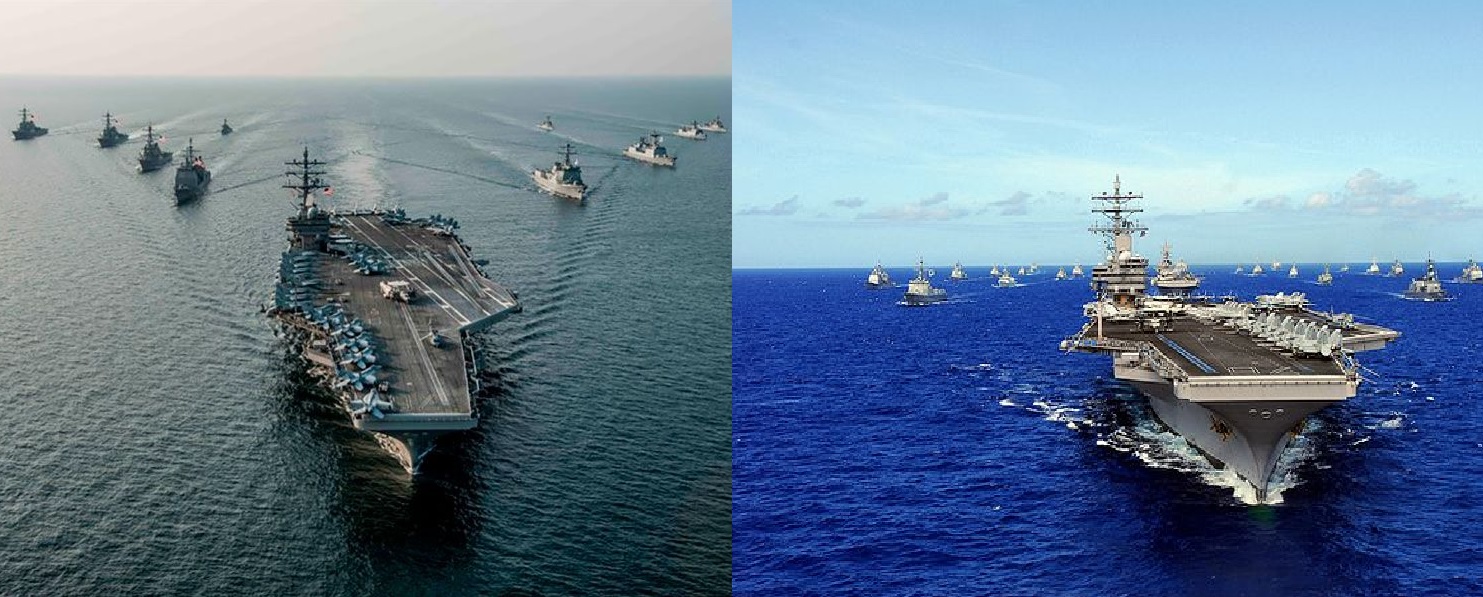
Washington/Taipei : The United States has intensified its naval posture in the Western Pacific with the deployment of two aircraft carriers and an amphibious assault ship amid China’s largest live-fire military exercises near Taiwan. The moves reflect escalating tensions in the Taiwan Strait, with Washington signaling its commitment to maintaining freedom of navigation and supporting regional security amid Beijing’s growing military assertiveness.
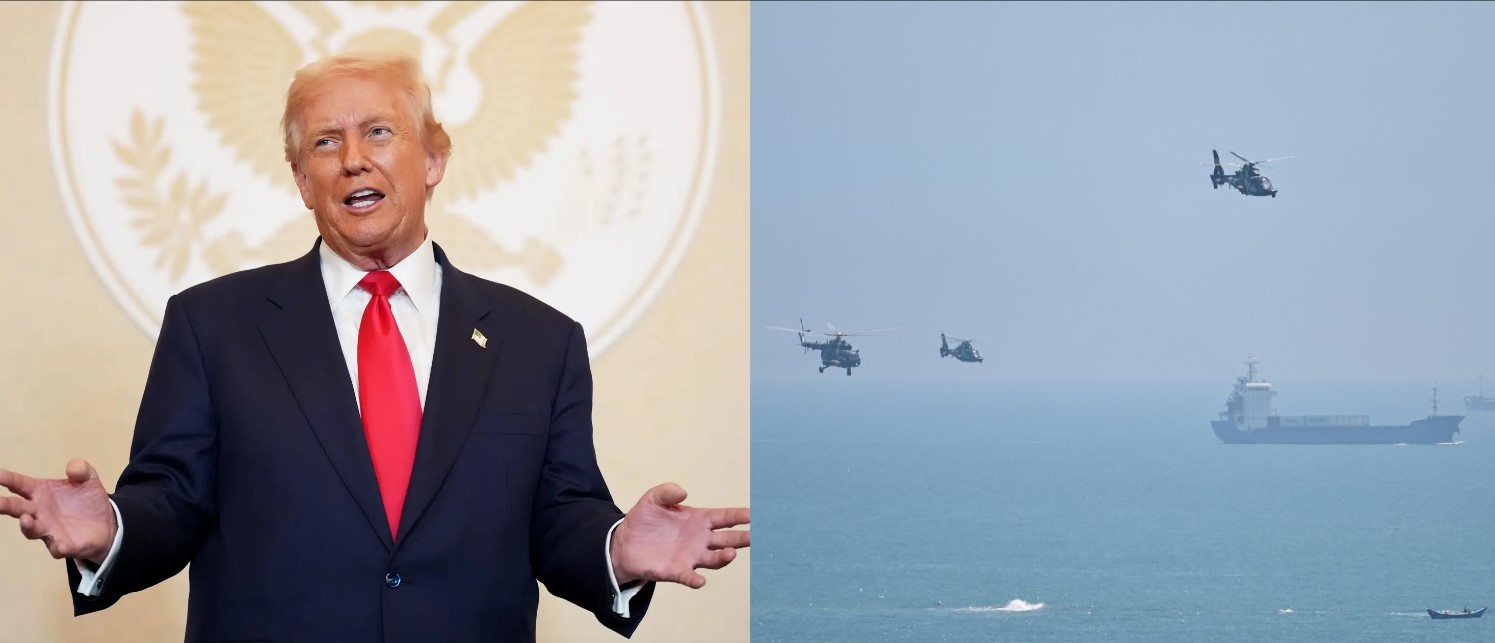
China’s “Justice Mission 2025” drills — spanning multiple designated zones encircling Taiwan — have involved extensive live-fire exercises, simulated blockades of key ports, and combined sea-air operations. Taiwanese authorities reported disruptions to international flights and maintained elevated alert levels as missiles, warships and fighter aircraft operated in waters and airspace around the island.
The People’s Liberation Army (PLA) described the maneuvers as a stern warning against “external interference” and a necessary action to safeguard national sovereignty and unity. China’s military activity followed the recent approval of a record U.S. arms package to Taiwan, including missiles, drones and artillery systems — a move denounced by Beijing as provocative.
U.S. Naval Deployment: Carriers and Amphibious Power
According to fleet-tracking data and defense reports, the U.S. Navy currently has two aircraft carriers operating in the Western Pacific:
-
USS Abraham Lincoln (CVN-72) — A Nimitz-class carrier that recently transited from Guam through the Philippine Sea into the South China Sea, conducting routine operations and integrating with allied maritime forces.
-
USS George Washington (CVN-73) — Forward-deployed at Yokosuka, Japan, and maintaining presence in the wider Pacific amid regional tensions.
Both carriers serve as flagship elements of their respective carrier strike groups, bringing significant air power, surveillance, and strike capabilities to the region. Nuclear-powered and equipped with a full complement of fighter aircraft, early warning planes and support helicopters, these carriers are central to U.S. force projection in the Indo-Pacific.
In addition to the carriers, the U.S. amphibious assault ship USS Tripoli has been active in the vicinity, operating with embarked F-35B Lightning II jets and supporting extended maritime operations. Tripoli’s presence enhances the U.S. capability to launch aviation and expeditionary missions, underscoring multidomain readiness amid rising tensions.
Strategic Implications and Regional Responses
The concurrent deployment of two U.S. carriers represents one of the most robust American naval postures in the region in recent years. Analysts view the strengthened presence as designed to deter further escalation and reassure allies such as Japan, South Korea, the Philippines and Taiwan of continued U.S. commitment to regional stability.
For its part, Taiwan has maintained heightened defensive readiness, conducting rapid-response drills and monitoring PLA movements with coast guard and military forces. The island’s leadership has condemned Beijing’s drills as intolerable provocations threatening peace in the region.
Beijing, however, insists the exercises were a demonstration of integrated combat capability and a direct counter to what it casts as separatist movements and foreign interference. Senior Chinese officials have reiterated the goal of reunification with Taiwan, framing the operations within broader national security objectives.
Global Repercussions and Future Outlook
The standoff around Taiwan is drawing international scrutiny as the PLA’s extensive live-fire exercises and U.S. naval deployments contribute to heightened strategic competition in East Asia. Allies within the Quad grouping — the United States, Japan, Australia and India — have also discussed regional security concerns, signaling a broad diplomatic response to China’s military expansion.
Defense experts caution that sustained military posturing, if not managed through diplomatic channels, could increase the risk of miscalculation. With China’s drills described as among the largest to date and U.S. carriers showcasing operational reach, the Taiwan Strait remains a focal point of potential flashpoints in the coming months.
As the new year begins, Washington and Beijing face mounting pressure to navigate the delicate balance between deterrence and escalation, with far-reaching implications for Indo-Pacific security and the broader international order
✍️ This article is written by the team of The Defense News.