U.S. B-52s Fly With Japan’s F-35s and F-15s in Powerful Display of Allied Air Power After China-Russia Patrols
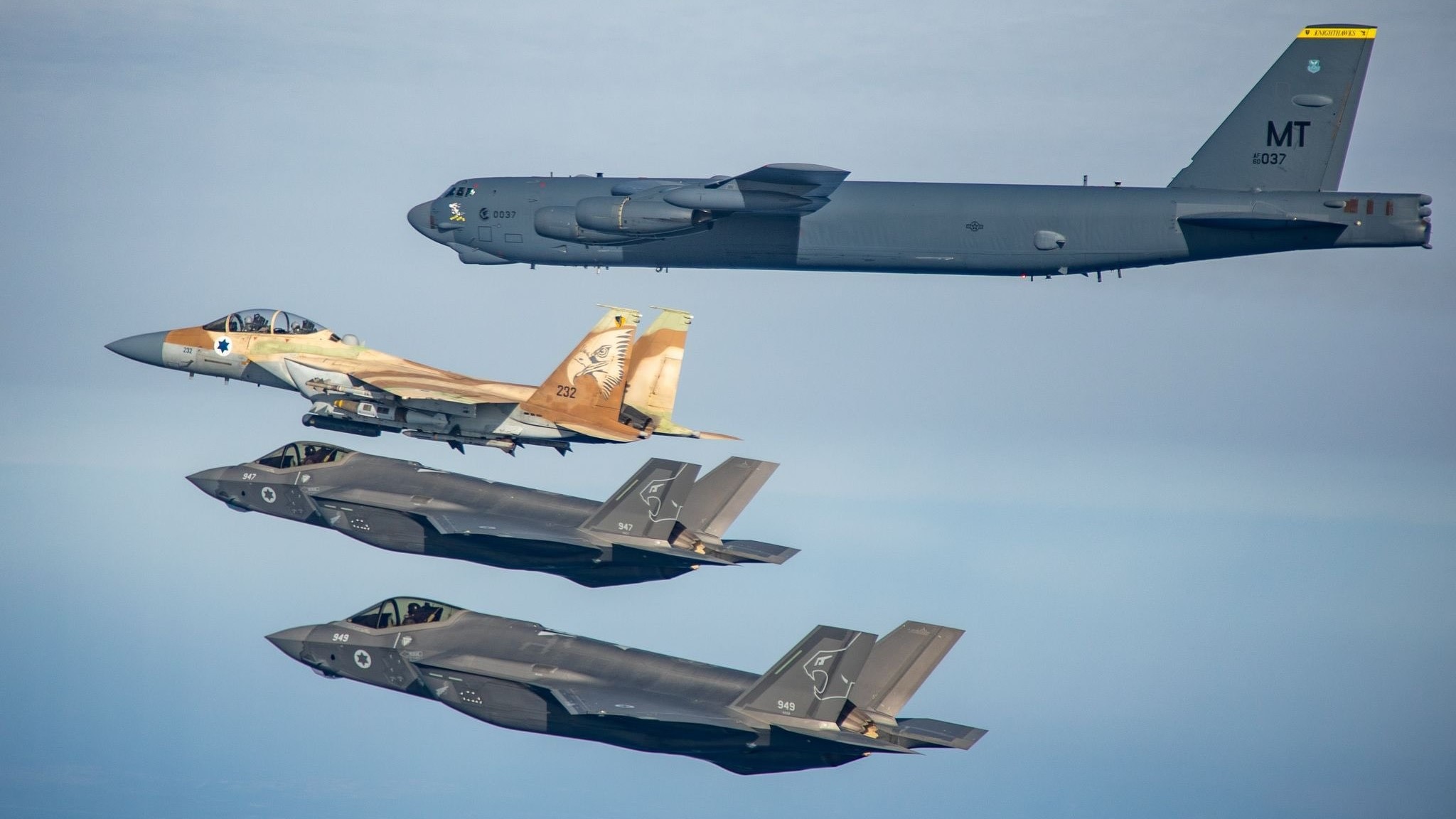
Tokyo — In a high-profile display of allied power, two U.S. Air Force B-52H Stratofortress bombers flew alongside Japan Air Self-Defense Force F-35A and F-15J fighters over the Sea of Japan on Wednesday, Japan’s defence ministry confirmed. The drill came just a day after Chinese and Russian strategic bombers conducted a joint patrol over the East China Sea and western Pacific, further escalating tensions in the region.
Japan said the exercise was meant to demonstrate “the unwavering commitment of Japan and the United States to protect regional stability and counter coercive actions that threaten the security environment.”
A Rapid Response to Escalating Regional Activity
The B-52s joined Japanese fighters over international waters west of Japan, conducting complex formation maneuvers, long-range strike coordination, and interoperability checks. The flight followed multiple incidents involving Chinese military aircraft near Japan’s airspace.
On Tuesday, Japan scrambled jets in response to Chinese aircraft carrier drills, saying its fighters were targeted by radar beams from Chinese aircraft operating south of Japan. The incident drew immediate criticism from Washington, which said the maneuver was “not conducive to regional peace and stability” and reaffirmed that the U.S.–Japan alliance remained “unwavering.”
China denied Japan’s accusation, insisting that Japanese jets flying near its carrier had endangered Chinese air operations.
China–Russia Patrol Triggers Wider Military Reactions
The latest China–Russia joint bomber flight — involving PLAAF H-6K bombers and Russian Tu-95 aircraft — prompted both Japan and South Korea to respond.
South Korea’s military said it scrambled fighter jets when the Chinese and Russian aircraft entered its Air Defence Identification Zone (ADIZ), an early-warning buffer that lies outside sovereign airspace.
Japan’s defence ministry has also reported increasing frequency of radar lock-on incidents involving Chinese fighters and more Russian long-range patrols around Japanese territory. Analysts say the combined pressure from Beijing and Moscow has forced Tokyo and Washington to adopt more visible shows of military cooperation.
Deepening U.S.–Japan Defence Coordination
Wednesday’s bomber-escort mission underscores the accelerating alignment between the United States and Japan as both governments respond to expanding Chinese military operations and Russia’s renewed activity in the region.
Japan is home to the largest concentration of U.S. military power overseas, including a U.S. Marine expeditionary force and a forward-deployed aircraft carrier strike group. The U.S. Indo-Pacific Command said cooperation with Japan is being strengthened to ensure rapid, seamless joint operations in any contingency.
Recent steps by Japan include expanding its fleet of F-35A and F-35B fighters, upgrading its F-15J Kai aircraft, and increasing the pace of maritime and aerospace drills with the United States.
Strategic Context: The Taiwan Factor
Regional tensions have risen sharply following remarks last month by Japanese Prime Minister Sanae Takaichi, who suggested Tokyo could consider certain responses if China were to attack Taiwan. Her comments triggered a diplomatic dispute with Beijing.
China claims the self-governed island as its own and has not ruled out the use of force to bring it under control. Taiwan lies just over 100 km (62 miles) from Japanese territory, close to key maritime supply routes on which Japan depends.
Analysts say this proximity — and the rising frequency of Chinese military activity — has made Taiwan a central factor in Japan’s defence planning and in U.S.–Japan joint operations.
Purpose of the B-52 Deployment
The B-52, one of the most recognisable symbols of U.S. long-range strike capability, plays several strategic roles in the current security environment. Its presence over the Sea of Japan signals Washington’s readiness to deter threats across the region, while also demonstrating the ability of U.S. strategic bombers to operate seamlessly alongside Japanese fighters during complex missions.
The deployment reinforces broader deterrence efforts at a time of heightened concerns over Taiwan, North Korea, and expanding Chinese activity. It also serves as a direct response to recent Sino-Russian coordination, which Tokyo views as an increasingly serious challenge along its borders.
Defence analysts said the mission sends strategic clarity to both Beijing and Moscow, underscoring that the U.S.–Japan alliance is prepared to respond firmly to any coercive military actions.
More High-End Drills Expected
With regional tensions unlikely to ease, officials expect the United States and Japan to continue ramping up advanced joint operations. The coming months are likely to see additional bomber-escort flights over the Sea of Japan, as well as expanded multinational air exercises involving South Korea, Australia, and the Philippines. Intelligence cooperation is also expected to deepen as the allies work to monitor and understand increasing Chinese and Russian air activity.
Japan’s growing fleet of F-35s will play a larger role in these operations, with both countries preparing for more complex integration of fifth-generation aircraft in joint missions.
A U.S. Indo-Pacific Command official said the alliance is moving steadily toward “seamless joint operations for any potential contingency,” reflecting the deepening military coordination between Washington and Tokyo.
About the Author
Aditya Kumar:
Defense & Geopolitics Analyst
Aditya Kumar tracks military developments in South Asia, specializing in Indian missile technology and naval strategy.