U.S. Army Tests AI-Powered Target Recognition Under Next Generation Command and Control Program
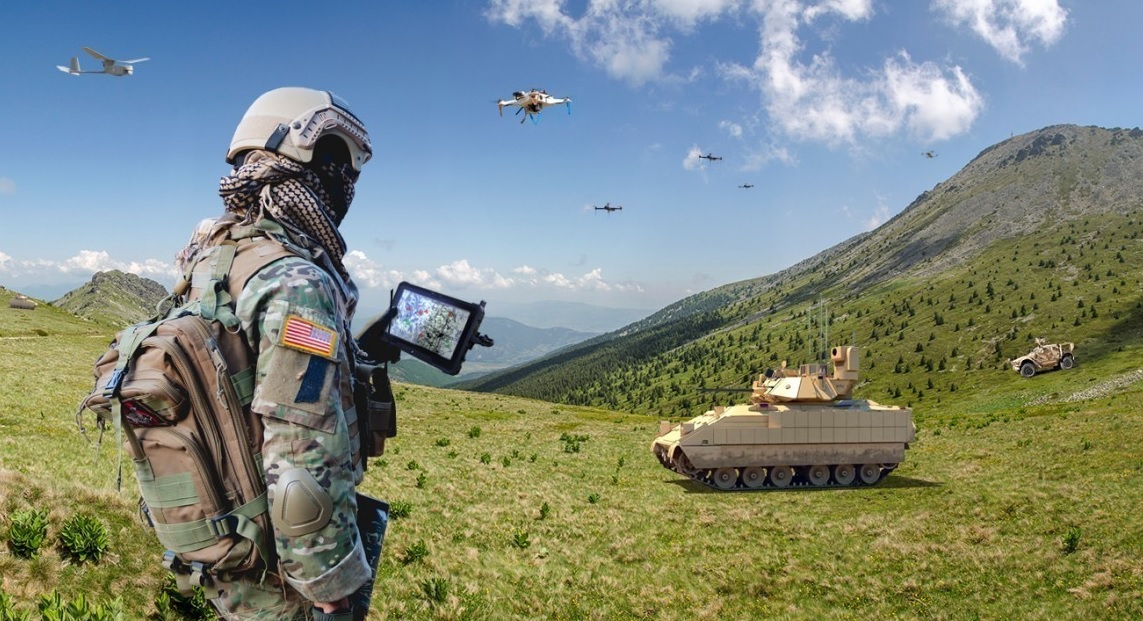
The U.S. Army has entered a defining phase in its digital warfare transformation with the Next Generation Command and Control (NGC2) initiative — a program that aims to fuse artificial intelligence (AI), automation, and battlefield awareness into a unified command structure. During the ongoing Ivy Sting 2 exercise led by the 4th Infantry Division at Fort Carson, Colorado, the Army is testing an AI-powered target recognition system designed to revolutionize how soldiers identify, engage, and destroy enemy assets.
This effort is not merely a technology trial; it’s a blueprint for how the Army envisions future command and control — faster, smarter, and more autonomous.
Reimagining Command and Control
At the core of this experiment is an AI-assisted target recognition tool that can autonomously identify “hulks”, or non-operational vehicles used for target practice. The system has been trained using real battlefield imagery, allowing it to detect shapes, silhouettes, and heat signatures characteristic of tanks and armored vehicles. Once the AI identifies a potential target, it can initiate a fire mission within seconds, drastically shortening what military planners call the “sensor-to-shooter loop.”
Traditionally, target identification, confirmation, and fire coordination require several manual steps — each taking valuable time. The new AI system automates much of that process, allowing data from sensors, drones, and radars to flow directly to a command center and then to the firing unit.
Army officials describe the new approach as “human-on-the-loop” rather than “human-in-the-loop,” meaning humans still make final decisions but AI accelerates detection and recommendation — compressing what once took minutes into mere seconds.
The Ivy Sting 2 Exercise: A Live Testbed for AI
The Ivy Sting 2 exercise serves as a live environment for testing how AI can integrate into command operations at multiple levels. Unlike previous trials, this one brings together six C2 (command-and-control) nodes, linked through a distributed digital network that can function even under degraded communications — a likely scenario in modern, contested environments.
Maj. Gen. Patrick Ellis, Commander of the 4th Infantry Division, emphasized that the project isn’t just about automating current processes but redefining how the Army operates in multi-domain warfare.
“We’re not just trying to optimize how we already fight,” Ellis explained. “We’re using these new technologies to fundamentally change how our formations sense, decide, and act.”
The test environment allows the Army to evaluate how effectively AI can assist soldiers in identifying targets during high-stress combat simulations, while also testing the resilience of digital networks and data-sharing frameworks under simulated electronic jamming and cyberattack conditions.
Transforming the Sensor-to-Shooter Chain
The Army’s concept of Next Generation Command and Control (NGC2) focuses on linking sensors — such as drones, radar systems, and satellites — with weapons and decision nodes in a seamless digital loop.
In the traditional model, intelligence from the field passes through multiple layers of analysis before being acted upon. This structure, while thorough, slows the response time in fast-moving battle scenarios. NGC2 aims to flatten that hierarchy, empowering soldiers and commanders to act with real-time situational awareness.
By combining AI target recognition with advanced data fusion, the Army hopes to create a self-healing, networked combat architecture — one that continues to operate even if certain nodes are destroyed or jammed.
Col. Richard Bartholomew, one of the officers overseeing the trial, described it as “a move from a command structure to a command web.”
“This network is meant to be resilient. Even if one node goes down, others can take over instantly — and AI helps us maintain that flow of information,” he said.
AI on the Battlefield: Promise and Caution
The Army’s AI-driven targeting capability is being hailed as a major step forward, but it also introduces ethical and operational challenges. Ensuring that AI systems correctly identify friend from foe, and that humans maintain ultimate control over lethal decisions, remains a top priority.
Army engineers are spending extensive time training and validating AI models using thousands of battlefield images, weather variations, and terrain data to minimize false positives. Even so, officials acknowledge that AI’s speed must be balanced with human judgment.
“We’re learning how to trust the machine — but not surrender to it,” said one project engineer during the trial.
Toward Multi-Domain Dominance
The Army’s AI experiments are part of a broader modernization push aimed at achieving multi-domain dominance — the ability to coordinate operations seamlessly across land, air, sea, cyber, and space. Under this vision, AI and automation act as force multipliers, enabling smaller units to make faster, more informed decisions.
The NGC2 initiative is expected to feed directly into Project Convergence, the Army’s flagship modernization campaign that integrates AI, robotics, and autonomous systems across joint forces. Future iterations of the Ivy Sting exercises will scale up to division-level operations under a program called Ivy Mass, incorporating real-time data from aircraft, sensors, and artillery networks.
Defense industry partners such as Anduril Industries and Northrop Grumman are also contributing to the NGC2 program, providing modular software and AI frameworks adaptable to different battlefield scenarios.
A Glimpse Into the Future of Warfare
If successful, the AI-powered target recognition system could redefine how the U.S. Army fights in the next decade. By reducing the time from detection to engagement, commanders could neutralize threats before the enemy can react, a decisive advantage in conflicts where milliseconds matter.
More importantly, the initiative reflects the Army’s shift from platform-centric warfare — focused on individual weapons — to data-centric warfare, where networks, sensors, and algorithms become the true enablers of combat power.
As one senior defense official noted:
“We’re no longer fighting with just soldiers and machines. We’re fighting with data — and whoever moves data faster will win the next war.”
The Ivy Sting 2 exercise and its AI-driven target recognition trials mark a pivotal moment in the U.S. Army’s modernization journey. By embracing artificial intelligence at the tactical edge, the Army is transforming how it perceives, decides, and acts in battle.
While challenges remain in refining algorithms and ensuring ethical use, the direction is unmistakable — the future battlefield will be AI-enhanced, data-driven, and lightning-fast.
In this emerging digital warfighting environment, the sensor-to-shooter chain is no longer just a process — it’s a weapon.
✍️ This article is written by the team of The Defense News.