U.S. Army Selects Kymeta Osprey u8 SATCOM Terminal for Next Generation Command and Control Pilot
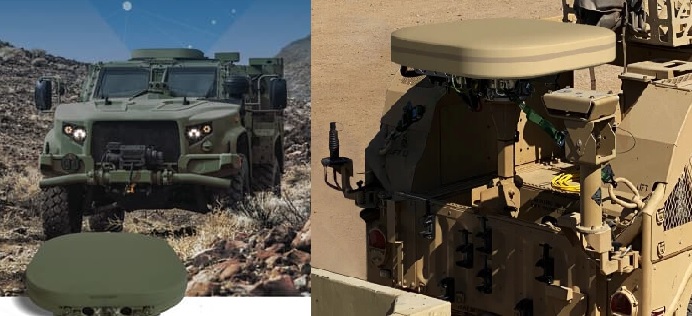
The U.S. Army has selected Kymeta’s Osprey u8 SATCOM terminal for its Next Generation Command and Control (NGC2) pilot program, marking an important step in modernizing the Army’s tactical communications network. The move reflects the Army’s increasing reliance on commercial satellite communication (SATCOM) systems to improve resilience, redundancy, and flexibility in contested operational environments.
Understanding the Next Generation Command and Control Pilot
The Next Generation Command and Control (NGC2) pilot is a U.S. Army initiative aimed at transforming how battlefield units communicate, share data, and maintain situational awareness under modern warfare conditions. It seeks to connect sensors, shooters, and decision-makers through a unified, secure, and resilient network.
The pilot explores integration of multi-orbit satellite networks (LEO, MEO, GEO), 5G systems, and cloud-based data management to ensure continuous connectivity — even when traditional line-of-sight radio or terrestrial communications are disrupted. In essence, NGC2 is the Army’s effort to bridge tactical and strategic networks, creating a connected digital backbone for future operations.
By selecting Kymeta’s Osprey u8 terminal, the Army aims to evaluate how commercial SATCOM technology can complement or substitute military systems in contested electromagnetic environments, where jamming and cyber threats are major challenges.
Kymeta Osprey u8
The Osprey u8 is a flat-panel Ku-band SATCOM terminal designed for communications-on-the-move (COTM). It allows vehicles or mobile command units to maintain satellite links while moving, without requiring large dish antennas.
Key Specifications:
-
Frequency Band: Ku-band
-
Antenna Type: Electronically steered flat-panel array (ESPA)
-
Dimensions: Approx. 89.5 cm x 89.5 cm x 14.5 cm (35.25 in x 35.25 in x 5.7 in)
-
Weight: Around 24 kg (53 lbs) including mounting hardware
-
Power Consumption: 120–150 W (typical operational mode)
-
Operational Modes: Stationary and on-the-move
-
Network Compatibility: Supports geostationary (GEO) and low-earth orbit (LEO) constellations, including Intelsat, SES, and OneWeb
-
Interface: Integrated modem with Ethernet and Wi-Fi connectivity options
-
Ruggedization: MIL-STD-810H compliant, weather-resistant for field deployment
The Osprey u8’s electronically steered antenna enables rapid satellite beam switching, supporting high data throughput with minimal latency — critical for command and control, video transmission, and sensor data sharing in real time.
Role in Army Modernization
Integration of the Osprey u8 within the NGC2 pilot demonstrates the Army’s commitment to leveraging commercial innovation for defense modernization. The terminal’s plug-and-play architecture allows it to be mounted on tactical vehicles, command posts, or unmanned platforms, offering flexible deployment options.
The Army’s broader modernization plan includes building a multi-orbit, multi-path transport layer — combining terrestrial networks, military SATCOM, and commercial satellite services to ensure data survivability under combat conditions. The Osprey u8’s compatibility with multiple orbits and service providers makes it a suitable candidate for this approach.
Broader Context
Kymeta has previously collaborated with U.S. defense agencies to field-test its SATCOM systems in various military environments. The selection for the NGC2 pilot follows successful trials demonstrating reliable broadband connectivity on the move, even in austere conditions where traditional systems fail.
As modern warfare increasingly depends on data-driven operations, the U.S. Army’s partnership with Kymeta represents a practical move toward ensuring uninterrupted communication and command capabilities across the battlefield.
The U.S. Army’s adoption of Kymeta’s Osprey u8 SATCOM terminal for its Next Generation Command and Control pilot underscores a shift toward commercial-military integration in tactical communications. With its rugged, low-profile design and multi-orbit compatibility, the Osprey u8 is positioned to play a central role in the Army’s effort to establish a resilient, global, and mobile network for future operations.
About the Author
Aditya Kumar:
Defense & Geopolitics Analyst
Aditya Kumar tracks military developments in South Asia, specializing in Indian missile technology and naval strategy.