US Army Seeks Lightweight Radar for High-Altitude Spy Balloons to Enhance Surveillance
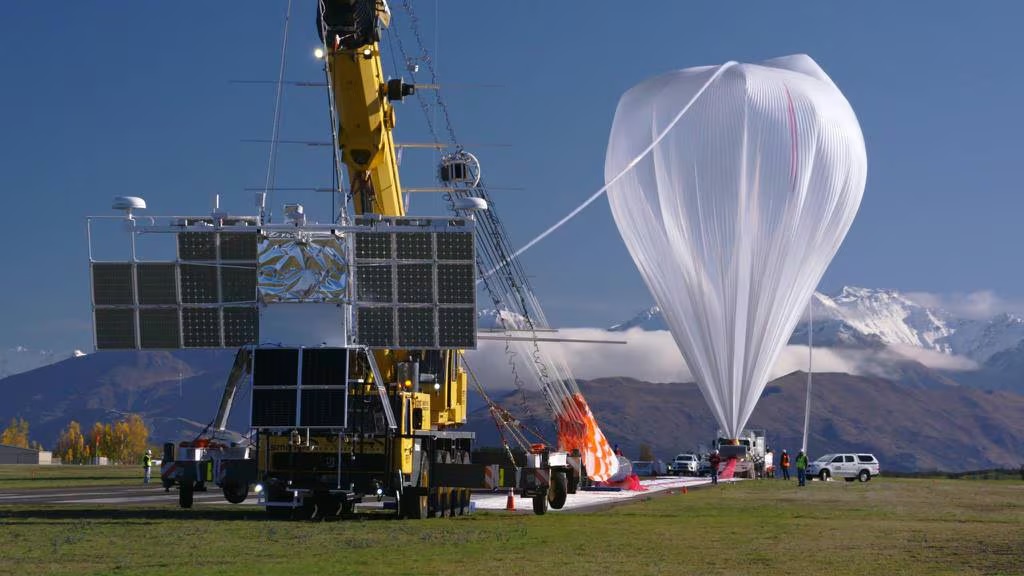
The US Army is on the lookout for innovative industry partners to develop a lightweight radar system designed for high-altitude surveillance balloons. This move aims to enhance the Army's surveillance capabilities and maintain a technological edge over potential adversaries like China.
A recent request for information (RFI) issued by the US Army outlines the need for an airborne sensor that meets specific requirements. The radar payload must weigh less than 15 pounds (6.8 kilograms) and be compatible with the existing power and communication systems on the spy balloons. The goal is to address critical gaps in indicators and warnings, long-range precision targeting, and situational understanding. Furthermore, the radar must be capable of withstanding the pressures and environmental challenges at altitudes of 60,000 feet (11.7 miles) or higher.
The push for advanced surveillance technology follows a significant incident in February 2023, when a Chinese spy balloon illegally entered US airspace, passing over several military sites. Although initial reports suggested the balloon gathered intelligence, the final investigation concluded that it failed to acquire any useful data before being shot down. This event underscored the need for improved high-altitude intelligence, surveillance, and reconnaissance (ISR) platforms to ensure robust national security.
The US Army's new radar system is expected to support large-scale ground combat operations, providing enhanced situational awareness and targeting capabilities. Interested companies have until July 22 to submit their proposals, detailing the capabilities, cost, and performance of their potential solutions.
This initiative is part of a broader effort by the US military to bolster its high-altitude surveillance and reconnaissance capabilities. The development of sophisticated sensors that can cover wider areas and improve reaction times to potential threats is crucial in maintaining a strategic advantage.
In a related development, Helsing, a leading defense company in Europe, announced the successful deployment of advanced AI capabilities on YAM-6, a satellite node part of Loft Orbital's space infrastructure. These extended tests focus on real-time onboard radio frequency signal detection and characterization, paving the way for military-grade signal intelligence and cognitive anti-jamming applications. This highlights the increasing importance of AI and space infrastructure in modern defense strategies.
Space has indeed become the new frontier in security and defense. Western governments and armed forces face frequent jamming attacks and interferences against their satellites. AI is emerging as a key capability to protect European space assets against these threats. Helsing aims to deliver advanced capabilities for upcoming constellations like the EU’s IRIS². Marc Fontaine, CEO of Helsing France, emphasized the rapid and safe deployment of AI on in-orbit satellites, providing immediate and significant capability gains.
The collaboration between Helsing and Loft Orbital demonstrates the potential for AI applications and space infrastructure to create unbounded capabilities and opportunities. Pierre-Damien Vaujour, CEO of Loft Orbital, noted the excitement around operational use cases deployed on their space infrastructure, indicating a significant inflection point for the future of defense technology.
The convergence of AI and space infrastructure with high-altitude surveillance technologies signifies a transformative shift in defense strategies, promising enhanced capabilities for monitoring and responding to potential threats. As the US Army seeks to implement lightweight radar systems on high-altitude spy balloons, the integration of cutting-edge technology will play a pivotal role in securing national interests and maintaining a strategic edge.
✍️ This article is written by the team of The Defense News.