U.S. Army Grants Sikorsky $43 Million to Modernise Black Hawk Helicopters
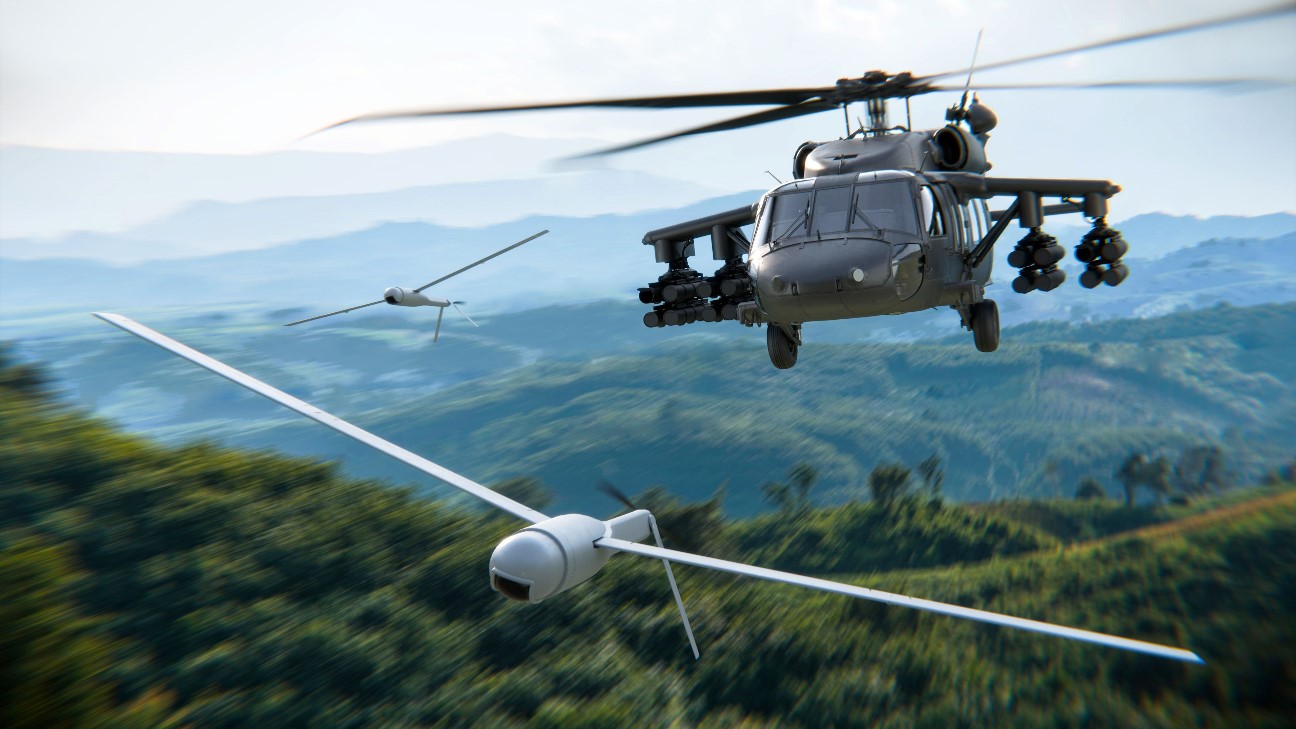
Stratford, Connecticut, August 20, 2025 – In a major step to secure the future of one of the U.S. Army’s most trusted aircraft, Sikorsky, a Lockheed Martin company, has been awarded a $43 million contract to begin advancing the modernisation of the Black Hawk helicopter.
The new contract is focused on building the foundational improvements that will support generations of upgrades to come. Among the immediate priorities are airframe enhancements, creation of a digital backbone that enables rapid technology insertion, and the use of model-based systems engineering (MBSE) to cut costs, increase efficiency, and streamline maintenance.
A New Phase for the Black Hawk
For over four decades, the UH-60 Black Hawk has been a workhorse for the U.S. Army, proving itself in combat and humanitarian operations worldwide. With this latest contract, the Army is signalling its intent to ensure the Black Hawk continues to meet future mission demands.
Hamid Salim, Vice President for Army and Air Force Systems at Sikorsky, stated, “Sikorsky is ready to implement new technologies that will strengthen the combat-proven Black Hawk helicopter and give U.S. Army soldiers greater advantage in areas like the Indo-Pacific. Integrating launched effects into the Black Hawk will enhance its capabilities and provide a significant advantage.”
Key Features of the Contract
-
Airframe Upgrades: Structural improvements that will extend the helicopter’s service life and boost reliability.
-
Digital Backbone: A flexible, software-driven framework that allows new mission systems to be integrated quickly, in line with the Army’s Modular Open Systems Approach (MOSA).
-
Launched Effects Integration: The ability for Black Hawk helicopters to deploy unmanned aerial systems (UAS) and other advanced payloads. This feature, known as “launched effects,” will greatly expand the helicopter’s ability to gather intelligence, conduct surveillance, and support troops on the ground.
The U.S. Army and Sikorsky are already demonstrating these launched effects and expect to have a federated UAS capability integrated by 2026.
Building for the Future
The digital engineering approach will form the core of this modernization effort. By using MBSE and a “digital thread,” engineers will be able to design, test, and maintain upgrades in a far more streamlined way. This will not only speed up the development cycle but also reduce long-term sustainment costs for the Army.
Initial work under this $43 million contract will cover airframe strengthening, improvements to the main fuel system, and integration of the digital backbone. These form the basis for more ambitious enhancements planned in the near future, such as:
-
A more powerful engine (the new T901 Improved Turbine Engine).
-
Expanded payload capacity to carry heavier equipment or more troops.
-
Autonomy and artificial intelligence-driven flight features to improve safety and reduce pilot workload.
Current Upgrades Already in Service
Sikorsky has already begun providing improvements to Black Hawk units in service. One key example is the Upturned Exhaust System II kit, which delivers:
-
Better infrared suppression to protect against heat-seeking missiles.
-
Reduced weight, giving the helicopter more efficiency.
-
Enhanced reliability and maintainability for field operations.
These upgrades are being installed on existing Black Hawks and will be a natural fit for the modernised versions.
Strategic Significance
The Black Hawk remains the backbone of U.S. Army aviation, and this contract is seen as a vital step to ensure it continues to serve effectively for decades. With increasing challenges in regions like the Indo-Pacific, the Army is investing in technologies that give troops a decisive edge in contested environments.
Salim highlighted the broader impact of this program, saying, “Together with our team of hundreds of American suppliers, we are committed to delivering the most advanced and capable modernized Black Hawk to the U.S. Army. We look forward to continuing our work with the Army to ensure that the Black Hawk remains a vital component of our nation’s defense capabilities for years to come.”
Looking Ahead
This contract marks only the first phase of a larger modernization roadmap. By laying the groundwork now with digital systems and structural improvements, Sikorsky and the U.S. Army are setting up the Black Hawk for agile, cost-effective, and future-proof upgrades.
Future milestones will likely include:
-
Full integration of the T901 engine, expected to deliver 50% more power and greater fuel efficiency.
-
Advanced autonomous flight capabilities, allowing Black Hawks to operate with minimal pilot input in high-risk missions.
-
Rapid integration of new weapons, sensors, and mission packages as threats evolve.
The $43 million Army contract to Sikorsky represents a critical investment in both present and future battlefield readiness. By combining proven combat performance with cutting-edge digital engineering, the modernised Black Hawk helicopter will remain one of the world’s most versatile and dependable military aircraft.
With the first set of upgrades already underway and a broader transformation planned, the Black Hawk is poised to stay at the center of U.S. Army operations well into the future.
✍️ This article is written by the team of The Defense News.