U.S. Army Awards $632 Million Contract for Iowa Ammunition Plant to Boost 155 mm Shell Production
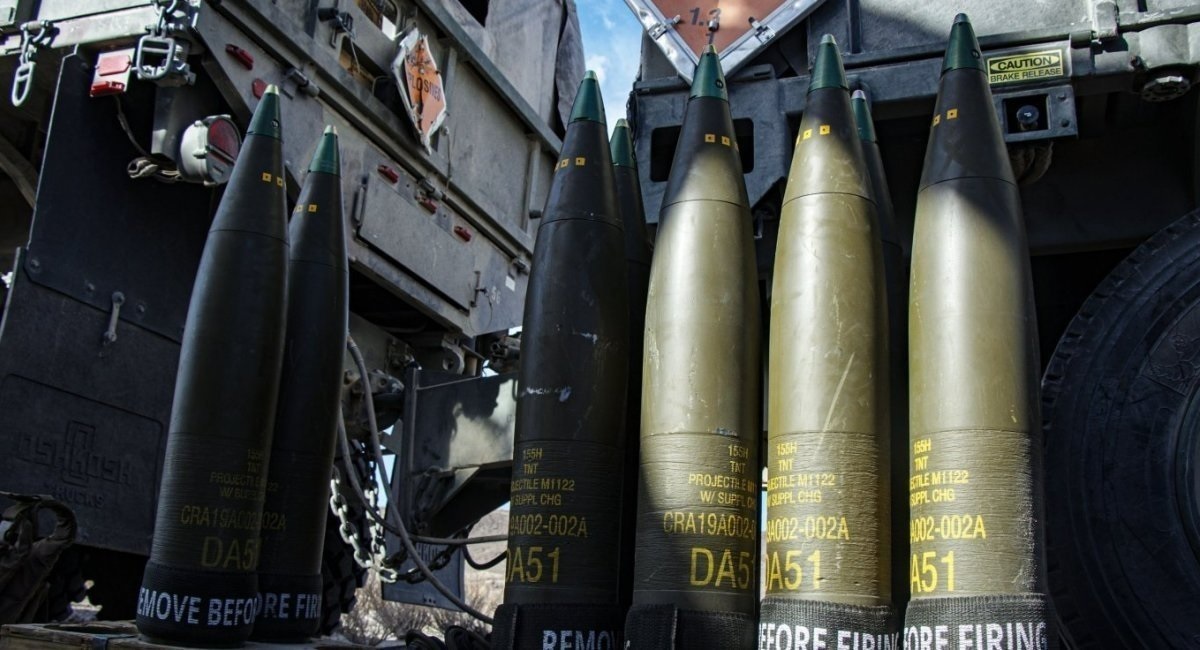
Washington, August 20, 2025 – In a major step to strengthen NATO’s firepower and address global shortages, the Czechoslovak Group (CSG) has announced that its American subsidiary, MSM North America, has secured a $632 million contract from the U.S. Army to build a state-of-the-art Future Artillery Complex (FAC) in Iowa.
The new facility, to be located at the Iowa Army Ammunition Plant, will have the capacity to produce up to 432,000 rounds of 155 mm artillery shells per year, reflecting Washington’s determination to rebuild its munitions base in response to escalating conflicts worldwide.
Industrial Expansion for NATO Firepower
The 155 mm artillery shell remains the backbone of NATO’s artillery doctrine and is standard across systems including the American M777 lightweight howitzer, the M109 Paladin self-propelled gun, Germany’s PzH 2000, South Korea’s K9 Thunder, and France’s Caesar.
Demand for these shells has soared due to the war in Ukraine, where artillery accounts for nearly 80% of battlefield casualties. Since early 2022, the United States alone has delivered over three million 155 mm rounds to Ukraine, straining domestic reserves and exposing the limited production capacity of existing U.S. plants.
The Iowa facility will help address this gap by producing 36,000 shells per month, making it one of the most advanced explosive-loading sites in the world. Designed around robotics, automation, and lean manufacturing, the FAC will set new benchmarks for efficiency and safety.
Strategic Timelines and Goals
The Pentagon expects the Iowa plant to be fully operational by September 2029, though initial goals targeted production of 100,000 rounds per month by 2026 through multiple facilities. The broader U.S. objective is to achieve over one million 155 mm shells annually across all production sites, ensuring sustained readiness for prolonged conflicts.
While construction and integration are underway, the U.S. is simultaneously expanding existing plants in Pennsylvania, Texas, and Kentucky, creating a diversified production network designed to reduce vulnerabilities and ensure uninterrupted supply in crisis scenarios.
European-American Defense Collaboration
The project is unique in that a European defense group, CSG, is spearheading a strategic American ammunition program. Through its subsidiary MSM North America, CSG will act as the prime contractor, bringing in U.S. firms for construction, automation systems, safety protocols, and environmental compliance.
This partnership underscores growing transatlantic defense integration. By involving a European group in the heart of U.S. ammunition supply, Washington is not only expanding capacity but also strengthening NATO cooperation at an industrial level.
The Broader Context: Artillery in Modern Warfare
Despite the rise of drones, precision-guided munitions, and advanced surveillance technologies, the Ukraine conflict has reinforced that artillery remains the “king of battle”. Prolonged campaigns require massive volumes of shells, and industrial endurance—not just advanced weaponry—has once again become decisive.
This echoes the lessons of World War I and World War II, where wars of attrition hinged on industrial capacity. Today, the United States and its allies are rediscovering that without vast reserves of artillery ammunition, even the most modern armies face operational risk.
NATO and Allied Benefits
Although the Iowa facility is primarily designed to supply the U.S. Army, it is also expected to support Foreign Military Sales and allied stockpiles. NATO members such as Poland, the Baltic states, and Germany are urgently seeking to expand their artillery reserves, and the new U.S. plant could serve as a central hub for allied support.
The project’s scale ensures that, once operational, NATO will have a reliable long-term reserve of firepower, reducing vulnerability in case of prolonged or multi-theater conflicts.
The establishment of the Future Artillery Complex in Iowa represents more than just industrial expansion—it signals a strategic recognition that modern wars still depend on massive, sustained artillery firepower. With a $632 million investment and a projected annual output of nearly half a million shells, the U.S. Army and its allies will gain a vital safeguard against shortages.
By 2029, the Iowa facility will stand as one of the world’s most advanced ammunition plants, anchoring NATO’s ability to fight prolonged wars and ensuring that the 155 mm shell retains its decisive role in 21st-century combat.
✍️ This article is written by the team of The Defense News.