U.S. Approves Transfer of 250 Strykers to Poland for One Dollar as European Force Structure Evolves
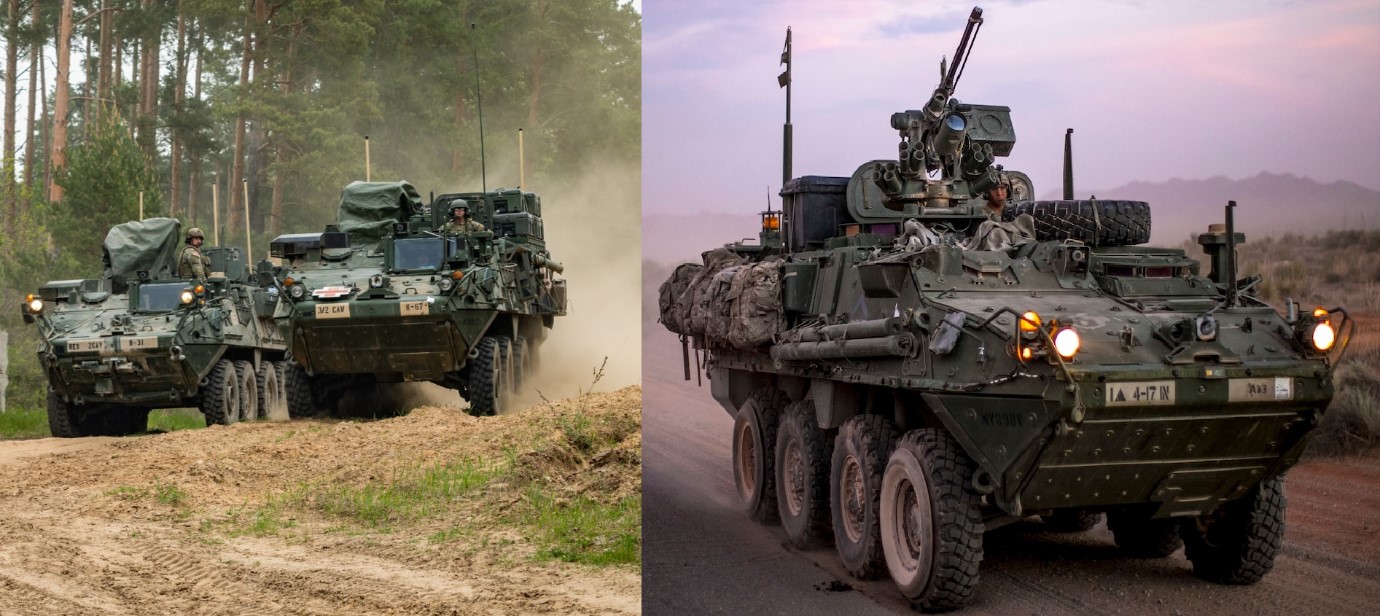
Poland is advancing toward a landmark defense agreement to acquire roughly 250 American Stryker armored personnel carriers for a symbolic price of one U.S. dollar, according to public comments by Deputy Prime Minister and Defense Minister Władysław Kosiniak-Kamysz and reporting from Polskie Radio. The vehicles would come from U.S. Army Stryker units already stationed in Europe as Washington reduces its forward-deployed Stryker footprint, offering Warsaw a rapid and cost-effective way to reinforce its mechanized formations without waiting for new production or transatlantic shipment delays.
Why One Dollar?
The one-dollar price is a long-standing mechanism used in defense cooperation among close allies. When equipment is no longer needed by U.S. forces—with depreciation already accounted for—Washington can transfer it at a nominal value to strengthen a partner’s military capabilities without triggering complex procurement, auction, or market-value procedures.
Poland will still bear the costs of inspections, refurbishment, upgrades, transportation, and integration, but the symbolic transfer price emphasizes political solidarity and strategic alignment rather than commercial profit.
A Strategic Boost for NATO’s Eastern Flank
The transfer, once a technical inspection and refurbishment plan is concluded, is expected to significantly accelerate Poland’s ability to field additional mechanized units. With Poland retiring its aging BWP-1 infantry fighting vehicles and donating large numbers of legacy platforms to Ukraine, Warsaw has faced acute shortages in modern troop carriers.
The Strykers—pulled from U.S. formations downsizing in Europe as force structure is realigned—would fill this gap rapidly. General Wiesław Kukuła confirmed that the Polish Armed Forces have prepared initial recommendations, with formal assessments planned through 2026. A deteriorating security environment, however, could accelerate the timeline.
Stryker: A Proven, Mobile, Coalition-Ready Platform
The Stryker M1126 Infantry Carrier Vehicle (ICV)—a member of the well-known 8x8 family derived from the LAV III and Piranha III—was chosen by the U.S. Army for its rapid deployment potential, enabling a full brigade to be transported within 96 hours. It carries nine infantry soldiers plus a crew of two, using a rear ramp for fast dismount and urban maneuver.
The vehicle’s dimensions—6.95 m long and 2.72 m wide—are optimized for airlift via C-17, C-5, and in some configurations C-130 aircraft, offering unprecedented mobility for coalition operations. Over the past decade, Strykers have been exported to several nations including Colombia and Thailand, and more than 100 units have been supplied to Ukraine since 2023.
Weapons and Protection
The M1126 is armed with the M151 Protector remote weapon station, capable of mounting a 12.7 mm machine gun, 7.62 mm MG, or 40 mm automatic grenade launcher. Fully stabilized optics and a Detached Line of Sight mode allow the gunner to maintain target lock while the vehicle traverses rough ground.
More recent upgrades include the CROWS-J configuration, integrating a Javelin anti-tank missile launcher with a 2.5 km range, enabling the Stryker to engage armored threats from beyond direct line of sight.
Protection features include:
-
High-hardness steel hull
-
Ceramic add-on armor against 14.5 mm rounds and artillery fragments
-
Afghanistan-era V-hull kits for mine and IED resistance
-
Full CBRN overpressure system
-
External fuel tanks to reduce risk to crew
-
FBCB2 digital battle-management network, enabling rapid tactical data sharing
Polish Modernization Strategy: Stryker, Rosomak, Borsuk
Officials stress that integrating Strykers will not undermine Poland’s domestic industry. The country already fields more than 900 Rosomak (Patria AMV-based) vehicles, with the latest versions mounting the ZSSW-30 remote turret featuring a 30 mm Mk44S cannon and Spike-LR missiles. Thirty-five such upgraded units are now in service with the 21st Podhale Rifles Brigade.
Additionally, the first 15 Borsuk tracked IFVs have been delivered to the 15th Mechanized Brigade in Giżycko, under a program that includes 111 initial units and may expand to 1,400 vehicles including specialist variants.
Together, these platforms form a three-tiered mechanized structure:
-
Stryker: rapid mobility, infantry lift, coalition flexibility
-
Rosomak: medium-weight firepower and anti-tank capability
-
Borsuk: heavy tracked survivability for high-intensity combat
Digital-hardware harmonization will support full integration into NATO command architectures, enabling real-time data sharing, sensor fusion, and coordinated fires across the alliance’s eastern flank.
Washington–Warsaw Alignment
The near-finalized Stryker deal reinforces growing U.S.–Polish strategic alignment at a time of sustained Russian pressure. By transferring proven platforms so cheaply, Washington signals confidence in Poland’s role as a frontline land power and rapidly strengthens NATO’s defensive posture in Central Europe.
For Poland, the acquisition represents a swift, low-cost injection of modern mobility at a time when equipment gaps remain significant due to donations to Ukraine and the phasing out of Soviet-era systems.
If completed as expected in the second half of 2026, the one-dollar Stryker transfer will stand as one of the most symbolic—and strategically meaningful—examples of U.S. military support to a European ally in recent years.
About the Author
Aditya Kumar:
Defense & Geopolitics Analyst
Aditya Kumar tracks military developments in South Asia, specializing in Indian missile technology and naval strategy.