U.S. Approves $82 Million Precision-Weapons Sale to Japan as Tokyo Deepens Stand-Off Strike Strategy
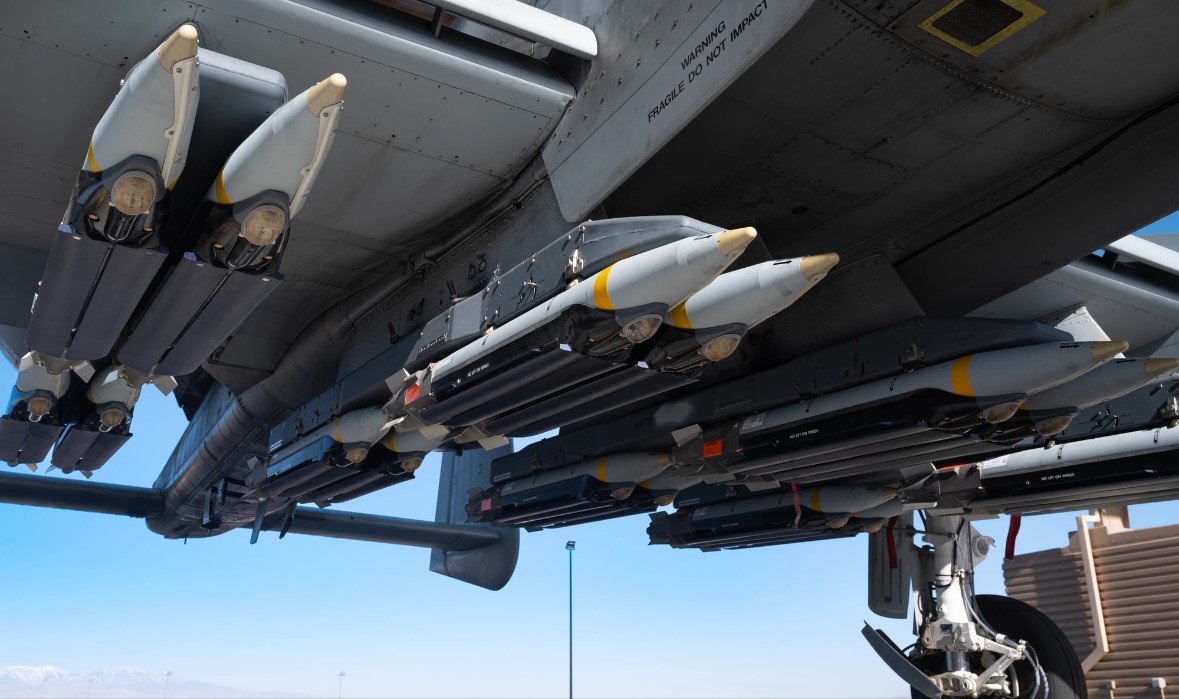
The United States has approved an $82 million Foreign Military Sale (FMS) that will supply Japan with a fresh stock of precision air-launched munitions, a move that reflects Tokyo’s accelerating shift toward stand-off strike capability in an increasingly volatile Indo-Pacific region.
The announcement came from the Defense Security Cooperation Agency (DSCA), which notified Congress that the State Department had cleared a package including Small Diameter Bombs (SDBs), JDAM tail kits, and general-purpose bombs for the Japan Air Self-Defense Force (JASDF). U.S. officials framed the sale as part of Washington’s commitment to strengthening a key regional ally regarded as central to maintaining stability.
A Response to Tokyo’s New Defense Reality
Japan had formally requested the weapons earlier this year, seeking to expand the strike potential of its frontline fighters — including the F-15J, F-35A, and the coming F-X sixth-generation platform. That request came as Tokyo reoriented its defense policy, adopting for the first time a doctrine that authorizes long-range counter-strike missions against enemy missile sites and command hubs.
The DSCA noted that the variety of munitions included in the package is meant to give Japan both depth and flexibility. The mix supports different mission sets: deep-strike, hardened-target attacks, and precision engagements in contested airspace.
Inside the Package: What Japan Is Getting
The approved sale delivers a broad suite of air-launched weapons and support systems:
-
GBU-39 Small Diameter Bombs (SDB-I)
-
Joint Direct Attack Munition (JDAM) guidance tail kits
-
Mk-82 and Mk-84 general-purpose bombs
-
Fuzes, containers, and mission planning equipment
-
Training tools, test gear, and manuals
-
Maintenance support, spares, and contractor assistance
U.S. defence officials said the package is structured not just as a one-time shipment but as a sustainment-ready system, enabling Japan to integrate, operate, and maintain the weapons over the long term.
Weapon Specifications: Precision for a New Era
- Small Diameter Bomb (SDB-I)
- Range: ~110 km
- Warhead: 113-kg focused-penetration explosive
- Guidance: GPS/INS
- Role: High-precision strikes with minimal collateral damage.
- JDAM Tail Kits
- Convert unguided bombs into GPS-guided precision weapons
- Accuracy: 5–10 meters
- Effective across all weather and combat conditions.
- Mk-82 / Mk-84 General-Purpose Bombs
- 500-lb and 2,000-lb class
- Serve as the backbone of U.S. and allied strike capability
- Compatible with JDAM kits for precision missions.
Together, these weapons dramatically expand Japan’s ability to conduct long-range precision strikes, a capability increasingly critical given North Korean missile launches and China’s expanding military footprint.
Who Will Deliver the Weapons
The DSCA identified several major U.S. defense contractors:
-
Boeing Defense, Space & Security — SDB production
-
Lockheed Martin and Raytheon — JDAM integration and support
-
General Dynamics Ordnance and Tactical Systems — Mk-series bombs
These companies will coordinate with Japan’s Ministry of Defense to deliver the munitions and provide training, software updates, and sustainment support.
Regional Context: Why Japan Is Expanding Its Strike Arsenal
Japan’s order reflects a broader transformation of its military posture. Under its revised National Security Strategy, Tokyo is investing heavily in systems that allow it to conduct stand-off and counter-strike missions. This includes future plans to field U.S. Tomahawk cruise missiles, expand indigenous missile development, and upgrade fighter fleets.
As China intensifies pressure around Taiwan and the East China Sea, and North Korea continues rapid missile testing, Japanese officials argue that traditional “shield-only” defense is no longer sufficient. A credible ability to hit back at long range has become essential to Japan’s deterrence strategy.
Washington agrees. In its notice, the DSCA emphasized that strengthening Japan’s precision-strike capabilities “supports the security of a major allied nation” and contributes to overall Indo-Pacific stability.
Congress will now review the sale, though approval is expected given strong bipartisan support for tighter U.S.–Japan defense cooperation. Once formalized, deliveries will begin through U.S. contractors, followed by integration and training across JASDF squadrons.
About the Author
Aditya Kumar:
Defense & Geopolitics Analyst
Aditya Kumar tracks military developments in South Asia, specializing in Indian missile technology and naval strategy.