U.S. Approves $230 Million Aid Package to Lebanese Security Forces Against Hezbollah
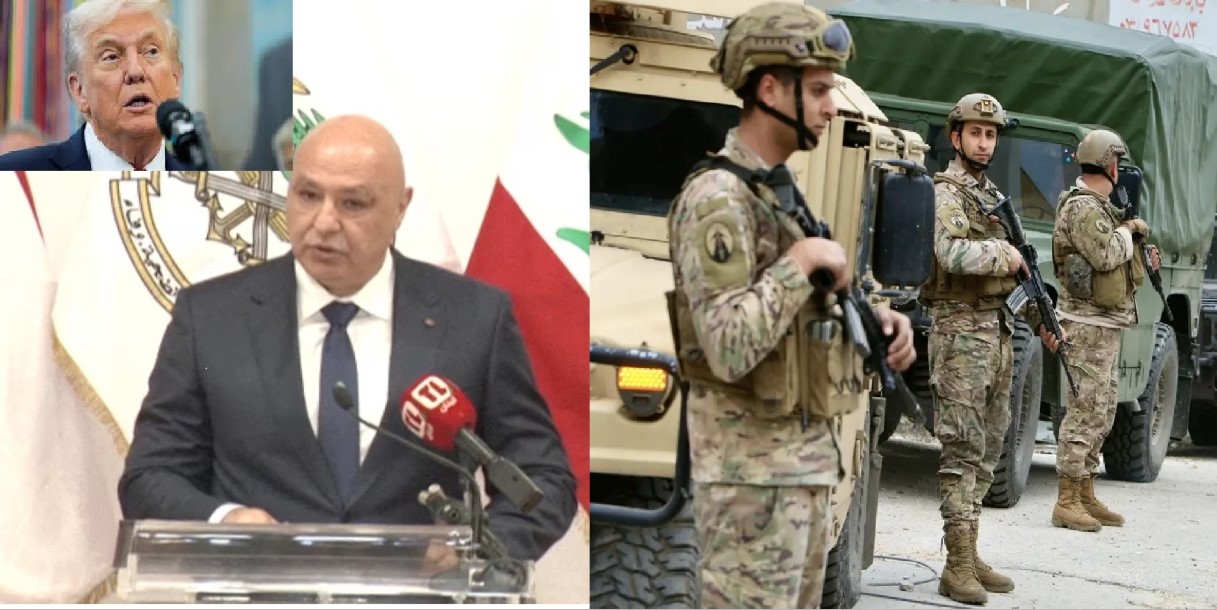
The Trump administration has approved a $230 million aid package for Lebanon's security forces, marking a major step in Washington’s efforts to curb Hezbollah’s influence in the country. Sources in Washington and Beirut confirmed that $190 million of the funding is allocated to the Lebanese Armed Forces (LAF), while $40 million is designated for the Internal Security Forces (ISF). The release came just before the end of the U.S. fiscal year on September 30, highlighting the strategic priority placed on Lebanon amid broader regional tensions.
For Lebanon, a relatively small country grappling with economic and political crises, this infusion of aid is substantial. According to Democratic congressional aides familiar with the matter, the funds provide critical support to institutions tasked with asserting state authority across the nation. The U.S. State Department emphasized that this assistance helps Lebanese forces implement United Nations Security Council Resolution 1701, which calls for the disarmament of all non-state armed groups and the restoration of full state control over national territory. This resolution was adopted in August 2006 following a deadly conflict between Hezbollah and Israel.
The timing of the aid coincides with mounting pressure on Hezbollah. A year-long conflict with Israel has weakened the group, leaving significant portions of Lebanon damaged. Despite repeated calls for disarmament, Hezbollah has resisted, citing its role as a protector against Israeli aggression. Nevertheless, Lebanese President Joseph Aoun and Prime Minister Nawaf Salam have instructed the LAF to create a plan ensuring that all arms in the country are under official security forces’ control by the end of the year.
The U.S. funding is expected to strengthen the ISF’s capacity to manage internal security, freeing the LAF to focus on other strategic priorities. Experts note that this approach reflects a broader U.S. strategy of supporting Lebanon’s sovereignty while countering Iranian influence in the region. Dr. Randa Slim, a senior fellow at the Middle East Institute, observes, “The U.S. is signaling its commitment to Lebanon’s sovereignty and the containment of Hezbollah’s military power. This funding sends a clear message that armed non-state actors will not dictate Lebanon’s security landscape.”
However, challenges remain. Hezbollah’s deep-rooted presence in Lebanese politics and society makes disarmament a complex undertaking. Analysts warn that the eventual withdrawal of the United Nations Interim Force in Lebanon (UNIFIL) by December 2026 could complicate efforts to maintain stability, leaving the Lebanese state to navigate internal and external pressures without the buffer previously provided by UN peacekeepers.
Overall, the $230 million aid package represents more than just a financial contribution; it is a strategic signal. By reinforcing the LAF and ISF, the United States aims to strengthen Lebanon’s state institutions, contain Hezbollah’s influence, and promote regional stability, even as the country faces significant internal challenges and external pressures.
About the Author
Aditya Kumar:
Defense & Geopolitics Analyst
Aditya Kumar tracks military developments in South Asia, specializing in Indian missile technology and naval strategy.