U.S. Approves $11 Billion Arms Package For Taiwan, Sharply Raising Costs of Any Chinese Invasion
The United States has approved the largest arms package in its history for Taiwan, authorising weapons sales and military support valued at more than $11 billion, a move expected to significantly complicate any potential Chinese attempt to seize the self-governed island and sharply increase the risk of massive military losses for an attacking force.
Announced late Wednesday by the U.S. State Department, the package includes advanced rocket artillery, long-range missiles, self-propelled howitzers, anti-tank weapons, loitering munitions, digital command networks, and extensive sustainment support. U.S. officials said the deal is designed to strengthen Taiwan’s deterrence posture by making any invasion scenario more complex, prolonged and costly for Beijing.
Scope and scale of the arms package
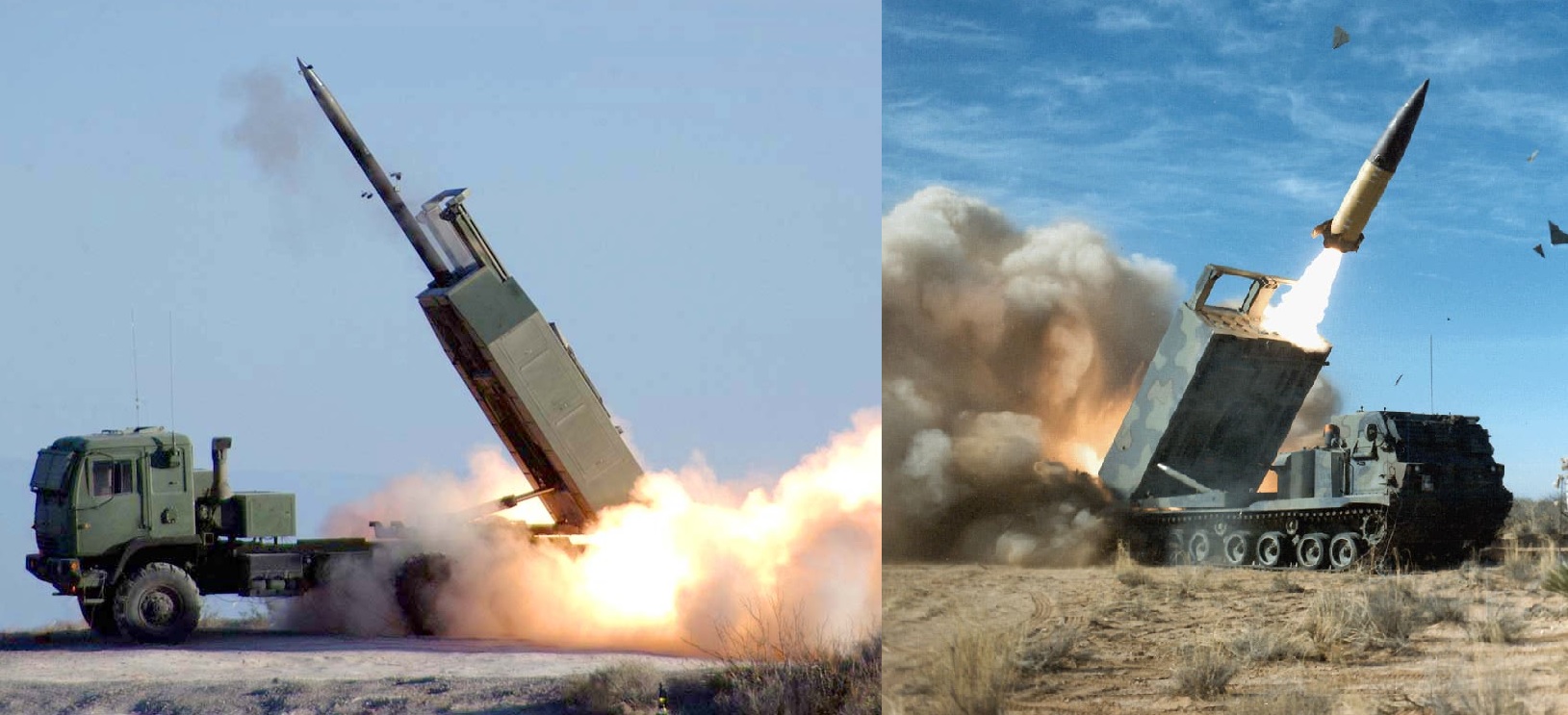
According to U.S. defence officials, the package represents a comprehensive effort to strengthen Taiwan’s land, air and maritime denial capabilities. At its core are 82 M142 High Mobility Artillery Rocket Systems (HIMARS) and 420 MGM-140 Army Tactical Missile Systems (ATACMS), providing Taiwan with the ability to strike invasion staging areas, ports, airfields and logistics hubs from long range with high precision.
The deal also includes 120 M109A7 “Paladin” self-propelled howitzers and M992A3 tracked ammunition carriers, significantly modernising Taiwan’s artillery forces. These systems are designed to fire rapidly, relocate quickly and survive counter-battery fire, enabling sustained operations even under intense missile and air attack.
Missiles, drones and anti-armor firepower
The package dramatically expands Taiwan’s ability to destroy armoured vehicles and amphibious landing forces. The sale of 1,545 TOW-2B anti-tank missiles and 1,050 FGM-148F Javelin missiles would allow Taiwanese ground forces to ambush and eliminate large numbers of tanks and infantry fighting vehicles, particularly in urban and mountainous terrain, where China’s numerical advantage is reduced.
In addition, ALTIUS-600M and ALTIUS-700M loitering munition systems—often described as kamikaze drones—would enable Taiwan to conduct precision strikes against moving targets, air-defence systems, and command posts. Their ability to loiter over contested areas forces an adversary to disperse forces and invest heavily in air defence, increasing operational strain.
Maritime defence is further strengthened through seekers and repair support for Harpoon anti-ship missiles, enhancing Taiwan’s capacity to target amphibious assault ships and naval escorts during a cross-strait operation.
Command networks and sustainment
The inclusion of the U.S. Armed Forces’ Tactical Mission Network (TMN) highlights Washington’s emphasis on battlefield integration and survivability. The network improves real-time coordination, targeting speed, and command-and-control resilience, particularly in environments dominated by electronic warfare.
The package also provides spare parts and repair support for AH-1W “Super Cobra” attack helicopters, ensuring that Taiwan’s existing strike assets remain combat-ready during a prolonged conflict.
Making an invasion far more difficult
Military analysts say the combined effect of these systems would make any Chinese attempt to capture Taiwan far more dangerous, uncertain and costly. Long-range systems such as HIMARS and ATACMS could strike Chinese ports, troop concentrations, logistics nodes and air bases even before forces cross the Taiwan Strait, disrupting mobilisation and slowing the tempo of operations.
If People’s Liberation Army (PLA) forces reached Taiwan’s shores, dense layers of anti-tank missiles, mobile artillery and loitering munitions would target landing units, armoured columns and command elements. Urban warfare, already among the most casualty-intensive forms of combat, would further magnify losses for an invading force.
At sea, expanded anti-ship capabilities would increase the vulnerability of amphibious vessels, transport ships and naval escorts. Analysts note that amphibious assaults are among the most complex military operations, and the strengthened Taiwanese arsenal would amplify risks at every stage.
Strategic intent and deterrence
U.S. officials emphasised that the package supports Taiwan’s shift toward an asymmetric defence strategy, prioritising mobile, survivable and precision-guided systems over large conventional formations. The objective is not to enable Taiwan to defeat China outright, but to convince Beijing that the cost of military action would be unacceptably high.
“This package is about deterrence,” a senior U.S. official said. “It raises uncertainty for any aggressor and increases the likelihood of significant losses at every stage of a conflict.”
Reaction from Beijing
China’s Foreign Ministry strongly condemned the announcement, accusing Washington of interfering in China’s internal affairs and undermining stability in the Taiwan Strait. Beijing warned of “resolute countermeasures,” though it did not specify what actions it might take.
China has consistently opposed U.S. arms sales to Taiwan and has intensified military pressure through large-scale exercises, missile tests, and frequent air and naval operations around the island.
Taiwan’s response and next steps
Taiwan’s Ministry of National Defense welcomed the decision, describing it as a major boost to the island’s defensive posture. Officials said key elements of the package would be funded through a special multi-year defence budget currently under review by Taiwan’s legislature.
The sale now enters a mandatory U.S. congressional review period, typically lasting 30 days. If Congress does not block the deal, contracts, training programmes and phased deliveries will follow, with some systems taking several years to fully enter service.
Regional implications
The unprecedented scale of the package underscores the deepening security relationship between Washington and Taipei amid intensifying U.S.–China rivalry. Supporters argue the deal strengthens deterrence and reduces the likelihood of war by making an invasion prohibitively costly. Critics, led by Beijing, warn it could fuel further escalation.
As the review process begins, the arms package is set to remain a central issue in regional diplomacy, reinforcing Taiwan’s strategic importance in the evolving security landscape of the Indo-Pacific.
About the Author
Aditya Kumar:
Defense & Geopolitics Analyst
Aditya Kumar tracks military developments in South Asia, specializing in Indian missile technology and naval strategy.