U.S Approved First-Ever Export of AIM-260A JATM to Australia, Become First Foreign Operator
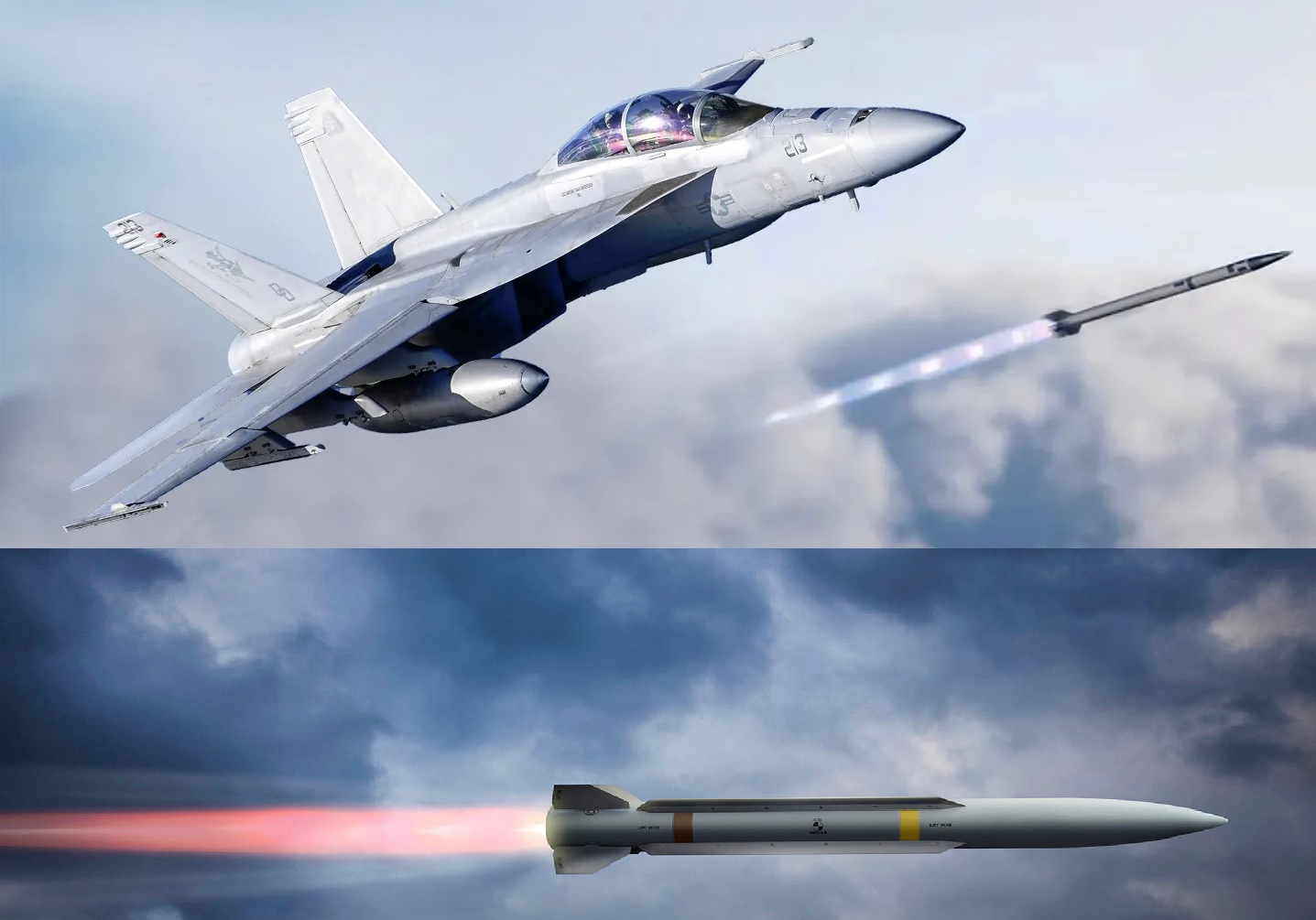
The Defense Security Cooperation Agency (DSCA) has formally approved the first-ever export of the next-generation AIM-260A Joint Advanced Tactical Missile (JATM), authorizing a sale to Royal Australian Air Force. Under the deal, Australia — via its fleet of F/A-18F Super Hornet and F-35A Lightning II aircraft — will become the first foreign operator of JATM. The provisional contract, revealed in documents sent to Congress this week, includes 450 AIM-260A missiles, 5 test vehicles, and 30 guided test vehicles, at an estimated cost of US $2.6 billion (rising to $3.1 billion when non-major defense equipment is included).
Delivery of the first batch is scheduled for the third quarter of 2033, aligning with current U.S. production timelines and taking account of U.S. inventory priorities. Final approvals from DSCA, the U.S. State Department, and relevant congressional bodies reportedly faced no objections.
What Is JATM — The Next-Generation Air-to-Air Missile
The AIM-260A JATM is a beyond-visual-range air-to-air missile (BVRAAM) developed by Lockheed Martin, conceived as a successor (or supplement) to the long-serving AIM-120 AMRAAM. The program began in 2017 in response to advances in adversary missile technologies — especially systems like China’s PL-15.
Although many details remain classified, public disclosures and industry briefings have revealed several key features. The missile has a similar outer form-factor to AMRAAM — enabling compatibility with existing missile rails and stealth-fighter internal weapon bays — yet under the skin carries a significantly more powerful rocket motor and altered internal layout to yield greater range and performance.
Missile flight tests reportedly began as early as 2020, with confirmed testing continuing in 2024 and 2025 under the auspices of the U.S. Navy’s development and evaluation squadrons. As of early 2025, the program remains in test; it has not yet achieved full operational status according to U.S. service officials.
According to public sources, the JATM is believed capable of significantly outranging the AMRAAM, with commonly cited range estimates in the ballpark of 200–320 km.
Significance of the Australian Sale: Strategic and Diplomatic Dimensions
This export marks a major milestone in U.S.-Australia defense cooperation, and signals trust in Canberra’s access to one of the U.S. military’s most sensitive weapons platforms — despite the fact that JATM remains in development. As noted by U.S. sources, additional export approvals of JATM “in the same style” may be granted to other allies, depending on changing policy, strategic priorities, and global threat perceptions.
The choice of Australia — geographically located in a strategically sensitive Indo-Pacific region — is likely not incidental. Exporting JATM to Australia underlines the U.S. intention to reinforce its deterrence and defense posture in the region, while encouraging interoperability among allied air forces. Reports indicate that nations already cleared for the AIM-120D-3 may be eligible to obtain AIM-260As in the future — depending on policy and prioritization.
At the same time, the sale has raised eyebrows within defense-industry watchers: export of a still-being-tested missile program is rare, prompting questions about risk, operational readiness, and the possible trade-offs between allies’ needs and U.S. inventory planning.
Technical Uncertainties & What Is Still Unknown
Despite published renderings and some testing data, many technical aspects of JATM remain undisclosed or speculative. The missile’s seeker — whether radar, infrared, or multi-mode — has not been officially confirmed. Similarly, while design drawings show only four tail fins (no mid-body controls), the missile’s maneuverability in a contested, ECM-rich environment remains uncertain.
The warhead type appears to be conventional high-explosive blast-fragmentation, but details about its size, lethality, or potential variants (e.g. proximity-fuzed, tunable yield) are not public.
Moreover, when asked about current test results, the U.S. Navy and Air Force have refused to comment; the program remains under “enhanced security” or Special Access Program (SAP) classification, limiting official transparency.
Finally — despite recent funding allocations — the missile has not yet attained any declared initial operating capability (IOC) status, raising questions about how soon Australia’s aircraft will actually field the weapon in mission-ready form.
Strategic Implications & What to Watch Next
The export of AIM-260A to Australia could accelerate a broader trend — selling advanced air-to-air weapons to allied air forces before U.S. internal deployment is complete. This may allow allies to field cutting-edge capabilities sooner, but also shifts the risk: if technical or integration problems arise, allied and U.S. aircraft may face operational constraints or delays.
From a geopolitical perspective, deploying long-range BVRAAMs across allied air forces — especially in the Indo-Pacific — may significantly alter regional air-power dynamics, complicating adversaries’ calculations, and reinforcing networked defense postures.
Looking ahead, key developments to watch include: (1) further export approvals of JATM to other allies; (2) official announcements of JATM’s IOC by the U.S. military; (3) possible technical briefings disclosing seeker type, warhead performance, counter-countermeasures; and (4) the pace of integration of JATM with both crewed stealth fighters (F-35, F-22) and potentially future unmanned combat platforms.
About the Author
Aditya Kumar:
Defense & Geopolitics Analyst
Aditya Kumar tracks military developments in South Asia, specializing in Indian missile technology and naval strategy.