U.S. Air Force to Use Tesla Cybertrucks as Live-Fire Targets in Weapons Testing, Why ?
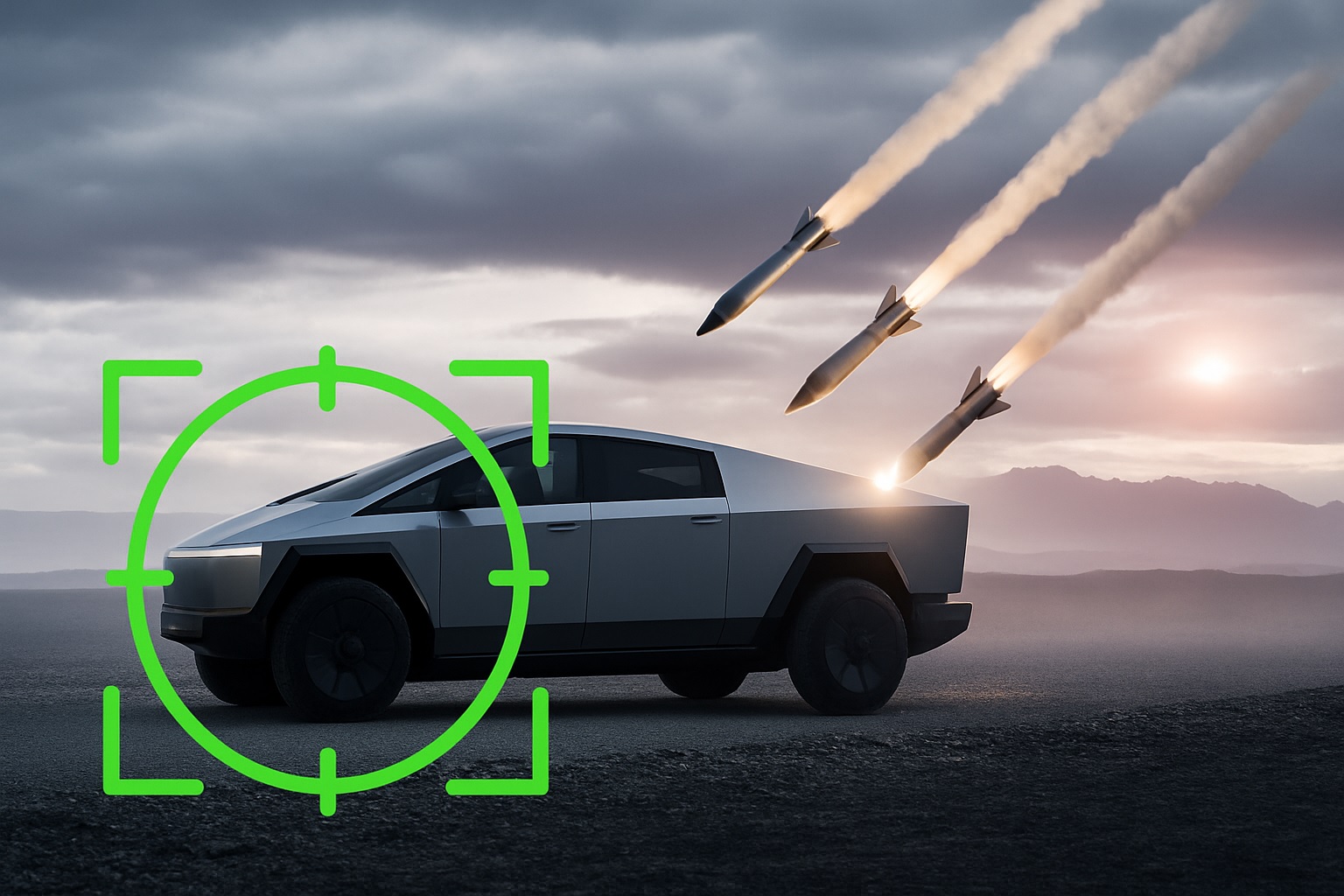
The U.S. Air Force is planning to buy two Tesla Cybertrucks — not for transport or patrol duties, but to blow them up. The futuristic electric pickups will be used as live-fire targets during precision weapons testing and special operations training at the White Sands Missile Range in New Mexico.
According to contracting documents, the Cybertrucks are part of a batch of 33 target vehicles being acquired for the U.S. Special Operations Command’s Stand Off Precision Guided Munitions (SOPGM) program. This program involves testing and training with advanced air-launched weapons such as Hellfire missiles, Griffin missiles, Small Glide Munitions, and Laser Small Diameter Bombs — all designed to hit moving or stationary targets from long distances.
While the rest of the target vehicles can be ordinary sedans, trucks, and SUVs, the Cybertrucks are specifically being purchased because the Air Force believes future adversaries could drive them in conflict zones. Military planners say the vehicles’ bullet-resistant panels, stainless steel exoskeleton, and unique angular design make them tougher than standard vehicles and capable of sustaining less damage from impacts — a factor that could change how weapons perform against them.
Interestingly, the Air Force does not need the Cybertrucks to be functional. They just need to roll when towed so they can be placed in firing zones. The idea is to simulate realistic battlefield conditions, especially in regions where special operations forces might face hostile fighters using such vehicles.
Although Tesla has only officially sold around 46,000 Cybertrucks, mostly in North America, some have already made their way overseas. Luxury markets in the Middle East are expected to get official sales this year, and there have been reports of Cybertrucks appearing in unexpected places — including in the hands of Russian-backed Chechen fighters during the war in Ukraine, some modified with heavy weapons.
The Cybertruck, which starts at around $80,000, has been marketed by Tesla CEO Elon Musk as “apocalypse-proof,” boasting resistance to pistol-caliber rounds and featuring a futuristic 48-volt electrical system. However, it has also faced criticism over recalls, build quality, and inconsistent performance. Still, its armored look and durability have drawn interest from law enforcement and private security buyers in countries such as the United Arab Emirates.
For the U.S. military, this move reflects a broader strategy — anticipating the kinds of equipment enemies might adopt in coming years and ensuring that American forces know how to destroy them effectively. The upcoming tests at White Sands are expected to examine how different precision-guided munitions perform against the Cybertruck’s unusual structure, providing valuable data for both current and future weapons development.
In the end, while the Cybertruck has been promoted as a vehicle of the future, for the U.S. Air Force, its role in that future may be short-lived — ending in a cloud of smoke, shrapnel, and missile fire in the deserts of New Mexico..
✍️ This article is written by the team of The Defense News.