U.S. Air Force Receives 500th F-35, Outnumbering Russia and China’s 5th-Gen Fleets Combined
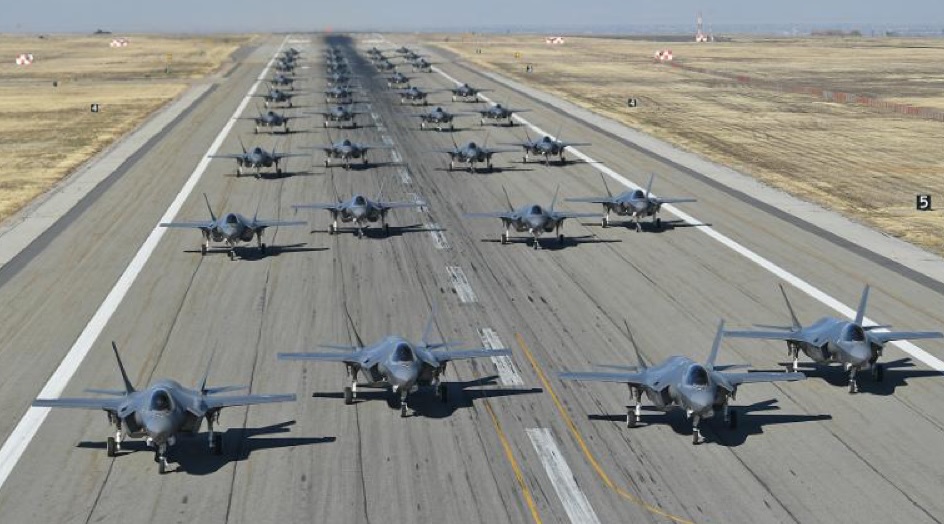
Jacksonville, Fla. (Aug. 21, 2025) — The Florida Air National Guard’s 125th Fighter Wing, known by the callsign “Thunder,” has officially entered the fifth-generation era with the arrival of its first permanently assigned F-35A Lightning II fighter jets. On July 9, three stealth aircraft touched down at Jacksonville Air National Guard Base, including a historic milestone — the 500th F-35A delivered to the U.S. Air Force.
This delivery marks the unit’s full transition away from its legacy F-15C/D Eagles, which had served since the late 1970s, and places the Wing among a select group of Air National Guard units now flying the world’s most advanced combat aircraft.
A New Chapter for the 125th
For the past year, the Wing had been flying loaned F-35s for training and familiarization. With these new jets under its own command, the unit gains full operational autonomy. The 125th is tasked with homeland defense across the southeastern United States and holds a rapid deployment role for overseas operations — missions now significantly strengthened by stealth, advanced sensors, and multirole combat versatility.
Lt. Col. Joseph Pasko, commander of the 159th Fighter Squadron, highlighted the leap forward:
“These new F-35s represent the forefront of fifth-generation airpower. Our citizen-Airmen stand ready to answer the nation’s call, anytime, anywhere.”
Brig. Gen. Richard L. Coffey, assistant adjutant general for air in the Florida Guard, added that stationing fifth-generation fighters in Jacksonville gives U.S. commanders an edge in rapid response, deterrence, and resilience.
Strategic Significance
-
The 125th becomes the fourth Air National Guard wing to operate the F-35A, joining Vermont, Wisconsin, and Alabama.
-
It is also one of only nine total Air Force units flying the jet, underscoring its elite role in national defense.
-
With stealth shaping, sensor fusion, and integrated electronic warfare, the F-35 offers capabilities the F-15C/D could never achieve, transforming the Wing’s mission from pure air defense to a multirole platform able to strike, defend, and coordinate across joint forces.
-
The fighters will operate under the Agile Combat Employment (ACE) model, allowing rapid dispersal and survivability in contested environments.
Years of Preparation
The decision to base the F-35A in Jacksonville was made in 2021, authorizing up to 20 aircraft for the Wing. Since then, the base has undergone significant modernization:
-
A new simulator complex for advanced pilot training.
-
A low-observable maintenance hangar and climate-controlled weapons loading facilities.
-
Expanded taxiways and infrastructure upgrades in coordination with Jacksonville International Airport.
Personnel across the Wing retrained for F-35 operations, while the Logistics Readiness Squadron revamped parts management systems to meet the fighter’s unique demands.
Homeland Defense and Global Reach
At home, the F-35A enhances the Wing’s 24/7 air defense mission protecting U.S. skies along the Southeast and Gulf coasts. Abroad, its reach extends far beyond Florida: the 125th is now capable of quickly deploying to NATO bases in Europe, forward positions in the Indo-Pacific, or regional hotspots in the Middle East and Caribbean.
The jet’s versatility allows it to act not only as a frontline strike fighter, but also as an airborne intelligence hub, connecting aircraft, ships, and ground forces into a unified combat network.
The Air Force plans to field more than 1,700 F-35As in the coming decades, ensuring the U.S. maintains overwhelming superiority against rivals like China’s J-20 and Russia’s Su-57, both of which lag in production and global integration.
For the 125th, the arrival of the first three fighters — including the Air Force’s 500th — is just the beginning. More aircraft will follow in the coming months, fully transforming the Wing into a fifth-generation combat unit ready to defend the homeland and project U.S. airpower worldwide.
✍️ This article is written by the team of The Defense News.