U.S. Air Force, Marine Corps Use 3D Printing to Repair Grounded F-15 in Hours
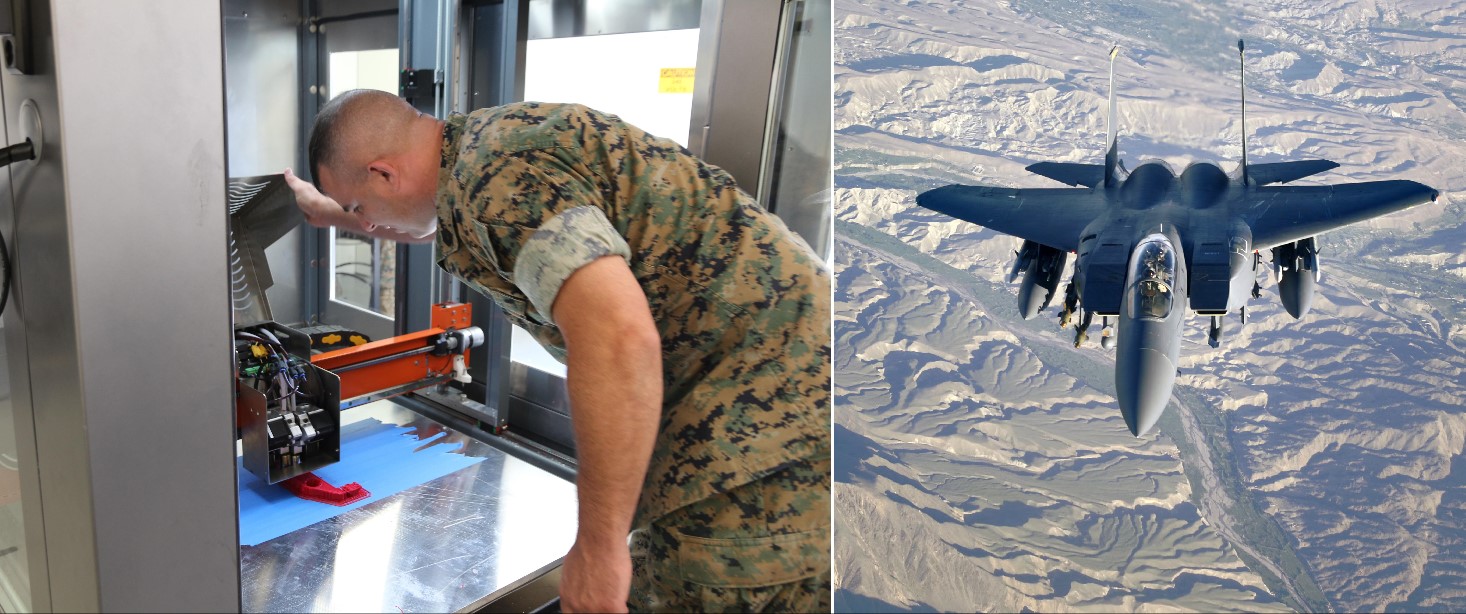
A U.S. Air Force F-15 fighter aircraft, grounded by a damaged cooling component, was restored to flight status in just a few hours on Dec. 10, following a rapid joint repair effort between Air Force and Marine Corps maintenance teams that sharply outpaced an original repair estimate of several months.
The repair was led by the 18th Maintenance Group, which maintains fighter aircraft at Kadena Air Base. After identifying a failure in a specialized cooling duct, Air Force maintainers determined that replacing the part through conventional supply channels could take up to four months, potentially impacting aircraft availability at one of the U.S. military’s most important forward-deployed installations in the Indo-Pacific.
Rather than accept the prolonged downtime, the 18th Maintenance Group sought assistance from the Marine Aircraft Logistics Squadron 36 (MALS-36), a Marine Corps logistics unit with on-site additive manufacturing capabilities.
Rapid Manufacturing Replaces Months-Long Timeline
The aircraft, an F-15, had been removed from flight operations after the cooling duct malfunction threatened safe system performance. Cooling ducts play a critical role in regulating temperatures within aircraft components, and failure can render an aircraft non-mission capable.
Using digital design data and industrial-grade 3D printers, Marine Corps technicians at MALS-36 began producing replacement duct prototypes almost immediately after the request was received. Within approximately 12 hours, two prototype parts were printed, transported to Kadena, and installed by Air Force maintainers.
Post-installation inspections and functional checks confirmed the component met operational requirements, allowing the aircraft to be cleared for flight the same day.
Inter-Service Coordination Drives Readiness
Officials involved in the repair emphasized that the success of the operation was driven by close coordination between the Air Force and Marine Corps, as well as the growing maturity of additive manufacturing within military maintenance operations. By producing the part locally, the joint team avoided supply chain delays related to manufacturing backlogs, transportation, and overseas delivery.
The rapid turnaround ensured the F-15 returned to the flight line far sooner than anticipated, preserving combat capability at Kadena Air Base, which supports regional deterrence and air operations across the western Pacific.
Broader Implications for Military Logistics
The Dec. 10 repair underscores a broader shift within the U.S. military toward agile and resilient logistics practices. Additive manufacturing is increasingly being used to produce hard-to-source or time-sensitive components, particularly in forward-deployed environments where traditional supply chains can slow operational readiness.
For Air Force and Marine Corps teams in Japan, the successful F-15 repair serves as a practical example of how joint innovation and emerging technology can deliver immediate operational benefits, reducing downtime and keeping critical aircraft mission-ready.
✍️ This article is written by the team of The Defense News.