AMMAN / WASHINGTON : The United States has launched one of its most concentrated airpower deployments to the Middle East in years, rapidly moving strike fighters, aerial refueling aircraft, and heavy transport planes into the region as tensions with Iran continue to intensify.
Over a span of roughly 48 hours, U.S. Air Force movements have revealed a surge designed not only to project combat power but also to establish the logistical depth required for sustained operations. Defense and aviation tracking data show a coordinated flow of fighters and airlifters converging on Jordan, signaling a shift toward a more forward-leaning military posture.
Strike Fighters Move East
At the center of the buildup is the deployment of a full squadron of F-15E Strike Eagles, the U.S. Air Force’s primary deep-strike fighter. Twelve aircraft from the 48th Fighter Wing, based in the United Kingdom, arrived in the Middle East under the long-range deployment mission CORONET East 028.
The F-15E, designed for penetrating defended airspace and delivering heavy precision weapons, is widely regarded as a platform reserved for high-end contingencies. Analysts say its presence sends a pointed message, underscoring U.S. readiness to conduct offensive operations if deterrence fails.
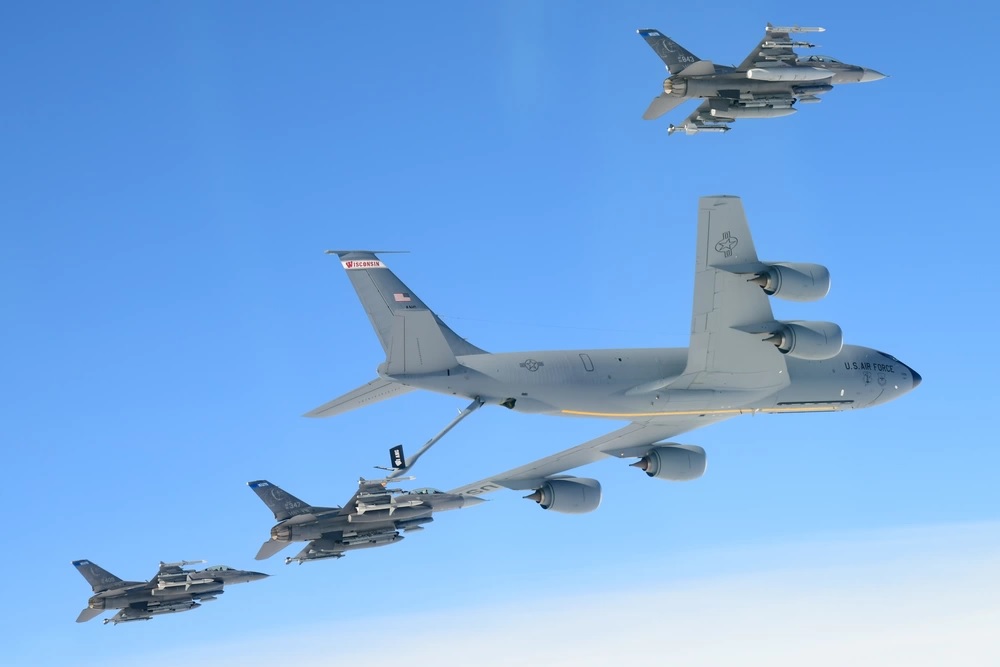
The transcontinental flight was enabled by an extensive aerial refueling effort. At least six KC-135 Stratotanker sorties launched from RAF Mildenhall to form an aerial refueling bridge across Europe and the Mediterranean. One of the Strike Eagles diverted to Crete, likely because of a technical issue, while the remaining aircraft completed the mission and landed in Jordan.
Jordan Emerges as a Forward Hub
The destination of the deployment, Muwaffaq Salti Air Base in Jordan, has increasingly become a cornerstone of U.S. regional strategy. Often described by defense officials as a “fortress” location, the base offers proximity to Syria and Iraq while remaining outside the immediate vulnerability of the Persian Gulf coastline.
Positioning advanced fighters there allows the United States to threaten a broad range of targets, including Iranian-aligned militias operating across the Levant, while complicating adversary planning through dispersed basing.
A Heavy Airlift Surge
While the arrival of combat aircraft has drawn attention, an even larger logistical buildup has unfolded in parallel. At least a dozen C-17A Globemaster III strategic airlifters have moved into Jordan in the same timeframe, an unusually high volume that points to preparations beyond a short-term show of force.
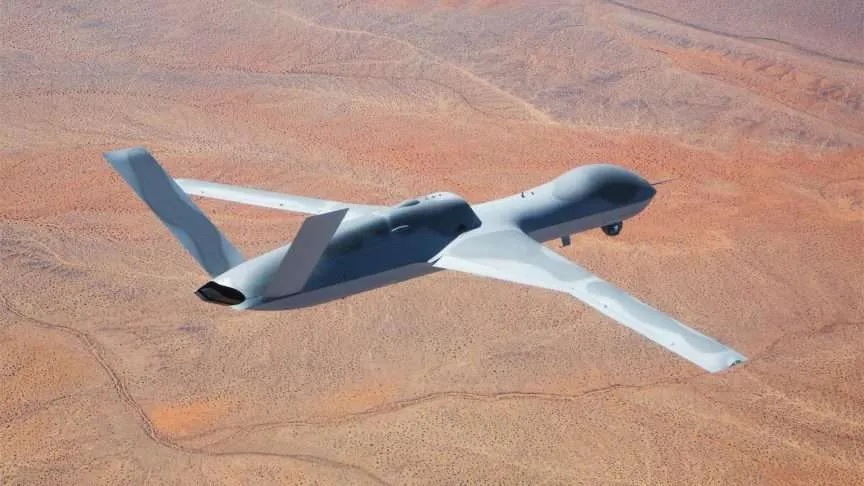
Flight paths indicate a global convergence. Multiple C-17s arrived directly from RAF Lakenheath and Ramstein Air Base, likely transporting personnel, maintenance equipment, and munitions. Others flew in from Diego Garcia in the Indian Ocean, a hub for pre-positioned heavy equipment and bomber support assets. Additional aircraft originated from Creech Air Force Base, the center of U.S. remotely piloted aircraft operations, hinting at an expansion of unmanned surveillance or strike activity.
Such an airlift pattern is typically associated with the establishment of a sustained air campaign, rather than a symbolic deployment.
Broader Regional Context
The aviation surge comes amid heightened regional volatility. Iran has faced weeks of internal unrest, and U.S. officials have repeatedly warned that any attack on American forces or allies would trigger a decisive response. At the same time, U.S. naval power has been on the move, with the USS Abraham Lincoln Carrier Strike Group accelerating its transit toward the Middle East from the Indo-Pacific.
Taken together, the movements in the air and at sea suggest a deliberate effort to reinforce deterrence while ensuring that, should diplomacy fail, the United States is positioned to act rapidly and at scale.
“The choice of Jordan is strategic,” a regional security analyst said. “It places high-end U.S. airpower within immediate reach of Iranian proxy networks in Syria and Iraq, while reducing reliance on more exposed Gulf bases.”
A Signal, Not Just a Warning
Whether the buildup culminates in military action remains uncertain. What is clear is that the scale and speed of the deployment mark a notable escalation in U.S. posture. By pairing frontline strike aircraft with an expansive logistical backbone, Washington appears intent on demonstrating that its warnings are backed by the capability to sustain operations well beyond an initial strike.
For now, the fighters and transports on Jordanian tarmacs stand as a visible reminder that the Middle East remains a central focus of U.S. military planning as tensions with Tehran continue to rise.