U.S Air Force Accelerates SiAW Missile Program for F-35, F-16, F-18, F-15E and B-21 Bombers
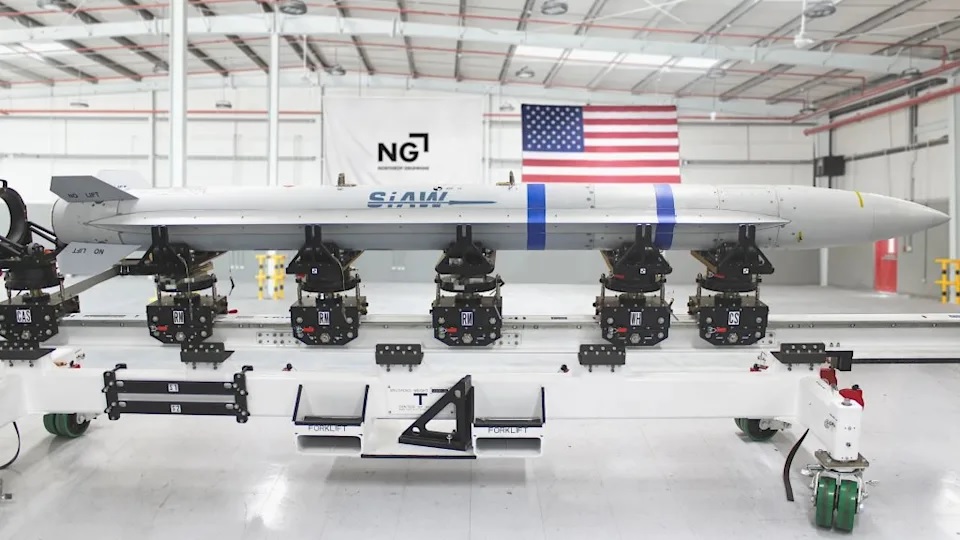
The United States Air Force is accelerating development of its new Stand-in Attack Weapon (SiAW), a next-generation air-to-surface missile designed to strike mobile, high-value threats inside heavily defended airspace. Built on the technological foundation of the Navy’s AGM-88G AARGM-ER anti-radiation missile, the SiAW represents one of the Air Force’s most significant new munitions programs aimed at countering advanced anti-access/area denial (A2/AD) systems.
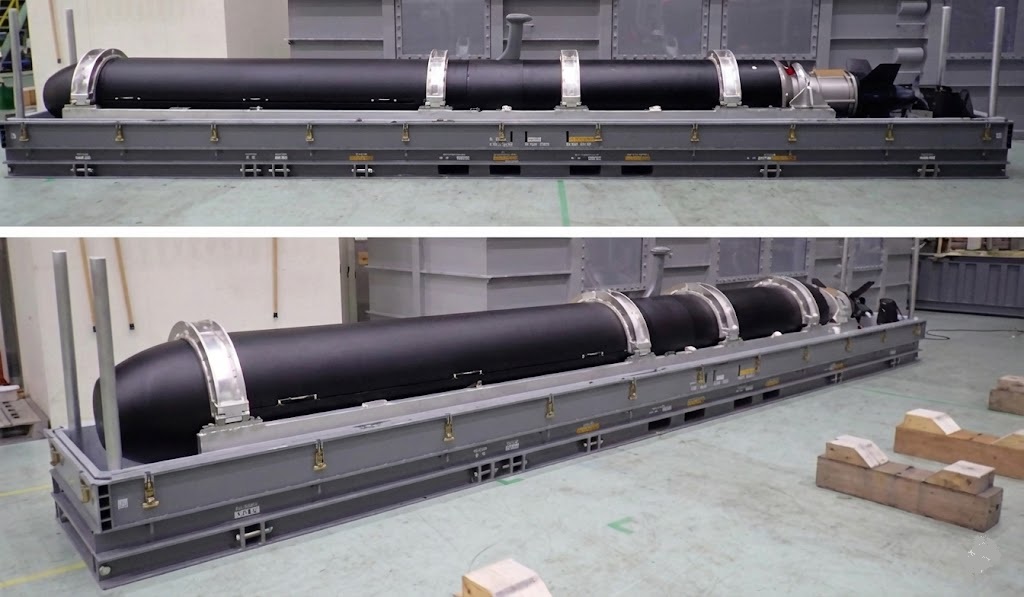
Northrop Grumman, which won the $705 million development contract in 2023, has already delivered the first inert test missile, paving the way for captive-carry and separation trials. Flight testing is scheduled to ramp up through 2025 as the service pushes for an early operational capability later in the decade.
Unlike the AARGM-ER, which focuses primarily on radar-emitting targets, the SiAW has been engineered for a much broader target set. It is designed to detect, track and destroy mobile ballistic-missile launchers, cruise-missile TELs, GPS-jamming vehicles, electronic-warfare platforms, command-and-control nodes, and other relocatable systems that adversaries typically move quickly to evade detection. The missile’s high-speed performance—derived from the AARGM-ER’s powerful extended-range motor—allows it to strike such time-sensitive targets before they can disperse or hide.
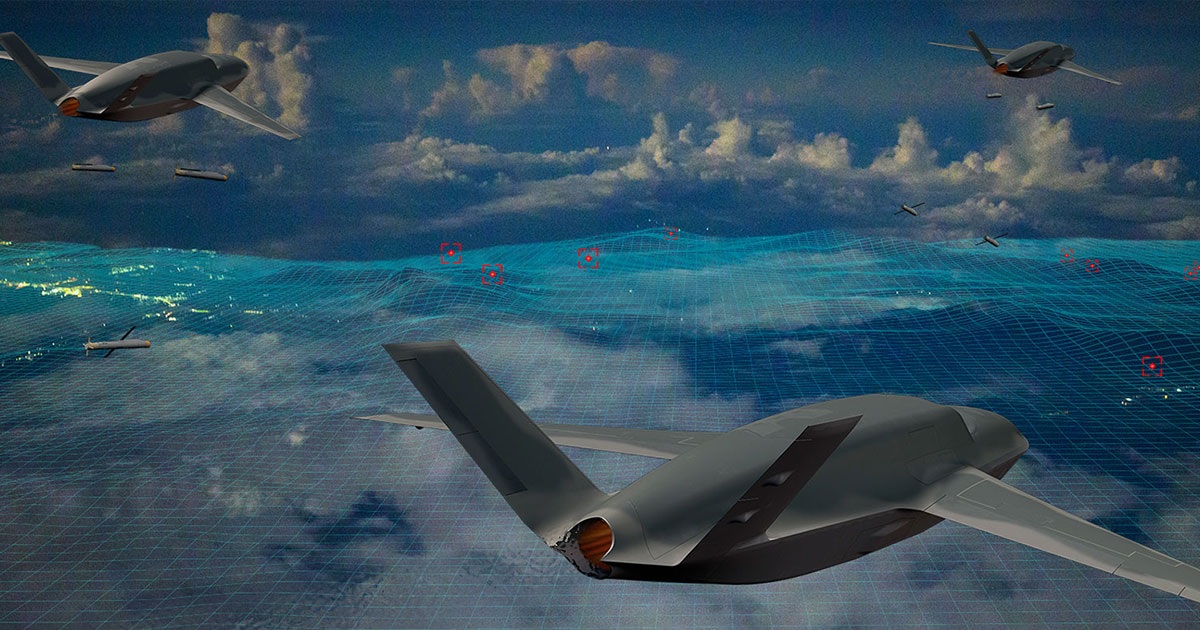
One of the program’s core goals is to enable “stand-in” strikes. Rather than being fired from long range, SiAW is meant for use after a fighter or bomber has penetrated contested airspace. This gives pilots the ability to engage the most threatening systems from inside an enemy’s defensive bubble while still maintaining survivability at supersonic speeds.
The missile will be carried internally on the F-35A and F-35C variants, preserving the aircraft’s stealth characteristics. The service has also confirmed plans for integration on the F-16, F-15E/EX, and Navy and Marine Corps F/A-18 aircraft. Additionally, the upcoming B-21 Raider stealth bomber will carry SiAW, giving the Pentagon’s newest long-range strike platform the ability to hunt and destroy mobile missile launchers in the opening hours of a conflict.
The Air Force originally evaluated proposals from multiple defense companies, including Lockheed Martin and L3Harris. Lockheed promoted a competing high-speed concept called “Mako,” but Northrop Grumman’s design—leveraging the existing AARGM-ER engineering base—was chosen to reduce development risk and accelerate fielding.
As testing continues, several details remain classified, including maximum range, seeker modes and counter-countermeasure capabilities. However, defense analysts say the program is designed to give the U.S. and its allies a critical tool for dismantling modern integrated air-defense networks built by China, Russia, and other near-peer militaries. By neutralizing mobile launchers and electronic-attack vehicles that underpin these A2/AD systems, the SiAW is expected to play a central role in early-phase air operations in any future high-end conflict.
With prototype deliveries complete and integration work expanding across multiple aircraft fleets, the SiAW is now transitioning from concept to reality. If the Air Force maintains its current pace, the missile could enter frontline ser
About the Author
Aditya Kumar:
Defense & Geopolitics Analyst
Aditya Kumar tracks military developments in South Asia, specializing in Indian missile technology and naval strategy.