UNSC Allows Afghan Foreign Minister to Travel to India for Talks
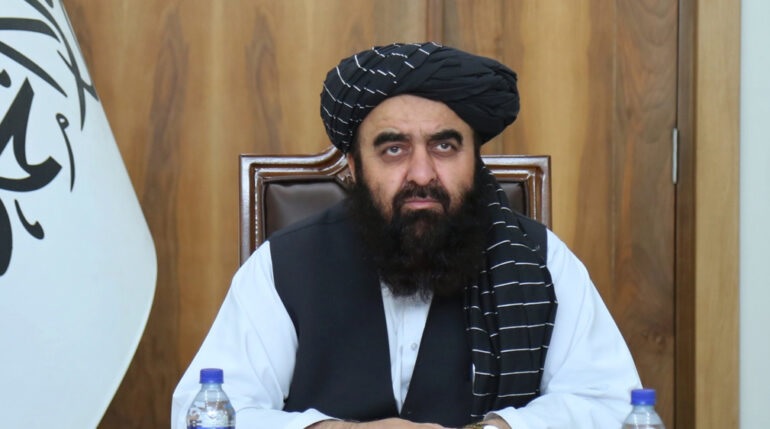
The United Nations Security Council (UNSC) has approved a temporary travel ban exemption for Afghanistan’s Foreign Minister Amir Khan Muttaqi, permitting him to visit New Delhi from October 9 to 16, 2025. The decision was taken under the framework of Security Council Resolution 1988 (2011), which places sanctions on senior Taliban leaders but also allows exemptions in specific cases, such as official duties or urgent humanitarian needs.
Background of the Travel Ban
The travel restrictions on Taliban officials were first imposed in 2011 through Resolution 1988, which targeted key leaders with measures including asset freezes, arms embargoes, and international travel bans. These sanctions were designed to pressure the Taliban leadership into complying with global counterterrorism and peace efforts. Since the Taliban’s return to power in August 2021, the sanctions have remained in place, with exemptions considered only after UNSC review.
Exemptions Granted in 2025
This year has already seen multiple cases of temporary waivers:
-
In July 2025, the UNSC permitted Khairullah Khairkhwah, a Taliban official, to travel to Moscow for medical treatment.
-
In August 2025, Abdul Salam Hanafi, the Deputy Prime Minister of the Taliban government, was allowed to visit Doha, Qatar, also on medical grounds.
These instances show that while sanctions are still enforced, the UNSC is applying flexibility in limited situations, balancing enforcement with diplomatic and humanitarian considerations.
Purpose of Muttaqi’s Visit to India
Amir Khan Muttaqi’s visit to India marks one of the rare direct engagements between the Taliban regime and New Delhi. India has not officially recognised the Taliban administration but has maintained limited communication channels, mainly to facilitate humanitarian assistance and discuss regional security.
Muttaqi’s agenda in New Delhi is expected to cover:
-
Humanitarian cooperation, particularly in light of the worsening food shortages and natural disasters in Afghanistan.
-
Regional security concerns, including terrorism and cross-border militancy, issues of particular importance to India.
-
Trade and connectivity, as Afghanistan seeks to reduce economic isolation by engaging regional stakeholders.
Current Situation in Afghanistan
Afghanistan continues to face a complex internal crisis. A 6.9 magnitude earthquake recently struck eastern provinces, worsening humanitarian conditions in a country already struggling with shortages of food, medicine, and essential supplies. International aid efforts remain complicated by the Taliban’s domestic policies, especially restrictions placed on aid agencies and women workers.
The government recently imposed a 72-hour nationwide communications shutdown, suspending internet and telephone services. The authorities said the measure was aimed at tackling “immoral activities,” but the blackout severely disrupted humanitarian coordination, online education programs, and public communication. It was the first complete communications cutoff since the Taliban takeover.
Impact on Women and Civil Society
Since 2021, women in Afghanistan have faced a series of restrictions:
-
Education: Girls have been banned from secondary schools since 2021, and universities stopped admitting women in late 2022.
-
Employment: Afghan women were prohibited from working in international NGOs, and in September 2025, the Taliban barred female staff working for the United Nations from entering offices.
-
Social participation: Limitations on movement and participation in public life have continued to expand.
The recent communications blackout further limited access to online education, one of the few avenues left for Afghan women and girls.
Significance of India’s Engagement
India’s hosting of Muttaqi comes at a time when most countries remain cautious in their dealings with the Taliban. By allowing dialogue without extending formal recognition, New Delhi is expected to use this visit to protect its interests in regional security and connectivity while supporting humanitarian initiatives for the Afghan people.
The UNSC’s exemption highlights the international community’s approach of keeping sanctions in place while allowing practical diplomatic engagement when necessary. For Afghanistan, such exemptions offer rare opportunities to engage directly with regional powers amid its continued isolation on the global stage.
About the Author
Aditya Kumar:
Defense & Geopolitics Analyst
Aditya Kumar tracks military developments in South Asia, specializing in Indian missile technology and naval strategy.