UK’s First E-7 Wedgetail Aircraft Completes Successful Test Flight, Strengthens RAF Surveillance Power
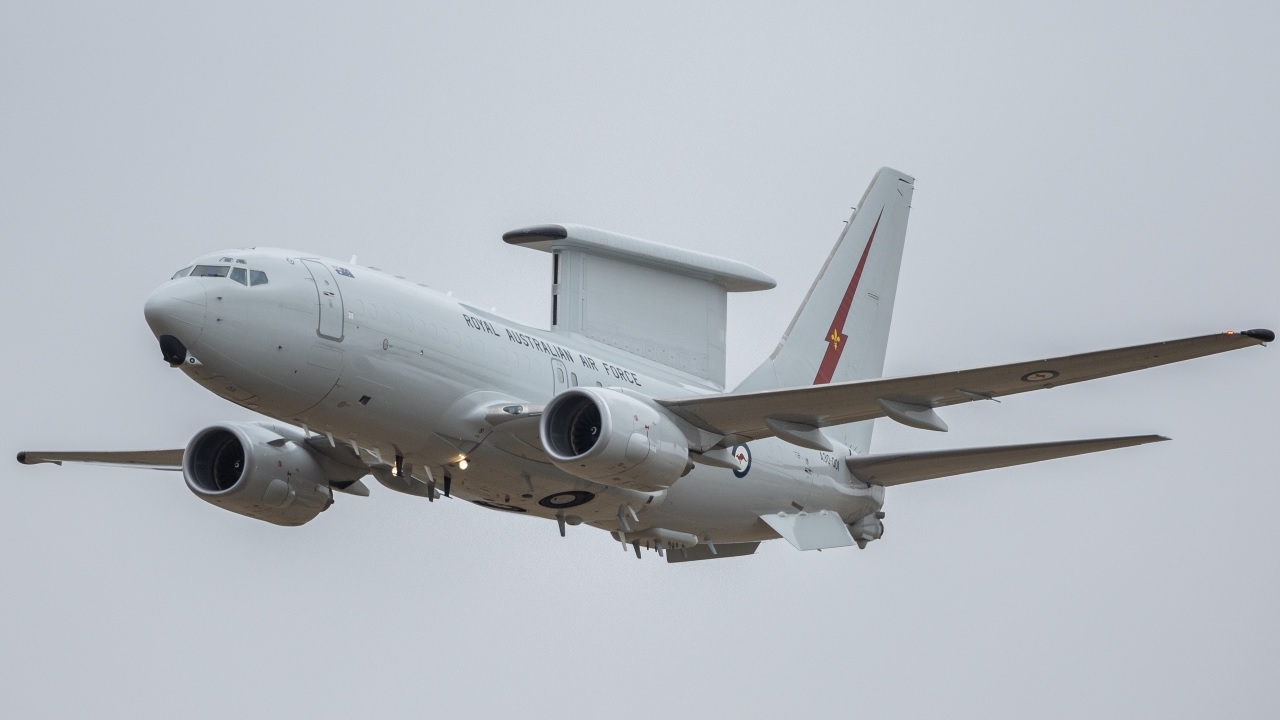
In a major milestone for the Royal Air Force (RAF), the first E-7 Wedgetail airborne early warning and control (AEW&C) aircraft, known as WT001, has successfully completed a key test flight. The RAF confirmed the achievement via social media, stating that the mission was conducted to verify the correct functioning of onboard systems.
This successful system validation flight marks a significant step in getting the UK’s latest airborne surveillance platform ready for full operational deployment. The E-7 Wedgetail, built on the Boeing 737-700 airframe, is fitted with the advanced Northrop Grumman MESA (Multi-role Electronically Scanned Array) radar, making it one of the most powerful AEW&C systems in the world.
Already operational in countries like Australia, South Korea, and Turkey, the E-7 is praised for its ability to track both air and maritime threats with high accuracy. The RAF describes it as “the most capable and effective airborne early warning and control platform in operation today.”
The E-7 is set to replace the retired E-3D Sentry fleet, which was withdrawn from RAF service in 2021, leaving a serious gap in long-range airborne surveillance and battle management capabilities. The new Wedgetails are expected to restore and enhance this critical function, offering faster response, longer range, and better situational awareness for both national defence and NATO operations.
While the UK originally planned to acquire five Wedgetail aircraft, that number was reduced to three as part of a 2021 defence spending cut, raising concerns about the RAF’s future operational capacity. However, officials have since reaffirmed their commitment to the platform and its strategic importance.
Defence Minister Maria Eagle, speaking before MPs on June 26, emphasised that the E-7 remains central to the UK’s defence plans. She confirmed that the Ministry of Defence (MoD) is actively working with the United States and Australia through trilateral working groups formed in 2022. A Joint Vision Statement was also signed in 2023 to ensure alignment between allied partners on the platform’s future development and integration.
Eagle further pointed out that the E-7 plays a vital role in the UK’s warfighting and NATO contributions, as stated in the recent Strategic Defence Review. She noted that expanding the RAF’s AEW&C capability is considered beneficial for both the UK and the NATO alliance.
To ensure proper oversight and project performance, the Wedgetail programme remains under the UK Government Major Project Portfolio. The MoD conducts frequent reviews to assess progress, risks, and future steps to ensure the programme delivers as expected.
With WT001's successful test flight now complete, the RAF moves closer to reintroducing airborne early warning capability, closing a crucial gap in its modern warfare toolkit, and reinforcing the UK's role in international air defence operations.
✍️ This article is written by the team of The Defense News.