UAE in Advanced Negotiations for Akash Missile System Amid Rising Saudi–UAE Tensions
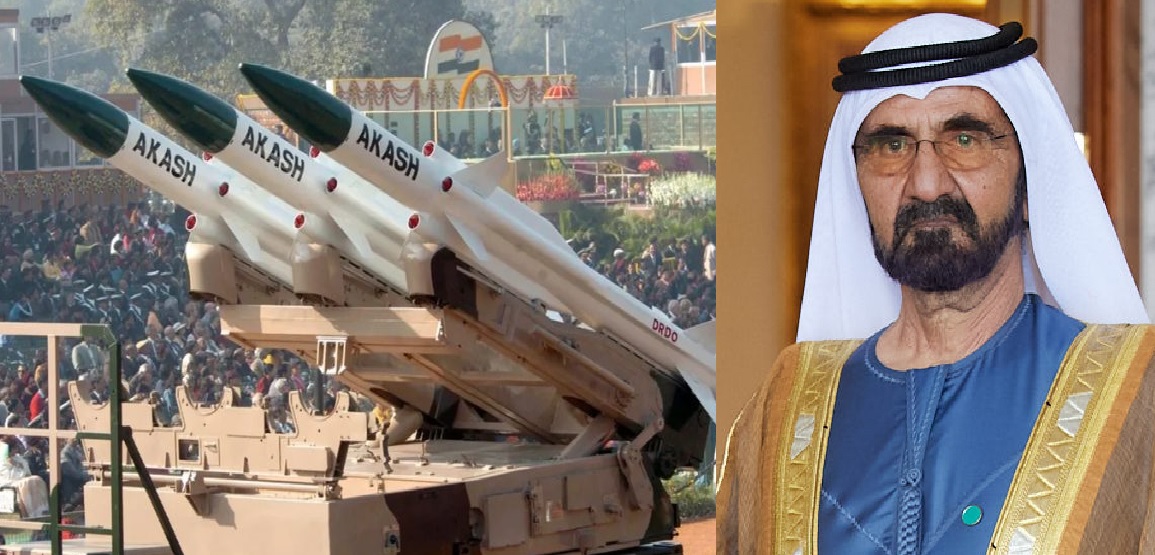
New Delhi / Abu Dhabi : The United Arab Emirates (UAE) is reported to be in advanced negotiations with India for the acquisition of the Akash medium-range air defence missile system, a move gaining urgency amid rising Saudi–UAE strategic frictions and an increasingly volatile regional security environment. The talks have been further accelerated by the combat-proven performance of Akash during India’s Operation Sindoor, which has drawn international attention to the indigenous system.
Defence and diplomatic sources say discussions have progressed beyond exploratory stages and are now focused on system variants, deployment architecture, training, delivery schedules and long-term sustainment. If concluded, the deal would represent one of the most consequential exports of a frontline Indian air defence platform to the Gulf region.
Regional Tensions Drive UAE’s Air Defence Push
The renewed Emirati interest in strengthening air defence capabilities comes against the backdrop of shifting power dynamics in the Gulf, where policy divergences and strategic competition between Saudi Arabia and the UAE have become more visible in recent years. While both nations remain partners in several regional frameworks, differences over regional influence, security priorities and military autonomy have prompted Abu Dhabi to reassess its defence posture.
Analysts note that these developments, combined with the proliferation of missiles, drones and precision-guided munitions in West Asia, have pushed the UAE to diversify its defence suppliers and reduce dependence on a narrow set of traditional partners. India, with its growing defence-industrial base and politically neutral profile, is increasingly viewed as a reliable and strategically flexible supplier.
Operation Sindoor Showcases Akash’s Battlefield Effectiveness
International attention on Akash intensified following its operational deployment during Operation Sindoor, India’s high-intensity military response to cross-border missile and drone attacks earlier this year. During the operation, Indian air defence units intercepted dozens of hostile aerial threats, including armed drones, cruise missiles and loitering munitions.
According to official briefings, one of the most significant interceptions involved a Pakistani Fatah-II missile, which was tracked and destroyed near Sirsa in Haryana. Defence experts say the successful engagements under real combat conditions provided strong validation of Akash’s reliability, radar integration and kill probability, sharply enhancing its attractiveness to foreign buyers.
Developed by the Defence Research and Development Organisation and manufactured by Indian defence firms, the Akash system offers an effective engagement range of 25–30 kilometres, with the ability to track and engage multiple targets simultaneously. Its high mobility and network-centric design make it well suited for defending air bases, energy infrastructure and urban centres.
Why Akash Fits UAE’s Defence Requirements
For the UAE, Akash addresses a critical requirement for short- to medium-range air defence capable of countering missile and drone threats targeting strategic assets. Indian officials say the system is being offered as part of a comprehensive package, potentially including operator training, maintenance support, spares provisioning and future upgrades.
The system’s cost-effectiveness, coupled with its combat-tested credentials, gives it an edge over several competing options. The talks also align with India’s broader ambition to expand defence exports under the “Make in India” initiative. India achieved record defence exports of ₹23,622 crore (approximately US$2.8 billion) in FY 2024–25, with missiles and air defence systems emerging as flagship offerings.
Indian Weapons And The UAE: Interest Versus Confirmed Induction
Despite steadily expanding defence ties, there is no publicly confirmed induction of a major Indian missile system into UAE military service so far. Abu Dhabi has previously shown interest in Indian platforms such as the BrahMos supersonic cruise missile, Akash air defence systems, and indigenous radars and electronic warfare solutions, but these engagements have largely remained at the evaluation and negotiation stage.
A successful Akash deal would therefore mark the first confirmed large-scale purchase of an Indian missile system by the UAE, signalling a meaningful shift in the regional defence market.
Strategic Implications For India And The Gulf
A UAE acquisition of Akash would carry significant strategic weight. For Abu Dhabi, it would strengthen layered air defence coverage and enhance autonomy amid regional rivalries. For India, it would reinforce its position as a credible defence exporter and deepen strategic engagement with a key Gulf power at a time of evolving Middle Eastern alignments.
Defence analysts emphasise that any final agreement is likely to include integration with existing air defence networks, rules of engagement, and long-term logistics arrangements, factors that will be closely monitored across the region.
Outlook
While negotiations are described as advanced, officials caution that final approvals and contract signing are still pending. Greater clarity is expected in the coming months on order size, delivery timelines and potential local maintenance or industrial collaboration.
For now, the talks highlight a broader shift: India’s indigenous, combat-proven weapon systems—led by Akash—are emerging as serious contenders in the global defence market, shaped not only by battlefield performance but also by changing geopolitical realities in the Gulf.
About the Author
Aditya Kumar:
Defense & Geopolitics Analyst
Aditya Kumar tracks military developments in South Asia, specializing in Indian missile technology and naval strategy.