UAE Nears KF-21 Deal, Egypt Set to Buy FA-50 as South Korea Expands Defence Influence
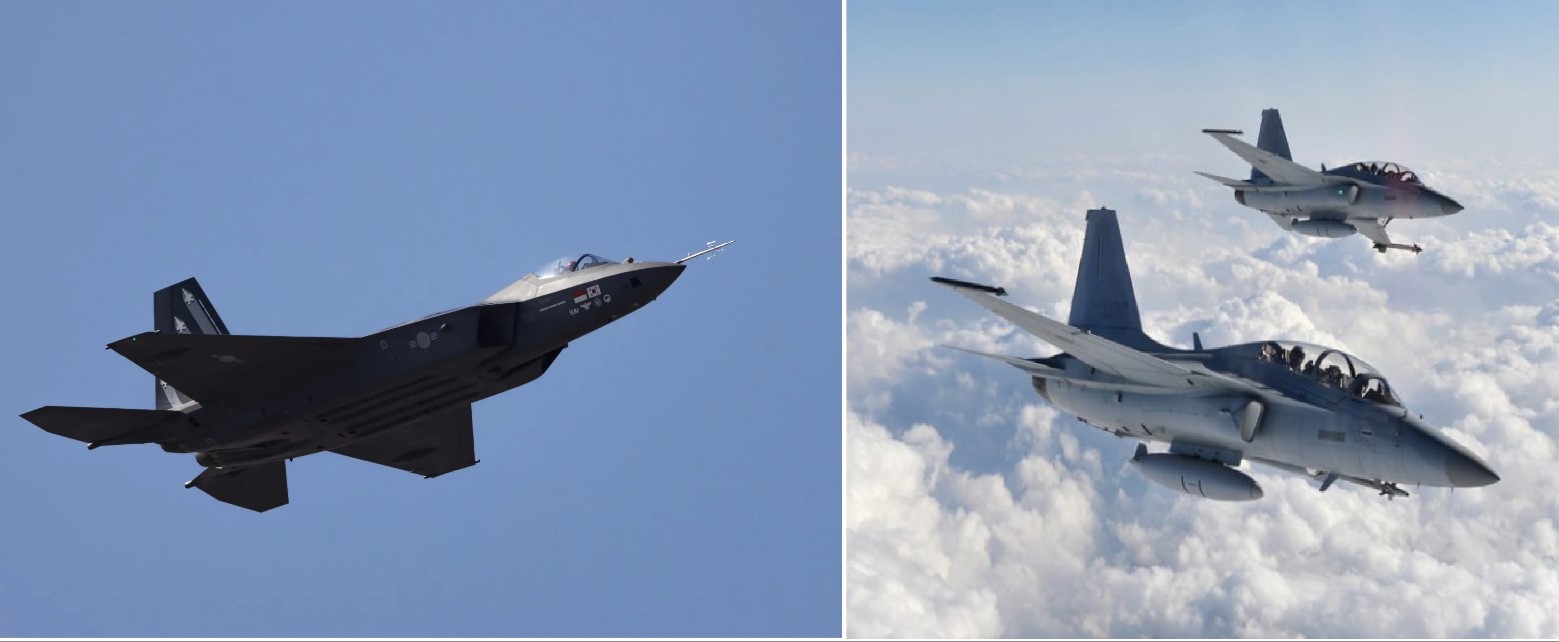
South Korea’s accelerating push into the global fighter jet market appears to be paying off, with the UAE reportedly on the verge of purchasing the KF-21 Boramae, while Egypt is said to be in the final phase of acquiring the FA-50 light combat aircraft. These moves follow President Yoon Suk-yeol’s recent visits to Abu Dhabi and Cairo, during which large-scale military cooperation—beyond just aircraft sales—was a central focus.
The United Arab Emirates is now “very close” to signing a contract for the KF-21, South Korea’s 4.5-generation multirole fighter. Abu Dhabi’s interest builds on its already long-standing partnership with Seoul across defence technology, missile defence, nuclear power, and advanced weapons development. The UAE currently operates South Korean M-SAM-II ballistic missile interceptors and Korean strike missile systems, and the relationship has expanded into areas such as UAV development, electronic warfare systems, and counter-missile technologies.
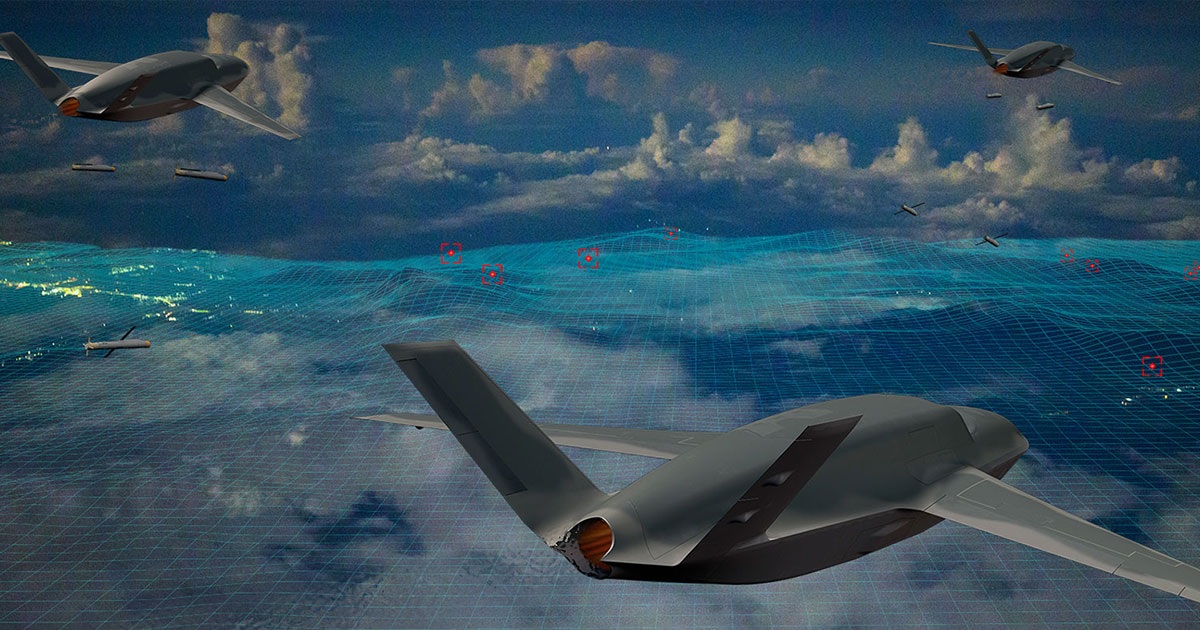
If the UAE proceeds with the KF-21 purchase, it would gain a major boost to its long-range precision strike capability and greater access to high-grade South Korean and Western air-launched missiles. The cooperation is also expected to open doors to next-generation fighter development programs and advanced UCAV integration, marking one of the most significant aerospace partnerships South Korea has ever secured in the Middle East.
Egypt, meanwhile, is reportedly even closer than the UAE to finalizing its purchase of the FA-50 Fighting Eagle. Cairo has already bought South Korea’s K9 Thunder self-propelled howitzers, and the FA-50 deal is expected to include aircraft, TAipers air-to-surface missiles, and potential agreements for extended maintenance, pilot training, and technical support. The FA-50’s affordability, operational versatility, and compatibility with modern Western systems make it an attractive option as Egypt continues modernizing its diverse fighter inventory.
These developments come as Saudi Arabia appears to be moving toward the U.S. F-35, though Riyadh has not disengaged from Korea. Saudi officials remain in dialogue with Seoul on future defence collaboration, including possible participation in KF-21 component production, UAV technologies, and other aerospace programs.
To meet rising global demand, Korea Aerospace Industries (KAI) has expanded its production capacity for both the FA-50 and the KF-21. The FA-50 backlog continues to grow after recent large purchases from Poland and Malaysia, with several nations—including Egypt, the Philippines, and Colombia—engaged in ongoing discussions. The KF-21 has active cooperation tracks with the Philippines, Malaysia, and Saudi Arabia, all exploring long-term aerospace development partnerships.
Indonesia, originally a co-developer expected to fund 20% of the KF-21 program, appears to have been relegated to the status of a general buyer after repeatedly delaying payments and failing to meet agreed milestones. While Jakarta still expresses interest in purchasing the aircraft, its influence on the program has significantly diminished.
The KF-21 Boramae is designed to replace South Korea’s aging F-4 and F-5 fleets and operate alongside modern platforms such as the F-35A Freedom Knight and F-15K Slam Eagle. It is being configured to integrate advanced armaments such as the Meteor BVRAAM, AIM-120 AMRAAM, long-range precision-strike weapons, and future indigenous missiles. With multiple interested customers and expanding regional partnerships, the KF-21 is positioned to become one of the most influential Asian fighter programs of the coming decade.
If the UAE and Egypt finalize their respective deals, South Korea could establish a powerful new defence triangle connecting Seoul, Abu Dhabi, and Cairo, strengthening cooperation in aviation, missile defence, and joint production. This would mark one of the largest expansions of South Korea’s defence export footprint and reinforce its status as a rising global leader in next-generation military aviation.
About the Author
Aditya Kumar:
Defense & Geopolitics Analyst
Aditya Kumar tracks military developments in South Asia, specializing in Indian missile technology and naval strategy.