UAE Cuts State Funding For Students Heading To The UK Over Islamist Radicalisation Fears
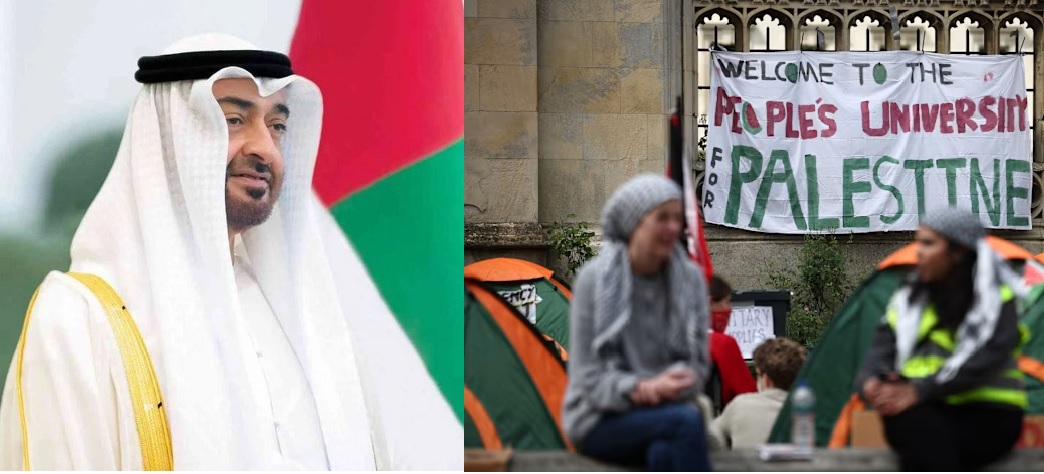
Abu Dhabi / London : The United Arab Emirates (UAE) has decided to cut state funding and official degree recognition for students seeking to study in the United Kingdom, citing fears that British university campuses have become vulnerable to Islamist radicalisation, particularly by groups linked to the Muslim Brotherhood.
The move marks a striking reversal in educational ties and reflects a broader security-driven reassessment by Abu Dhabi, with an Arab state now effectively treating a major European education hub as a potential ideological risk zone.
Policy Shift Confirmed By UAE Authorities
The decision is formalised through an updated list issued by the UAE Ministry of Higher Education and Scientific Research, which determines which foreign universities qualify for federal scholarships and automatic degree recognition. Under the revised framework, UK universities have been removed from the approved list.
UAE officials have confirmed through diplomatic channels that the exclusion is intentional and based on national security considerations, not academic standards. Emirati authorities argue that some British campuses provide space for Islamist networks to operate openly, influence student communities and promote political ideologies viewed by the UAE as destabilising.
Students may still enrol in the UK using private funding, but degrees obtained without state approval may no longer be recognised for government employment, licensing or public-sector careers back home.
Why The UAE Sees The UK As A Security Concern
The UAE has maintained a zero-tolerance policy toward the Muslim Brotherhood for more than a decade, designating it a terrorist organisation and dismantling affiliated structures domestically. Emirati leaders view the movement not only as a political rival but as a long-term ideological threat capable of influencing youth through activism, student organisations and public discourse.
From Abu Dhabi’s perspective, the UK has emerged as one of Europe’s most permissive environments for Brotherhood-linked figures and groups, particularly within universities. Emirati officials argue that academic freedom in Britain has unintentionally allowed Islamist narratives to spread under the guise of debate, activism and free expression.
This assessment has driven the UAE’s conclusion that young Emirati students studying in the UK could be exposed to ideological currents incompatible with the country’s internal security doctrine.
Impact On Student Numbers And Universities
The consequences are already visible in student mobility data. UK visa statistics show a sharp decline in Emirati students in 2025, reversing several years of growth. Analysts say the removal of state-funded Emirati students will affect not only enrolment numbers but also the financial stability of some UK institutions increasingly reliant on international tuition fees.
For Emirati students, the shift is more direct. Many scholarship recipients are now being redirected to universities in the United States, Australia, France and other approved destinations, while UK degrees risk losing value within the UAE’s public and regulated private sectors.
UK Response And Strategic Divide
British officials and university leaders have reacted with concern, warning that the decision undermines academic exchange and long-standing educational ties. The UK government has historically resisted pressure to ban the Muslim Brotherhood outright, maintaining that lawful political or academic activity does not automatically equate to extremism.
This divergence highlights a deeper strategic and ideological gap. For the UAE, the issue is framed as preventive national security. For the UK, it remains bound to civil liberties, freedom of expression and academic autonomy.
A Broader Diplomatic Signal
Beyond education, the decision is widely interpreted as a diplomatic message. By leveraging scholarships and degree recognition, the UAE is signalling that its partnerships — even with close Western allies — are increasingly conditioned on alignment over Islamist extremism.
As this policy takes effect, British universities face the prospect of reduced access to state-funded Gulf students, while London confronts growing pressure from regional partners to reassess how political Islam is managed within its borders.
About the Author
Aditya Kumar:
Defense & Geopolitics Analyst
Aditya Kumar tracks military developments in South Asia, specializing in Indian missile technology and naval strategy.