Turkey Begins Construction of First Naval Ship Export to Portugal
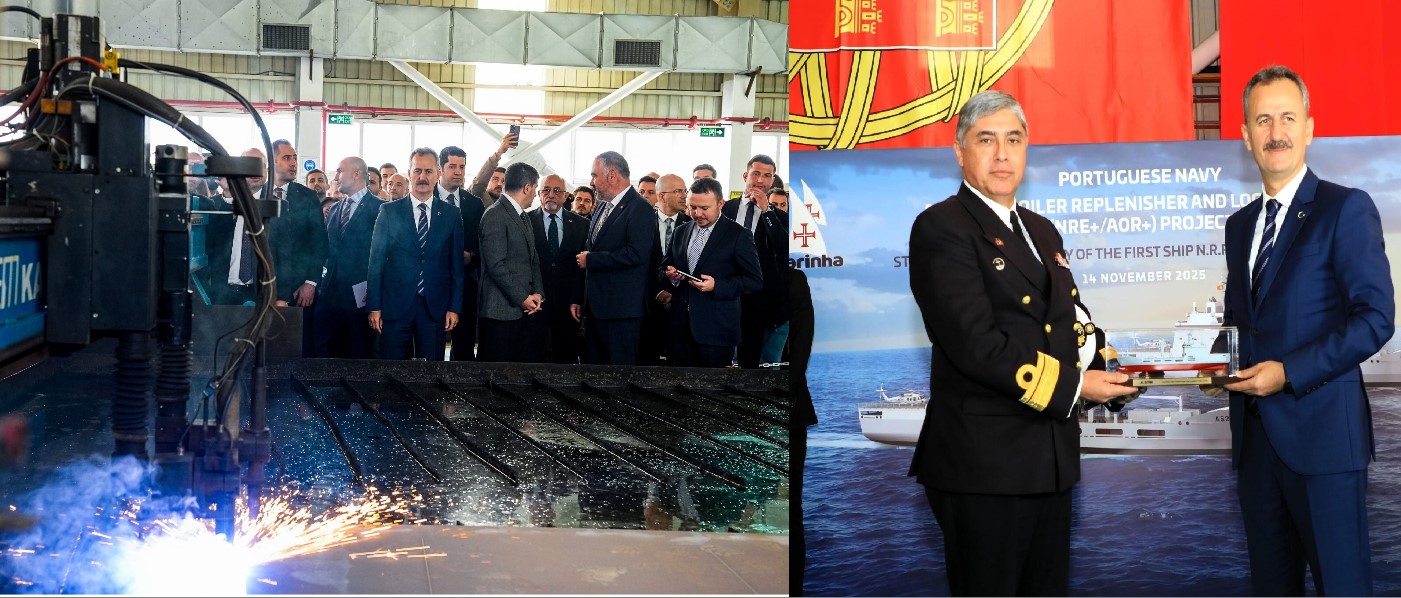
Turkey has formally begun steel cutting for two naval support vessels ordered by Portugal, marking the first military ship export from Ankara to a European Union and NATO member-state. The step follows a contract signed in Lisbon in December 2024 and represents growing technical and industrial cooperation between the two countries.
Long-Range Auxiliary Vessels for Portugal
The two ships under construction are Auxiliary Oiler and Logistics Vessels, designed to operate across long distances and support a wide range of naval missions.
Key features of the vessels include:
-
14,000 nautical mile range at an economical speed of 14 knots
-
Capability for replenishment at sea, logistics support, and amphibious operations
-
Facilities for medical assistance, search and rescue, and humanitarian relief
-
Capacity to carry up to 20 light armored vehicles
-
A flight deck and hangar suitable for helicopters and unmanned aerial vehicles
Once completed, the vessels will significantly improve Portugal’s ability to sustain naval operations in the Atlantic and participate in extended NATO missions.
Turkish Industry Participation and Delivery Timeline
Around 30 Turkish companies are contributing to the project, with STM serving as the prime contractor. The company has confirmed the delivery schedule:
-
First vessel: in 36 months
-
Second vessel: in 44 months
This places deliveries between 2027 and 2028, depending on shipyard progress.
The project reflects Turkey’s rising presence in the international shipbuilding and defense markets, particularly in logistical and support vessel categories.
Part of Turkey’s Expanding Defense Export Portfolio
The Portugal program adds to a series of recent export successes for Turkey’s defense industry.
-
Turkish Aerospace Industries has delivered Anka-S armed drones to Qatar and Azerbaijan, enhancing both countries’ surveillance and operational capabilities.
-
STM previously exported MILGEM Ada-class corvettes to Pakistan under a long-term cooperation framework.
-
Roketsan continues to supply precision-guided munitions and short-range missile systems to Morocco.
These exports illustrate Turkey’s effort to broaden its defense partnerships and supply advanced systems to a wider range of international customers.
Strengthening Ties Within NATO
For Portugal, the new vessels support its long-term naval modernization goals and strengthen its ability to participate in NATO maritime operations. For Turkey, the contract marks a useful opening into European defense procurement and highlights compatibility between Turkish naval engineering and NATO operational standards.
With steel cutting now underway, both countries enter a practical phase of cooperation that is expected to continue over the next several years as the ships progress through construction and testing.
About the Author
Aditya Kumar:
Defense & Geopolitics Analyst
Aditya Kumar tracks military developments in South Asia, specializing in Indian missile technology and naval strategy.