Trump’s Tilt Toward Pakistan: Personal Profits Over U.S. Interests and the Risk of Alienating India
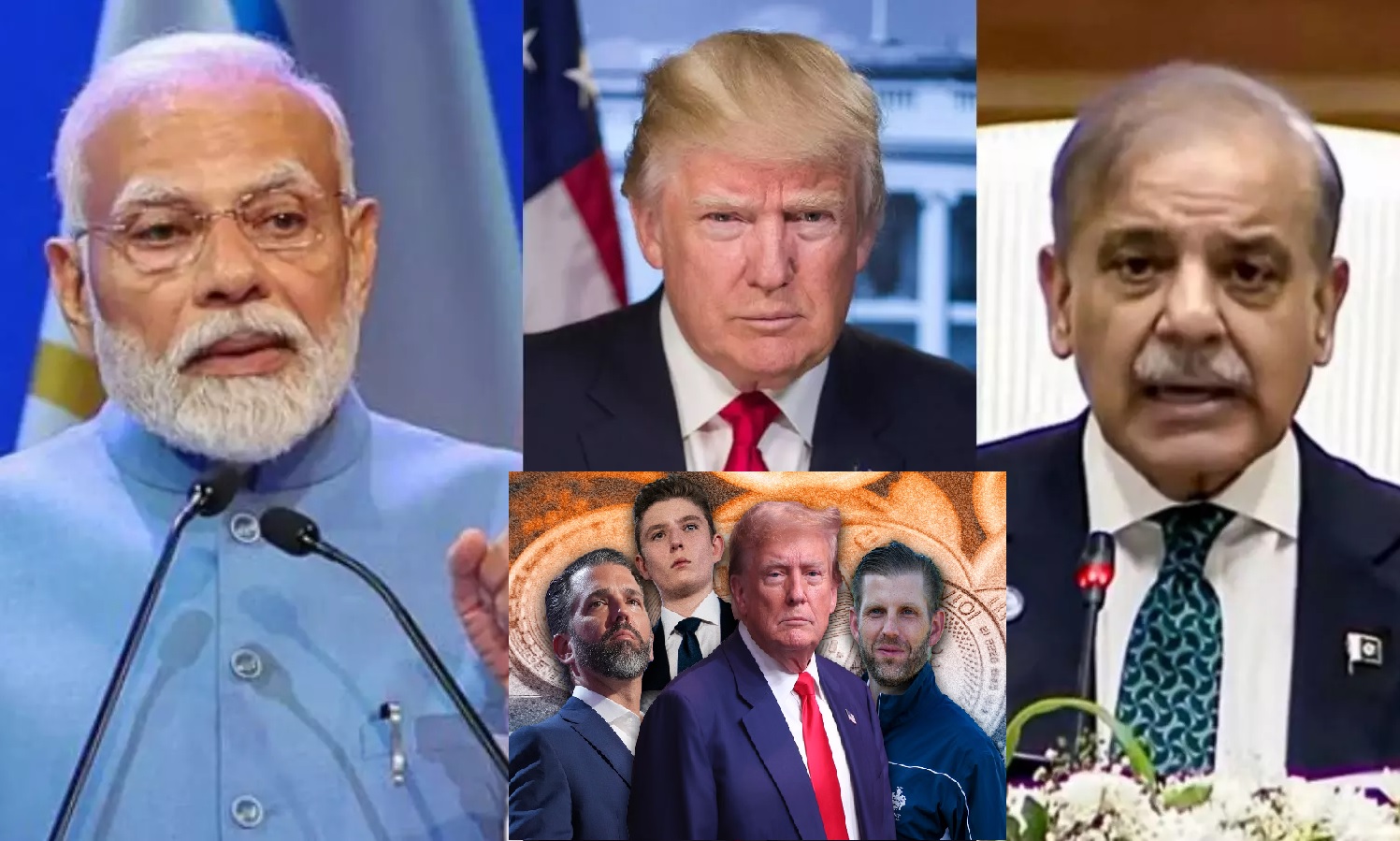
In a move that has rattled foreign policy experts and strategic analysts alike, former U.S. President Donald Trump has once again injected personal business interests into America’s foreign affairs—this time potentially endangering the fragile but crucial U.S.-India strategic partnership. His recent overtures toward Pakistan, notably his public offer to mediate on Kashmir following a terror attack in India’s Pahalgam region, have raised questions not just about diplomacy, but about conflicts of interest involving his family’s lucrative crypto deal with Islamabad.
At the heart of this growing controversy is a shadowy crypto partnership between Pakistan’s government and World Liberty Financial (WLF)—a blockchain firm majority-owned by Trump’s sons Eric Trump, Donald Trump Jr., and Jared Kushner through DT Marks DEFI LLC. This alliance, inked in April 2025, has cast a long shadow over Trump's geopolitical motives and may have long-lasting consequences for the United States if not checked.
When Business Interests Trump National Interests
The deal between WLF and the Pakistan Crypto Council (PCC) is not some small blockchain experiment. It's a strategic tech and monetary alliance involving Pakistan’s military, political leadership, and global crypto infrastructure, with over $1.6 billion in potential value. It includes:
-
Development of a Pakistani stablecoin (USD1) for digital trade
-
Tokenization of assets (real estate, minerals)
-
A massive commitment of 2,000 MW of power to crypto mining
-
Possible secret resource exchange deals
Donald Trump Jr. and Eric Trump are the beneficiaries of more than 75% of WLF’s revenue, making the family directly financially dependent on the success of the Pakistan deal.
Just days after this agreement was signed—with Pakistani Army Chief Asim Munir personally present—Trump publicly offered to mediate in Kashmir, reversing his previous pro-India stance. This occurred shortly after a terrorist attack in Pahalgam, where Indian civilians were killed, prompting India's military response—Operation Sindoor—across the Line of Control.
The timing is not coincidental. The Trump family’s business stood to gain global legitimacy if Pakistan appeared peaceful, economically reforming, and strategically supported by U.S. narratives. Hence, Trump’s "neutrality" was not a geopolitical calculation—but a corporate marketing move.
Strategic & Ethical Implications
-
The timing of the deal—days before diplomatic escalation following the Pahalgam terror attack and India’s military operation Operation Sindoor—raised eyebrows when President Trump publicly offered to mediate between India and Pakistan, undercutting questions about motives and optics .
-
U.S. lawmakers, led by Senator Richard Blumenthal, have initiated a Senate investigation into possible conflicts of interest, coordination with diplomatic missions, and undocumented communications between WLF and Pakistani leaders. Since May 6, the Senate Permanent Subcommittee on Investigations has requested WLF communications, which the firm has not fully complied with Wall Street
Who Are the Key Players?
| Name | Role / Connection |
|---|---|
| WLF Ownership | ~60 % held by Trump family through DT Marks DEFI LLC; owns ~75 % of revenue rights |
| Zachary Witkoff | Co‑founder and delegation head; son of longtime Trump ally Steve Witkoff, now U.S. special envoy for crypto affairs |
| Binance Founder “CZ” | Changpeng Zhao was appointed strategic advisor to the PCC before the WLF deal; WLF’s USD1 stablecoin is linked to Binance’s blockchain |
| Gentry Beach Jr. | Friend of Donald Trump Jr.; led investor delegations to Pakistan, Bangladesh, Turkey for rare-earth and crypto sector investments, sometimes overlapping with WLF outreach |
Why This Hurts U.S. Interests
India is not just another country—it is:
-
America’s largest defense buyer among democracies
-
A $3.7 trillion economy poised to become the world’s third-largest by 2027
-
A counterbalance to China in the Indo-Pacific
-
A critical partner in semiconductors, clean energy, AI, and space tech
Alienating India for short-term crypto deals in Pakistan risks:
-
Jeopardizing QUAD cooperation (U.S., India, Japan, Australia)
-
Weakening U.S. foothold in the Indian Ocean Region, where China is expanding rapidly
-
Losing massive U.S. investments in India’s defense, aviation, tech, and infrastructure sectors
India’s Response: BRICS and the Dollar Dilemma
India has already been working with BRICS nations to create a common currency for global trade as an alternative to the U.S. dollar. If ties with the U.S. sour, India could accelerate dedollarization, particularly in energy imports and arms deals with Russia and UAE, using currencies like the rupee, yuan, or BRICS token.
If India supports dedollarization:
-
The dollar’s global reserve status could be undermined, especially in the Global South
-
U.S. inflation could spike, and the Federal Reserve’s monetary tools could weaken
-
U.S. sanctions would lose their power, diminishing American geopolitical leverage
India holds $619 billion in foreign reserves and has successfully used rupee-based trade with Russia and the UAE, setting the stage for a wider shift away from the dollar.
The Bigger Picture: A Personal Mistake with Global Impact
Donald Trump’s track record of blending business with politics is well-known. From Mar-a-Lago hosting foreign dignitaries to his dealings with Saudi royals during arms talks, Trump’s diplomacy often benefited Trump Inc. Now, his sons’ crypto ambitions in Pakistan have sparked:
-
A U.S. Senate investigation into foreign influence and lobbying violations
-
Backlash from Indian diplomats who see U.S. neutrality as a betrayal
-
Anger within the U.S. strategic community, which sees this as undermining decades of effort in building India as a regional ally
Trump may believe that crypto mining and tokenization in Pakistan represent future wealth. But alienating India, a democratic nuclear power and economic giant, could prove far more costly.
Donald Trump’s Pakistan pivot is not about peace or strategy—it’s about protecting a family business interest that conflicts with America’s global interests. By taking a stance that favors a known state-sponsor of terrorism over a vital democratic partner like India, Trump risks sabotaging not only bilateral ties but also America’s influence in the 21st-century world order.
If India turns toward BRICS-led financial structures, and further reduces dollar dependence, it could ignite a cascading shift in global economics, threatening the very foundation of American economic hegemony.
Trump’s short-term gain may turn out to be a long-term strategic disaster—for the U.S., its allies, and the global balance of power.
✍️ This article is written by the team of The Defense News.