Trump’s Return Fuels Anxiety in Seoul as US-South Korea Alliance Faces New Strains
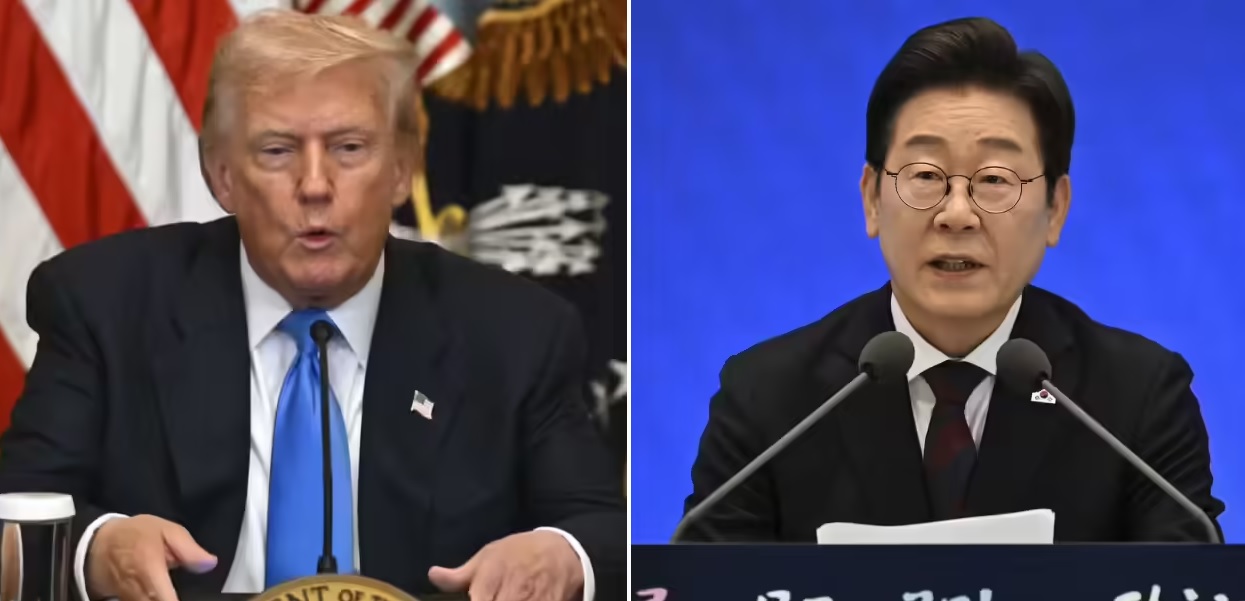
The return of Donald Trump to the White House has reignited deep unease in South Korea, casting doubt over the future of what was once described as the “ironclad” US-ROK alliance. Trump’s renewed focus on transactional diplomacy, burden-sharing, and strategic returns over mutual trust is reshaping the security dynamics on the Korean Peninsula at a time when North Korea’s nuclear threat is escalating.
Conditional Security Under Trump
Trump has already reopened contentious cost-sharing negotiations, demanding that South Korea pay significantly more to host nearly 28,500 US troops stationed on its soil. At the same time, his administration has hinted at a possible reassessment of extended nuclear deterrence, long considered the backbone of South Korea’s security. This has fueled fears in Seoul that US protection now comes with conditions, leaving questions about how reliable American support would be in a crisis.
Rising North Korean Threats
The timing could not be worse for Seoul. North Korea is expanding its nuclear arsenal at an alarming pace, testing tactical nuclear weapons, hypersonic missiles, and submarine-launched systems. Pyongyang’s growing defense ties with Russia, reportedly involving arms and technology exchanges, further complicate deterrence calculations. These advances increase doubts in South Korea over whether Washington would respond decisively in a limited nuclear scenario, especially under Trump’s more transactional worldview.
Seoul Turns to Self-Reliance
In response, Seoul is accelerating efforts under its three-axis defense strategy — focusing on preemptive strike capabilities, missile defense, and retaliatory strike options. South Korea is also strengthening its surveillance and reconnaissance systems to ensure faster crisis response. While the Nuclear Consultative Group with Washington remains active, the lack of unequivocal US guarantees has pushed Seoul toward strategic autonomy.
Strategic Divergence With Washington
Trump’s approach also highlights diverging priorities between the allies. While Washington expects Seoul to play a larger role in its Indo-Pacific strategy against China, South Korea remains cautious, reluctant to jeopardize its deep economic ties with Beijing. This divergence complicates joint military planning and risks creating gaps in deterrence during future regional crises. Seoul’s hesitation to join US-led patrols in the Taiwan Strait or South China Sea has already raised questions in Washington about South Korea’s commitment to “shared goals.”
Industrial Friction Growing
Tensions extend beyond strategy into the defense industry. Trump is expected to pursue a harder “America First” procurement policy, potentially limiting technology transfers and prioritizing US firms over allies. South Korea’s booming arms exports — including deals with Poland, the UAE, and Australia — are increasingly seen as competition rather than cooperation by Washington. This risks undermining ongoing joint projects and defense innovation partnerships, pushing both sides toward protectionism rather than collaboration.
Seoul’s Narrowing Choices
With alliance predictability weakening, Seoul faces limited options. It could move to institutionalize deeper military integration with the US, making abandonment politically costly. Alternatively, South Korea may seek to diversify its security ties, expanding cooperation with Australia, the UK, NATO, and ASEAN partners. Most controversially, there is growing public debate in Seoul about pursuing an independent nuclear deterrent — a move that would face strong international opposition but underscores South Korea’s determination to ensure survival in an uncertain security environment.
Preparing for Uncertainty
Trump’s second term has not only shaken confidence in the US-ROK alliance, but also exposed South Korea’s vulnerabilities in relying too heavily on a single guarantor. In an Indo-Pacific region increasingly defined by nuclear brinkmanship, cyber conflict, and great-power rivalry, Seoul is being forced to rethink its long-term strategy.
Going forward, strategic autonomy, defense self-reliance, and diversified partnerships will likely become the cornerstones of South Korea’s national security policy. In Trump’s world, loyalty is negotiable — but for Seoul, deterrence must be guaranteed, not promised.
✍️ This article is written by the team of The Defense News.