Trump and Putin Advance Secret Ukraine Deal, Proposals Favor Major Russian Demands
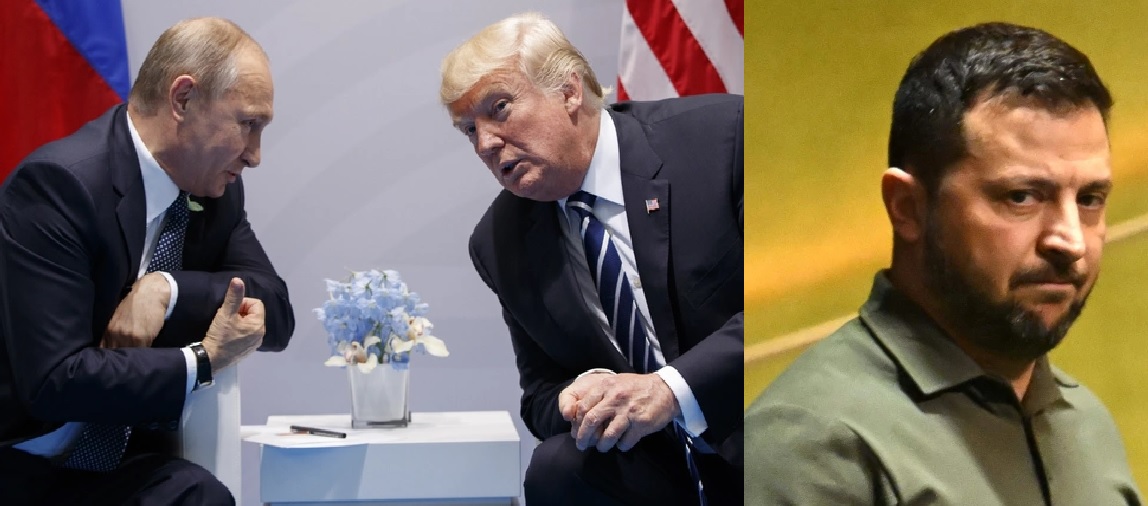
A sweeping and highly controversial diplomatic effort is unfolding behind closed doors as U.S. President Donald Trump and Russian President Vladimir Putin work on a secret 28-point peace plan to end the war in Ukraine — a plan that, according to multiple reports, is built largely on Russian conditions.
First revealed by Axios and further supported by reporting from the Financial Times and Reuters, the emerging proposal would mark the most dramatic shift yet in U.S. policy toward the conflict, and one that has already alarmed Ukraine and unsettled America’s European allies.
Recognition of Russian-Controlled Territories at the Center of the Draft Plan
Sources briefed on the negotiations say the draft plan includes a cornerstone concession:
U.S. and European recognition of Crimea and much of Donbas as legitimate Russian territory.
Such recognition has been a core Russian demand since its 2014 annexation of Crimea and its 2022–25 campaign in eastern Ukraine. For years, Washington firmly rejected any discussion of legitimizing the annexations. Now, the Trump administration appears willing to consider it as part of a broader settlement framework.
Deep Cuts to Ukraine’s Military Capabilities
Another major element of the plan reportedly demands that Ukraine:
-
Reduce its armed forces by 50%.
-
Remove all long-range missiles and ensure no foreign missile systems are stationed on Ukrainian soil.
-
Prohibit NATO combat aircraft and foreign military bases within Ukraine.
These measures would dramatically reshape Ukraine’s defence posture, leaving it with limited ability to deter a future Russian offensive.
According to European officials cited in Reuters, the plan mirrors elements of a Gaza-inspired ceasefire model built on phased demilitarization and external monitoring.
Cultural and Political Concessions: Language and the Church
Moscow is also pushing for cultural and political guarantees:
-
Russian to be declared an official state language in Ukraine.
-
The Russian Orthodox Church to be granted formal status and freedom of operation.
Both conditions strike at the core of Ukraine’s national identity and sovereignty, making them among the most politically explosive components of the emerging deal.
Though U.S. officials have not confirmed these points, Financial Times reporting describes them as part of Russia’s demands communicated during talks.
Negotiations Held Quietly, Away From European Allies
The talks, according to Axios, have taken place largely without Europe’s direct involvement. U.S. envoy Steve Witkoff reportedly met Russian sovereign-wealth fund chief Kirill Dmitriev in Miami in October, where work on the document accelerated.
European leaders have expressed concern that Washington and Moscow are negotiating “behind Europe’s back,” sidelining nations that have provided billions in aid and borne the brunt of the war’s fallout.
A French official told Le Monde that Europe “cannot accept a plan imposed on Ukraine,” warning that a deal dominated by Russian preferences risks abandoning core European security principles.
Ukraine Responds With Alarm and Rejection
Kyiv has reacted sharply to the reported conditions, warning that the emerging peace plan would amount to a historic setback for the country. Ukrainian officials argue that the proposal would legitimize Russia’s territorial conquests in Crimea and Donbas while simultaneously dismantling Ukraine’s military strength through forced reductions and strict limits on defense capabilities. They warn that accepting such terms would compromise Ukraine’s sovereignty at its core, effectively reducing the nation to a subordinate geopolitical position under Moscow’s influence.
President Volodymyr Zelensky’s office has insisted that Ukraine will not accept any agreement recognizing Russian annexations or restricting the country’s sovereign right to defend itself. Ukrainian analysts further contend that embracing the plan would encourage future Russian aggression and undermine decades of international law designed to deter territorial expansion by force.
Trump’s Objective: End the War Quickly
According to U.S. sources quoted by Reuters, President Trump sees the conflict as “a senseless war draining global stability” and believes a direct deal with Putin is necessary for rapid de-escalation.
The 28-point plan reportedly aims to:
-
Establish a long-term ceasefire
-
Define a new European security architecture
-
Reset U.S.–Russia relations
-
Clarify Ukraine’s future military posture
Yet the secrecy surrounding the negotiations has raised questions about transparency, alliance unity, and the degree of Ukrainian participation.
What Happens Next?
The Trump administration is expected to present a formal version of the plan to Kyiv in the coming weeks. Analysts believe Ukraine may refuse the terms outright, leaving Washington and Moscow to decide how to proceed.
European diplomats worry that if the U.S. pressures Ukraine to accept the deal, it could fracture NATO unity and lead to political turmoil across multiple capitals.
For now, the world waits to see whether this behind-the-scenes diplomacy results in a breakthrough — or a geopolitical crisis of its own.
About the Author
Aditya Kumar:
Defense & Geopolitics Analyst
Aditya Kumar tracks military developments in South Asia, specializing in Indian missile technology and naval strategy.
Top 6 Latest Posts



Leave a Comment: Don't Wast Time to Posting URLs in Comment Box

