Trump Withdraws National Guard From Chicago, Los Angeles and Portland After Court Setbacks
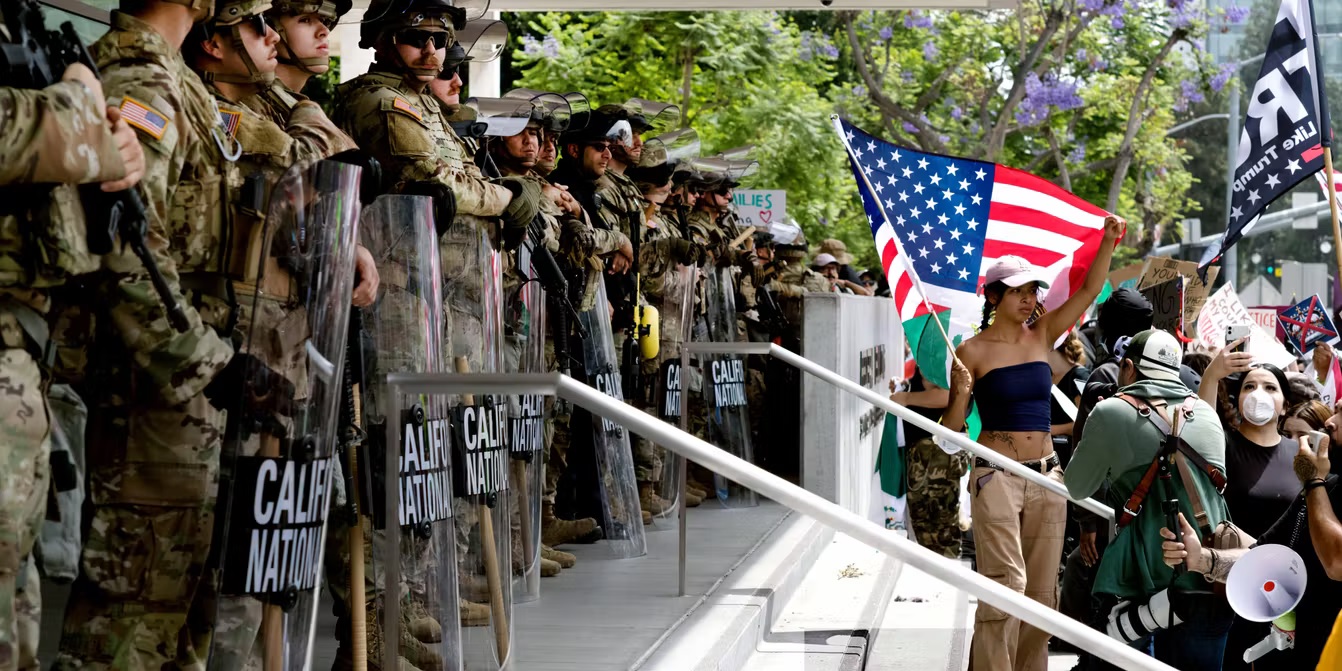
WASHINGTON: President Donald Trump on Wednesday announced the withdrawal of National Guard troops from Chicago, Los Angeles and Portland, marking a significant reversal in his administration’s controversial domestic security strategy following a string of adverse court rulings.
In a post on social media, Trump said the deployments had contributed to a reduction in crime in the three cities, but warned that federal forces could return if crime rates rise. “We are removing the National Guard… despite the fact that crime has been greatly reduced by having these great patriots in those cities,” he wrote, adding that a renewed deployment could occur “in a much different and stronger form” if crime “begins to soar again.”
Legal Pressure Forces Policy Shift
The decision came amid mounting legal pressure on the White House. Federal judges overseeing lawsuits filed by cities and states repeatedly ruled that the administration had exceeded its authority by deploying National Guard troops without state consent. Courts also found insufficient evidence to support claims that federal property or personnel faced threats requiring military protection.
Hours before Trump’s announcement, a federal appellate court ordered the return of hundreds of California National Guard troops to the control of Gavin Newsom, dealing a major blow to the administration’s legal justification for the deployments. Earlier, the U.S. Supreme Court blocked the president’s attempt to deploy National Guard forces in Illinois, stating that federal control of state Guard units likely applies only in “exceptional” circumstances.
In its unsigned order, the Supreme Court said the government had failed, at least at this stage, to identify a lawful basis allowing the military to execute domestic laws in Illinois, a finding that weakened similar deployments elsewhere.
Local Leaders Reject Crime Claims
Democratic leaders in the affected cities said the withdrawals were the direct result of legal defeats rather than improved public safety. Officials in Chicago pointed to city data showing that violent crime in 2025 fell 21.3% compared with 2024, marking the lowest level in more than a decade. Mayor Brandon Johnson’s office said the statistics contradicted the administration’s claims that federal troops were necessary.
Newsom’s office dismissed Trump’s announcement as political posturing, saying the courts had already stripped the administration of its authority to maintain the deployments. “This was compelled by the rule of law,” a spokesperson said, adding that California had consistently opposed federal control of its Guard forces.
Background of the Deployments
Trump began deploying National Guard troops in June 2025, initially in response to protests against his hardline immigration policies and later expanding the mission to include crime prevention and the protection of federal facilities. In addition to Chicago, Los Angeles and Portland, troops were also sent to Washington, D.C. and Memphis, with the president citing what he described as rampant crime despite local statistics showing mixed or declining trends.
Military officials have gradually scaled back the operations in recent months as ongoing litigation left the deployments in legal limbo. Several lawsuits remain active, challenging the scope of presidential authority to federalize National Guard units without state approval.
Ongoing Debate Over Federal Power
While the withdrawal ends the Guard’s presence in three major cities, Trump’s warning that federal forces could return underscores the continuing political and legal debate over the use of the military in domestic law enforcement. Legal scholars say the recent court rulings reaffirm long-standing limits on executive power, while supporters of the deployments argue the president must retain broad authority to respond to unrest.
For now, the pullback marks a rare retreat for the administration, driven less by policy change than by decisive intervention from the courts.
About the Author
Aditya Kumar:
Defense & Geopolitics Analyst
Aditya Kumar tracks military developments in South Asia, specializing in Indian missile technology and naval strategy.