Trump Revives U.S. Push for Greenland, Rekindling a Century-Old Arctic Power Struggle

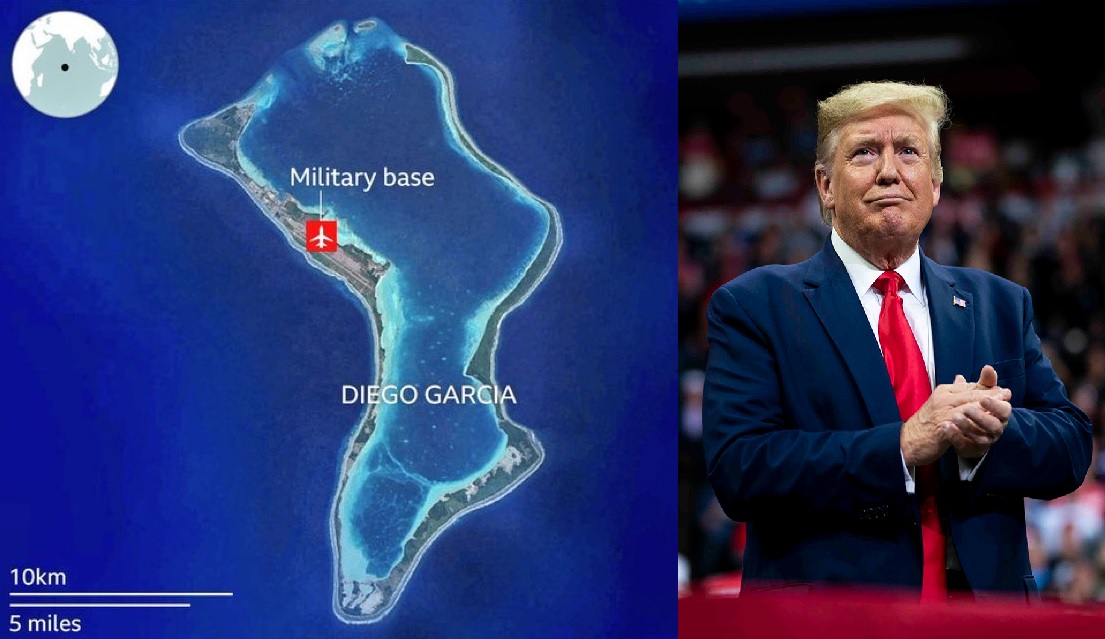
U.S / Greenland : In a statement this week that has alarmed governments from Copenhagen to Brussels, U.S. President Donald Trump reaffirmed Washington’s intent to gain control of Greenland, declaring that the United States will pursue the territory “whether they like it or not.” Trump framed this push as an urgent national security imperative to deter Russian and Chinese influence in the Arctic — rhetoric that has drawn sharp rebukes from Denmark, Greenlandic leaders, and NATO allies.
Historical Roots: More Than a Modern Provocation
Although Trump’s comments have revived headlines, the notion of Greenland as a strategic prize for the United States has deep historical roots dating back more than 150 years. Shortly after the U.S. acquisition of Alaska in 1867, Secretary of State William H. Seward — the architect of the Alaska purchase — considered extending American territorial reach further into the North Atlantic by acquiring Greenland and Iceland, even commissioning a detailed report on Greenland’s natural resources. While no formal offer was made, the initiative reflected a broader vision of Arctic expansion that failed to gain congressional approval.
In 1910, U.S. diplomats proposed a trilateral territorial exchange that would have transferred Greenland to American control in return for concessions in the Pacific. The complex deal, involving Denmark and Germany, ultimately collapsed amid competing national interests.
The most concrete post–Civil War attempt came in 1946, when President Harry S. Truman personally offered Denmark $100 million in gold for the island, underscoring its perceived strategic value at the dawn of the Cold War. Denmark rejected the proposal, but the United States later solidified its military footprint through expanded defense agreements.
Military Presence and Strategic Importance
U.S. involvement in Greenland intensified during World War II, when Denmark was occupied by Nazi Germany and Washington negotiated defense rights to prevent Axis control of the island. These wartime arrangements laid the groundwork for a long-term American military presence.
Today, the Pituffik Space Base (formerly Thule Air Base) remains a critical U.S. installation, hosting early-warning radar systems and serving as the northernmost site of U.S. Space Force operations under bilateral defense agreements.
Analysts note that Greenland’s geographic position — astride key Arctic air and sea routes — and its untapped natural resources, including rare earth minerals and hydrocarbons, have heightened its appeal amid climate change and escalating great-power rivalry.
Modern Revival: Rhetoric Meets Realpolitik
The Trump administration’s renewed focus on Greenland has included controversial statements suggesting all options are on the table, including military measures, though senior officials insist a negotiated purchase remains the preferred route. Reports indicate the White House has explored acquisition strategies ranging from economic incentives to legal mechanisms designed to expand U.S. influence without direct sovereignty claims.
These developments have triggered strong international pushback. Denmark’s prime minister has stated that the United States has “no right” to annex Greenland, warning that unilateral actions could severely strain NATO relations.
In Nuuk, Greenland’s autonomous government has been equally firm, emphasizing that the island’s future must be decided by its own people. Public opinion polls indicate overwhelming opposition among Greenlanders to joining the United States, reinforcing demands for self-determination.
Allied Concerns and Arctic Dynamics
European and North American allies have warned that aggressive U.S. pursuit of Greenland could destabilize long-standing partnerships. NATO officials and European leaders have reiterated support for Danish sovereignty and rejected any use of force or coercion.
Meanwhile, strategic competition in the Arctic is intensifying. Russia and China have expanded their regional engagement, prompting Washington to stress the Arctic’s growing importance for defense, shipping routes, and resource competition, particularly as melting ice opens new maritime passages.
What was once dismissed as rhetorical provocation is increasingly viewed by policymakers as a potential geopolitical flashpoint. The United States’ historical interest in Greenland — from 19th-century expansionism to Cold War strategy — has resurfaced amid renewed great-power competition, challenging established norms of territorial sovereignty and alliance cohesion in the High North.
Whether diplomacy, economic engagement, or escalating rhetoric shapes the next phase of U.S.–Greenland relations remains uncertain. What is clear, however, is that Greenland’s global significance is not accidental — it is grounded in history and amplified by the strategic imperatives of the 21st century.
About the Author
Aditya Kumar:
Defense & Geopolitics Analyst
Aditya Kumar tracks military developments in South Asia, specializing in Indian missile technology and naval strategy.