Trump Open to Sending National Guard to New York if Necessary, But Why
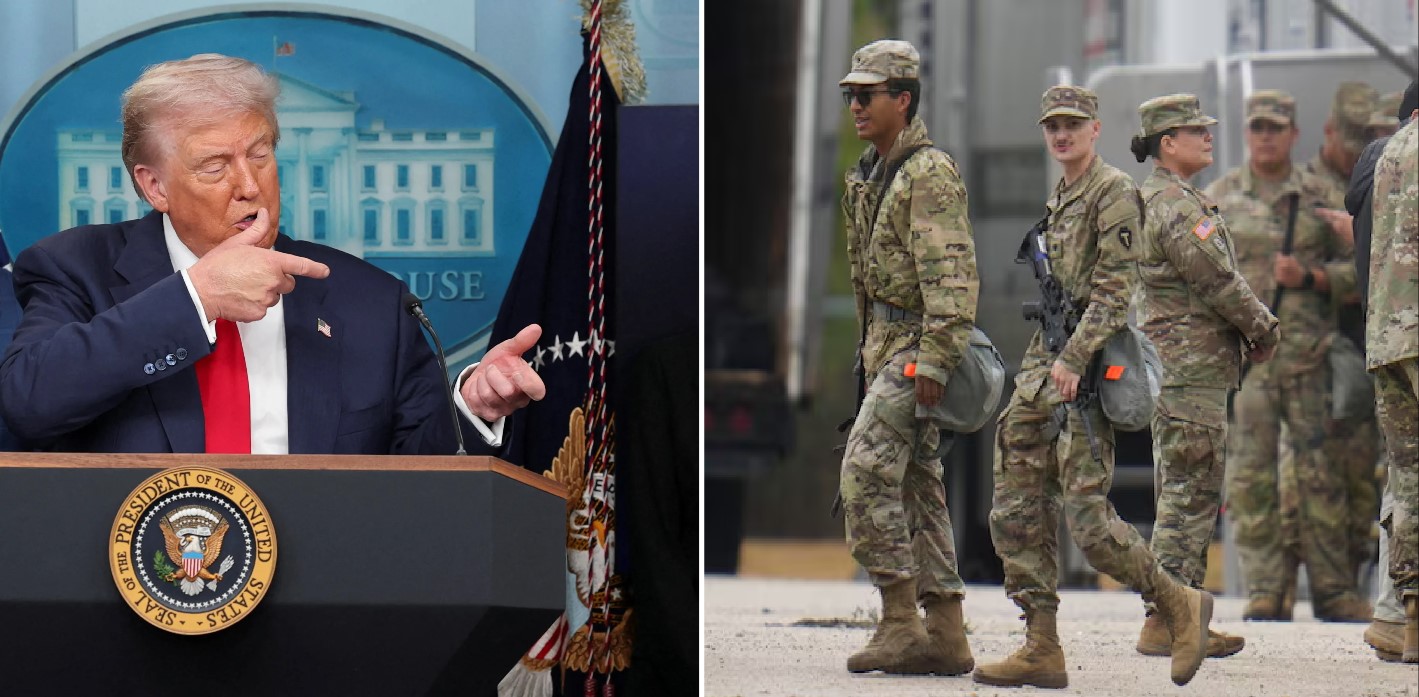
President Donald Trump said he is prepared to send the National Guard to New York City if circumstances require it, confirming that the issue was discussed during his Oval Office meeting with Mayor-elect Zohran Mamdani on Friday. The statement marks the latest development in a tense political narrative that began during New York’s mayoral campaign and has now evolved into a cautious, temporary truce.
Speaking to reporters outside the White House on Saturday, Trump said the deployment remains an option but is not currently planned.
“If they need it. Right now, other places need it more. We talked about that. If they need it, I would do it,” he said.
Why the National Guard Became an Issue in New York
Talk of sending federal troops to New York began weeks before the election, when Trump repeatedly criticized Mamdani and claimed the city would become unsafe under his leadership. Throughout the campaign, the president described the city as being in “decline,” citing concerns over crime, drug trafficking and migrant inflows. He warned that he might use federal authority—including the National Guard—if New York’s “crisis escalated.”
After Mamdani’s election victory, the issue became more prominent. Trump allies hinted that the administration was reviewing options for stronger federal intervention in “high-risk urban areas,” and New York was frequently cited alongside Chicago, Los Angeles and Washington, D.C. These discussions took place even as federal courts issued rulings questioning Trump’s deployment of National Guard troops to other cities.
At the same time, immigration enforcement operations intensified in New York, with federal agents conducting arrests in several boroughs. This added to speculation that the White House was preparing a broader security action involving uniformed troops.
The Oval Office Meeting: From Hostility to a Sudden Reset
Friday’s meeting between Trump and Mamdani was closely watched after months of bitter political rhetoric. Ahead of Election Day, Trump had labeled the mayor-elect a “communist,” questioned his background, and predicted chaos in New York under his administration. Mamdani, in turn, accused Trump of weaponizing federal power for political gain.
But inside the Oval Office, the tone changed dramatically. Both sides described the conversation as unexpectedly warm, with Trump saying he and Mamdani “agreed on more than expected.” The two discussed public safety, federal funding, and how the city and White House could coordinate on economic concerns.
It was during this meeting that concerns about a National Guard deployment were addressed directly. Mamdani reportedly emphasized that such a move would undermine trust in the city, while Trump suggested he would not rush into a decision unless the situation demanded it.
Why a Deployment Remains a Possibility
Despite the friendlier tone, the discussion reflects broader tensions between New York and the federal government. Trump has already attempted to federalize National Guard units in several major cities as part of his national crime and immigration strategy. In some cases—such as Chicago and Washington—courts have blocked or limited those deployments, prompting ongoing legal battles.
For New York, the situation is especially sensitive. Any federal deployment would require justifying a significant emergency or instability, something state officials say does not exist. Governor Kathy Hochul has publicly opposed the idea of federal troops patrolling the city, and legal experts note that Trump would likely face immediate challenges if he tried to override state authority.
Still, the president has kept the option open, and his remarks on Saturday indicate the White House wants to maintain pressure while avoiding an immediate clash with the incoming administration.
How New York Is Responding
Mayor-elect Mamdani has begun preparing for potential federal action by strengthening the city’s legal teams and coordinating closely with state leadership. He has told supporters that the city will not accept “political intimidation” and vowed to resist any unnecessary military presence.
Mamdani has also stressed that New York remains safe and stable, rejecting claims that the city requires federal troops. His administration is focusing on public safety reforms, housing affordability, and immigrant community protections—issues that are expected to shape his early months in office.
For now, Trump’s comments suggest a temporary pause rather than an abandonment of the National Guard idea. The administration is currently focused on crime and immigration operations in other parts of the country, where federal courts are actively reviewing the limits of presidential power.
Whether New York eventually sees a deployment will depend on two key factors:
-
How the city handles public safety and migrant issues in the coming months.
-
How ongoing court battles shape the president’s authority to federalize state troops.
The Oval Office meeting may have lowered the temperature, but the underlying political and legal tensions remain unresolved. Both sides now face the challenge of navigating one of the most sensitive federal-city relationships in the country, with the possibility of National Guard troops in New York still looming—quietly, but unmistakably—in the background.
As of 23 November 2025
As of late 23 November 2025, there has been no National Guard deployment to New York City, and no formal request from either the mayor-elect or the governor. The White House has not issued any executive order or directive linked to troop movement toward New York.
Federal officials say the situation remains “under review,” but insist that New York is not on the immediate list of cities being considered for federalized Guard involvement. Meanwhile, state authorities have confirmed that New York’s security environment is stable, and the city continues to operate with normal policing levels.
Mamdani’s transition team has also reported “no escalation” in federal pressure since the Oval Office meeting, noting that communication with the White House has been “professional and consistent.”
The issue, however, remains open-ended, with the administration signaling that the option could be reconsidered if conditions change.
About the Author
Aditya Kumar:
Defense & Geopolitics Analyst
Aditya Kumar tracks military developments in South Asia, specializing in Indian missile technology and naval strategy.