Trump Announces 10%–25% Tariffs on European Imports Over Greenland Dispute
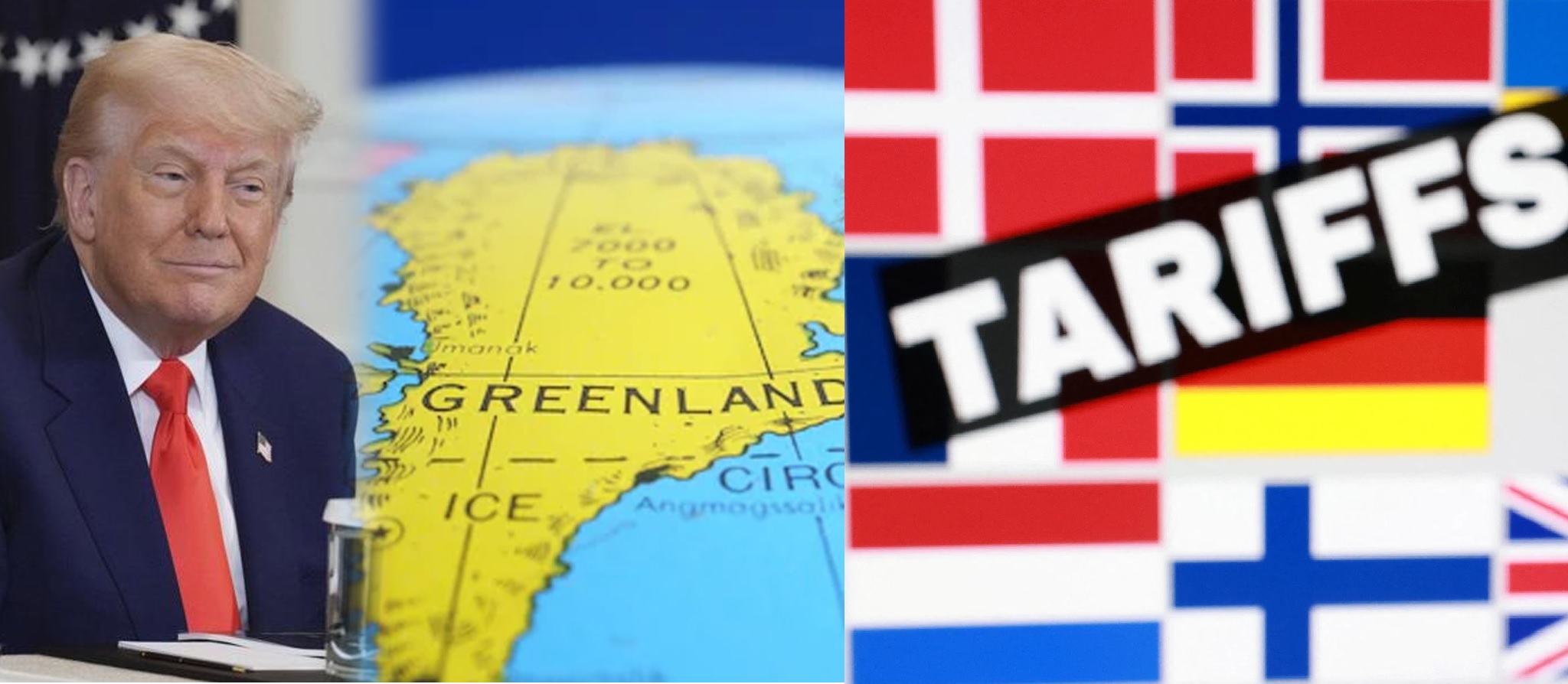
WASHINGTON : Former US president Donald Trump has announced plans to impose sweeping tariffs on imports from several European countries, linking the proposed trade measures directly to negotiations over Greenland in a move that has stunned diplomats and economists on both sides of the Atlantic.
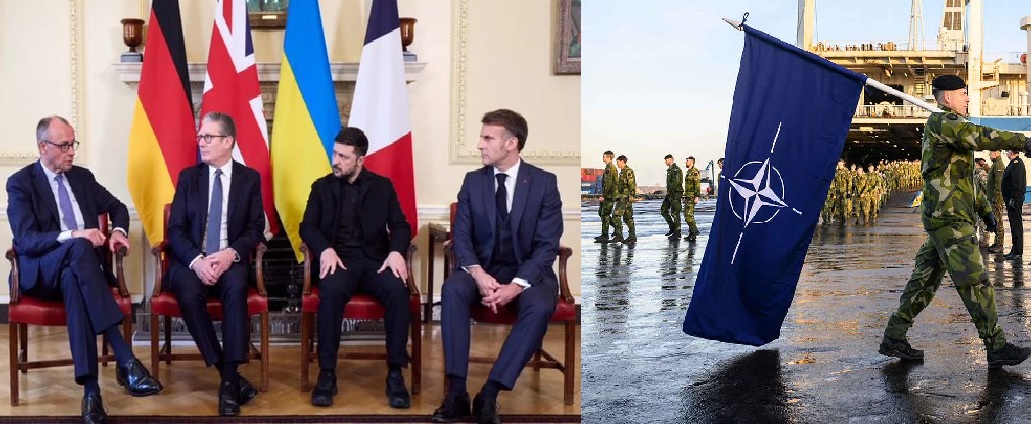
In a statement posted on his Truth Social platform, Trump said the United States would begin levying a 10 per cent tariff from February 1, 2026, on goods originating from Denmark, Norway, Sweden, France, Germany, the United Kingdom, the Netherlands and Finland. He added that the tariff would rise sharply to 25 per cent from June 1, 2026, and would remain in force “until such time as a Deal is reached for the Complete and Total purchase of Greenland.”
“We have subsidized Denmark, and all of the Countries of the European Union, and others, for many years,” Trump wrote, framing the tariff threat as both an economic correction and a negotiating tool.
Greenland Once Again at the Center of US Strategy
Greenland, an autonomous territory within the Kingdom of Denmark, has long held strategic importance for the United States because of its Arctic location, mineral potential, and proximity to emerging polar shipping routes. Trump first floated the idea of purchasing Greenland during his presidency, a proposal that was swiftly rejected by Copenhagen and Greenlandic leaders at the time.
By explicitly tying tariffs to Greenland, Trump has revived a highly unconventional approach to diplomacy, using broad-based trade pressure to pursue a geopolitical acquisition. European officials have not formally responded to the latest statement, but past reactions suggest fierce resistance to any attempt to monetize sovereignty through economic coercion.
A Tariff Strategy With Domestic Consequences
While the announcement focuses on European countries, economists note that the immediate financial burden of tariffs falls largely on US importers and consumers, not on foreign governments. Tariffs are collected at the US border, meaning American companies pay the higher costs upfront. These costs are often passed on to households through higher prices on everyday goods ranging from automobiles and machinery to pharmaceuticals, food products and consumer electronics.
Historical data from previous US tariff rounds show that price increases tend to be gradual but persistent. In sectors heavily dependent on European imports, analysts expect inflationary pressure, particularly affecting middle-income households that spend a larger share of their income on traded goods.
In this sense, the policy generates revenue for the US government, but that revenue is drawn primarily from American consumers’ spending power, not directly from European treasuries. Studies of earlier tariff regimes indicate that while federal customs revenue rises, household purchasing power declines, effectively operating as a regressive tax.
Broader Trade Impact and Risk of Retaliation
The countries named in Trump’s statement collectively represent a substantial share of US–Europe trade, with Germany, France and the United Kingdom among America’s largest trading partners. A 25 per cent tariff would almost certainly trigger retaliatory measures, potentially targeting US agricultural exports, aerospace products, and digital services.
Such escalation could disrupt supply chains that remain fragile after years of pandemic shocks and geopolitical tensions. US manufacturers that rely on European components would face higher input costs, potentially reducing competitiveness and slowing hiring or investment.
Political Signaling and Economic Reality
Supporters of aggressive tariff policies argue they strengthen US bargaining power and protect domestic industry. Critics counter that tariffs function less as a penalty on foreign nations and more as a hidden tax on American citizens, with long-term consequences for inflation, consumer choice, and global economic stability.
By linking trade policy to the purchase of Greenland, Trump has added a geopolitical dimension that complicates traditional trade negotiations. Whether the proposal becomes formal policy or remains a negotiating signal, it underscores a broader trend toward weaponizing tariffs as tools of statecraft — a strategy whose economic costs are likely to be felt first and most sharply at home.
About the Author
Aditya Kumar:
Defense & Geopolitics Analyst
Aditya Kumar tracks military developments in South Asia, specializing in Indian missile technology and naval strategy.