Türkiye Unveils High-Speed Şimşek-K Drone at IDEF 2025

At the IDEF 2025 defense exhibition in Istanbul, Turkish Aerospace Industries (TAI) officially unveiled its newest innovation — the Şimşek-K High-Speed Target Drone System. This marks an important advancement in Türkiye’s defense training capabilities, focusing on simulating fast and complex aerial threats to prepare armed forces for modern combat scenarios.
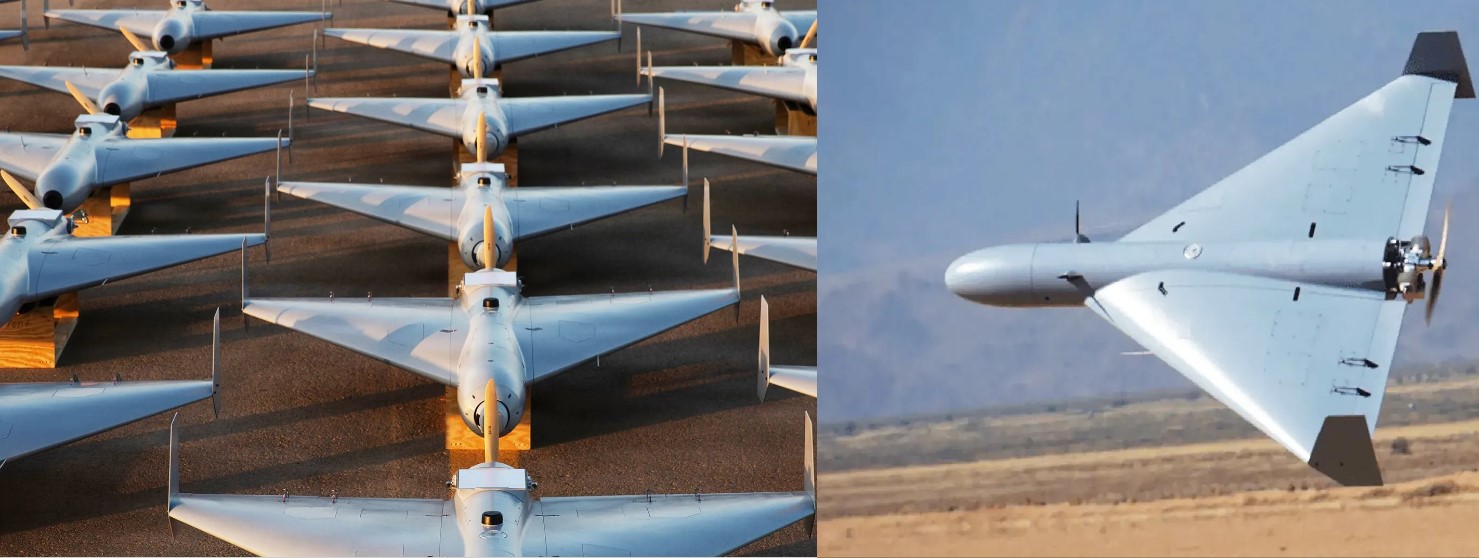
The Şimşek-K drone is designed specifically for military training and air defense exercises, acting as a high-speed, realistic target for fighter jets, missile systems, and naval defenses. With the world witnessing more advanced threats, especially from missiles and UAVs, drones like Şimşek-K help countries train against those challenges in a safer and cost-effective way.
The drone is 2.4 meters long with a 1.5-meter wingspan, and it weighs 83 kilograms at takeoff. Despite its compact size, it carries a payload of up to 18 kilograms, including radar cross-section enhancers, infrared signature boosters, and cameras for improved mission simulation. Powered by 35 liters of fuel, it can fly at speeds up to Mach 0.63, reach altitudes of 25,000 feet, and stay airborne for more than 45 minutes. Its datalink range is 150 kilometers, and the total operational range extends beyond 500 kilometers.
One of Şimşek-K’s key features is its fully autonomous and encrypted flight system, which allows for mid-flight mission updates, emergency procedures, and automated landing. It can be launched from the ground, sea vessels, or even airborne platforms, using rocket-assisted takeoff, and it returns via a parachute recovery system, making it reusable and cost-efficient.
This new drone builds on over a decade of development in TAI’s target drone program. The original Şimşek was first tested in 2012, followed by upgrades like the Super Şimşek. In 2020, the Şimşek was successfully launched from an Anka combat drone, proving its adaptability. The Şimşek-K now represents the most advanced version, reflecting lessons learned from earlier versions and operational feedback.
Compared to older systems and foreign drones, Şimşek-K brings a blend of speed, modularity, and security in a compact form. While many similar drones offer basic functions, Şimşek-K includes real-time encrypted telemetry, reprogrammable missions, and multi-threat simulation capabilities. These features make it a valuable asset for NATO allies and countries looking for cost-effective, indigenous defense solutions.
Beyond technology, Şimşek-K symbolizes Türkiye’s growing independence in defense manufacturing and its ambition to become a global supplier of advanced training systems. By offering realistic, reusable, and autonomous drones, Türkiye is reducing its reliance on Western imports and expanding its defense partnerships — especially in regions like the Middle East, Central Asia, and Africa.
In short, Şimşek-K is not just a drone — it’s a strategic tool that enhances training while strengthening Türkiye’s defense industry. With global threats becoming more unpredictable and fast-moving, systems like Şimşek-K will play a crucial role in helping armed forces prepare for the future of warfare.
✍️ This article is written by the team of The Defense News.