Türkiye Unveils 970-kg GAZAP Bomb, Its Most Powerful Non-Nuclear Weapon Yet
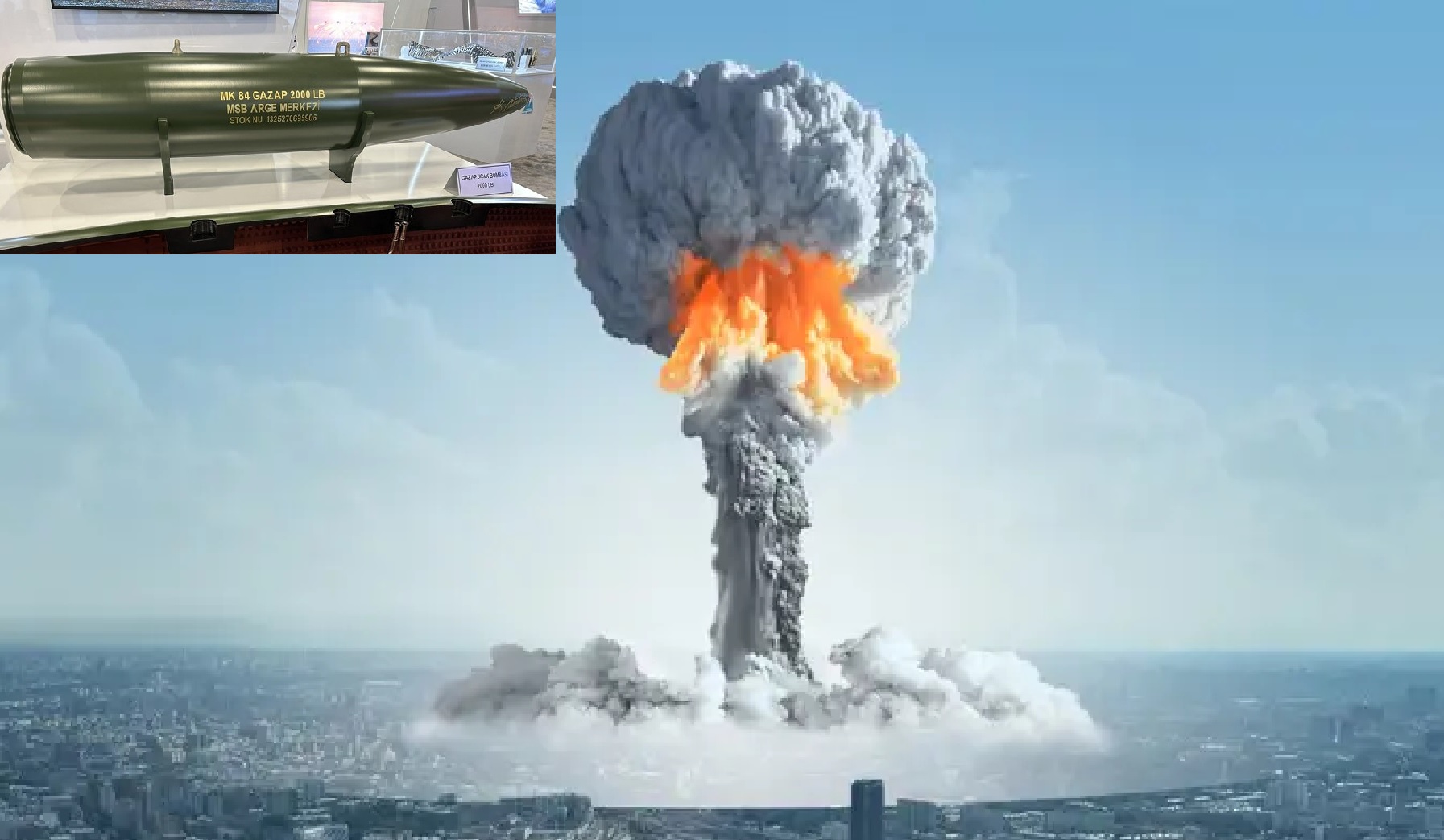
In a bold demonstration of its advancing defence capabilities, Türkiye has introduced what it claims is its most powerful non-nuclear bomb ever — the 970-kilogram GAZAP, developed by the Ministry of National Defence’s R&D division. The bomb made its debut at IDEF 2025, the country’s premier international defence expo held in Istanbul, alongside other major Turkish-made military systems.
GAZAP stands out due to its extremely high fragment density, reportedly producing 10.16 fragment explosions per meter, far surpassing the earlier standard of one explosion every three meters. This technology drastically boosts the lethality and area coverage of the bomb, making it highly effective in conventional combat without stepping into the nuclear realm. The bomb is compatible with F-16 fighter jets, providing easy integration into Türkiye’s existing air fleet.
But while Türkiye calls the GAZAP its most powerful non-nuclear bomb to date, a closer comparison with similar weapons from other military powers reveals that such large-scale, high-yield conventional bombs have long been in service elsewhere:
Global Comparison of Heavy Non-Nuclear Bombs
| Country | Bomb Name | Weight (kg) | Type | Notes |
|---|---|---|---|---|
| USA | GBU-43/B MOAB ("Mother of All Bombs") | 9,800 kg | Massive Ordnance Air Blast | Largest non-nuclear bomb in US arsenal; used in Afghanistan in 2017 |
| Russia | FOAB ("Father of All Bombs") | ~7,000 kg (equivalent TNT yield) | Thermobaric | Claimed to be 4x more powerful than MOAB |
| China | Unnamed Air-dropped Bomb | ~5,000 kg (est.) | Thermobaric | Tested in 2019; called China’s MOAB |
| India | DRDO’s Penetrator Bomb | ~1,000 kg | Bunker-buster | Designed for deep penetration; mostly classified |
| UK | Storm Shadow Cruise Missile (Warhead) | ~450 kg | Precision-guided | While lighter, highly accurate for strategic targets |
| Türkiye | GAZAP | 970 kg | Fragmentation bomb | Türkiye's heaviest and most advanced conventional bomb to date |
When placed against these heavyweight contenders, Türkiye’s GAZAP is modest in size and yield. While it may be the most powerful bomb developed indigenously by Türkiye, it falls well behind the 9.8-tonne MOAB of the United States and the thermobaric FOAB of Russia in terms of destructive capacity.
Yet, where the GAZAP makes its mark is in technological sophistication and target-specific lethality. Its high fragmentation rate is designed for maximum personnel and light structure damage over a wide area, rather than raw explosive force. This makes it ideal for modern combat environments requiring precise, high-impact damage with minimal collateral risk.
NEB-2 Ghost: Bunker Buster With a Delay Twist
Also revealed at the expo was the NEB-2 Ghost, another 970-kg bomb, this one tailored for bunker-busting missions. In a dramatic test, the bomb was dropped on an island target and penetrated 90 meters underground, causing landslides, gas leaks, and destroying rock formations across a 160-meter radius. The detonation was delayed by 240 milliseconds after impact — a sharp contrast to the standard 25 milliseconds, allowing it to dig deeper before exploding. This delay technique significantly increases its underground destructive potential.
Tayfun Block 4: Türkiye’s Hypersonic Leap
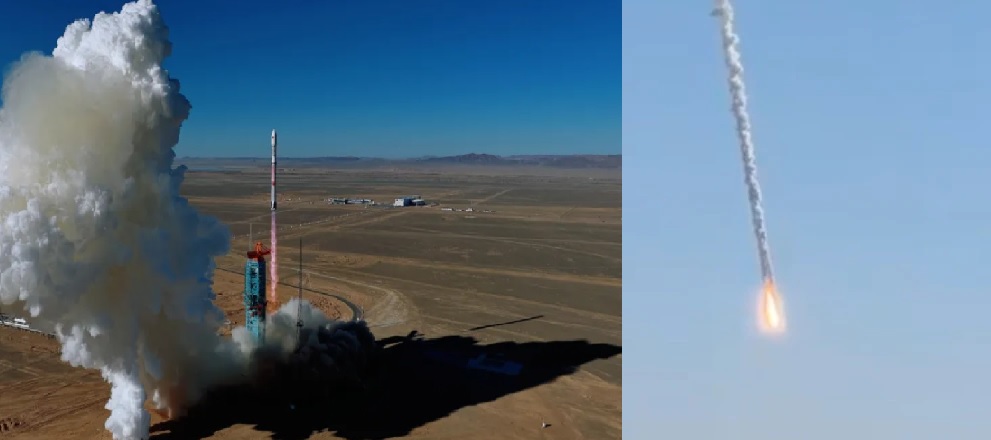
The final showstopper was the Tayfun Block 4, Türkiye’s first hypersonic ballistic missile, developed by Roketsan. The missile promises high manoeuvrability, long-range precision, and the ability to evade missile defence systems, reflecting Türkiye’s ambition to join the elite club of hypersonic missile producers like the US, Russia, and China.
Türkiye’s Message: Self-Reliance and High-Tech Warfare
While Türkiye's newly unveiled bombs may not rival the physical mass or yield of their American or Russian counterparts, they underscore a significant milestone: indigenous development of smart, effective, and mission-specific weaponry. The focus is not just on brute force but on adaptability, precision, and technological integration—hallmarks of next-generation warfare.
The unveiling of GAZAP, NEB-2 Ghost, and Tayfun Block 4 sends a clear message: Türkiye is rapidly modernizing its military arsenal with homegrown solutions, aiming for strategic independence and a stronger role in global defence markets. Whether it becomes a leader in firepower is yet to be seen, but it is certainly proving itself as a fast-rising player in the defence innovation race.
✍️ This article is written by the team of The Defense News.