Türkiye Hands Over Second MILGEM Corvette PNS Khaibar to Pakistan Navy
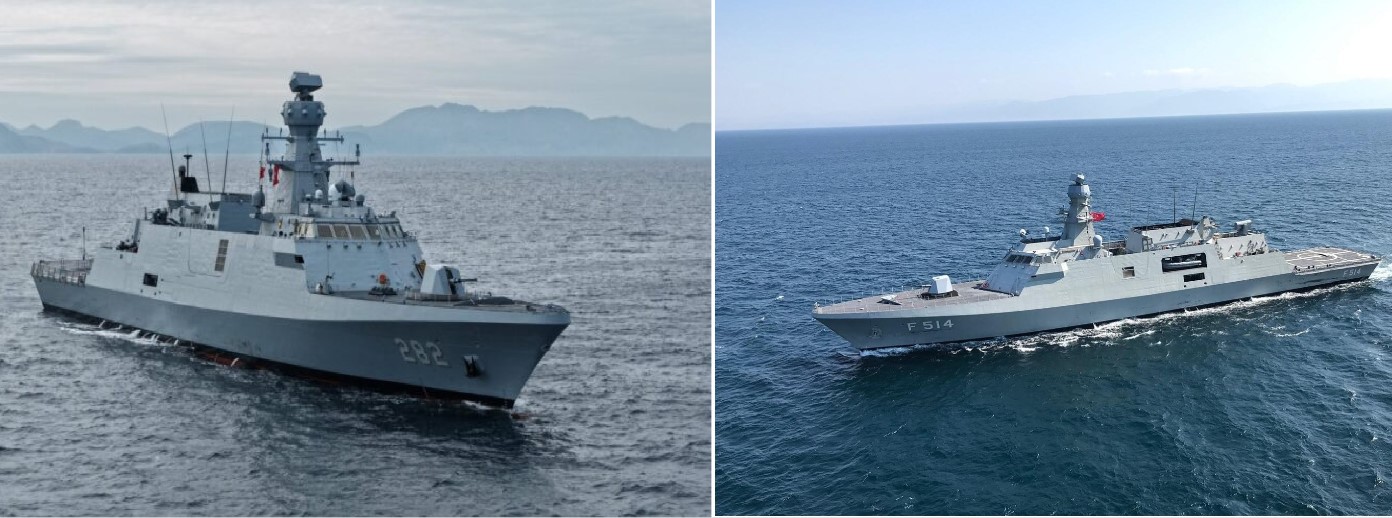
Türkiye on December 20 formally handed over PNS Khaibar, the second MILGEM corvette built for the Pakistan Navy, during a naval commissioning ceremony in Istanbul presided over by President Recep Tayyip Erdoğan. Reporting from Istanbul, Anadolu Agency said the delivery underlined Ankara’s expanding shipbuilding capacity and its strategy of leveraging advanced naval exports to secure long-term defense partnerships.
Addressing the ceremony, President Erdoğan described the handover as a milestone in the “brotherly” Türkiye–Pakistan relationship, rooted in shared history and reinforced by converging strategic interests across the Indian Ocean and the broader Middle East. The event marked the second delivery under Pakistan’s MILGEM program, following the induction of PNS Babur in May 2024.
Program Background and Delivery Timeline
PNS Khaibar is the second of four corvettes ordered by Pakistan in 2018 under a government-to-government agreement linked to Türkiye’s MILGEM. The remaining two ships, PNS Bedir and PNS Tarik, are scheduled for delivery in 2026 and early 2027 respectively. Under the program structure, the first two vessels are being built in Türkiye, while the third and fourth are under construction in Pakistan with Turkish technical support.
Officials from both countries have emphasized that the program goes beyond a simple purchase, centering on technology transfer, co-design, and local industrial participation.
Design and Platform Characteristics
The Babur-class corvettes represent a customized and enlarged variant of the original Ada-class MILGEM design. With a displacement of nearly 3,000 tons and a length of about 108 meters, the ships are configured as multi-role surface combatants capable of sustained operations. A combined diesel and gas (CODAG) propulsion system enables speeds above 26 knots, while a range of roughly 3,500 nautical miles and an endurance of around 15 days support extended deployments in the Arabian Sea and beyond.
The design reflects Pakistan Navy requirements for a compact but heavily armed platform, optimized for contested maritime environments.
Weapons, Sensors and Combat Systems
PNS Khaibar is armed with a 76 mm main gun and twin triple launchers for Pakistan’s indigenous Harbah cruise missile, capable of engaging both surface and land targets. Air defence is provided by a 12-cell vertical launch system (VLS) configured for modern surface-to-air missiles, offering an engagement envelope beyond 40 kilometers.
Anti-submarine warfare (ASW) capability is delivered through 324 mm lightweight torpedoes, supported by a hull-mounted sonar. A flight deck and hangar enable the operation of a medium naval helicopter for ASW, surveillance and search-and-rescue missions.
A defining feature of the Babur-class is its advanced electronics and sensor suite, supplied largely by Turkish industry. Systems from Aselsan include a 3D air-search radar, low-probability-of-intercept navigation radar, torpedo countermeasure systems, a 35 mm close-in weapon system (CIWS) and multiple 25 mm remote weapon stations. These are integrated through a modern combat management system, enabling network-enabled operations.
Industrial Cooperation and Technology Transfer
Negotiations for the Pakistan Navy MILGEM program began in the mid-2010s and culminated in the 2018 contract, which included extensive technology transfer and the transfer of design-related intellectual property. The first two ships were built at Istanbul Naval Shipyard, while the remaining units are under construction at Karachi Shipyard.
For Pakistan, the arrangement is intended to build domestic shipbuilding and systems integration capacity, potentially supporting future indigenous surface combatant projects. For Türkiye, the program demonstrates its ability to deliver complex naval exports end-to-end, from design and integration to training and lifecycle support.
Strategic and Regional Implications
Operationally, the induction of PNS Khaibar enhances the Pakistan Navy’s ability to conduct anti-surface, anti-submarine, and area air-defence missions, strengthening deterrence and the protection of sea lines of communication in the northern Indian Ocean. The ship’s networked architecture improves coordination across surface, subsurface and air assets.
Strategically, the handover reflects Pakistan’s effort to diversify naval acquisitions beyond traditional suppliers, with Türkiye emerging as a key partner in both capability and industrial development. For Ankara, the program reinforces ambitions to rank among the few states capable of designing, building and exporting modern warships, supported by companies such as ASFAT and Havelsan.
Outlook
With two Babur-class corvettes delivered and two more under construction, the MILGEM program is set to play a central role in reshaping the Pakistan Navy’s surface fleet. As construction activity in Karachi expands and cooperation deepens, the project is increasingly viewed as a reference model for South–South defense cooperation, combining advanced naval capability, industrial development, and long-term strategic alignment.
✍️ This article is written by the team of The Defense News.