Thales Developing AI-Enabled TALIOS to Transform Rafale F4.3 Targeting Capabilities by 2026
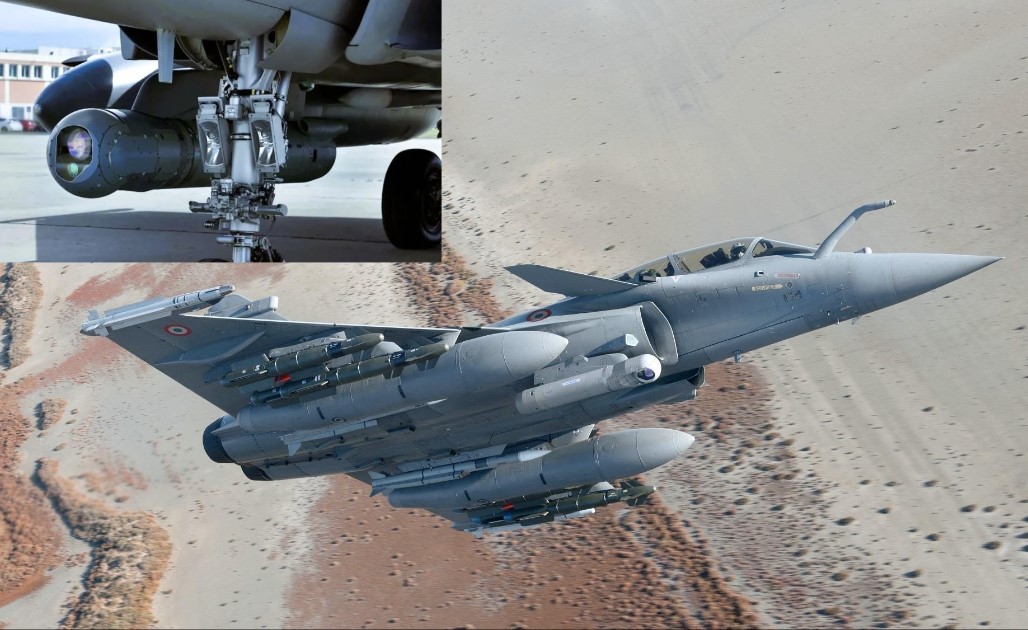
In a major leap toward next-generation aerial warfare, French defense giant Thales is enhancing its TALIOS (Targeting Long-range Identification Optronic System) pod with embedded artificial intelligence for the Rafale F4.3 fighter aircraft. Scheduled to be operational by 2026, this upgraded targeting system will offer real-time image analysis, enabling pilots to identify, classify, and engage targets with unprecedented speed and accuracy.
At the heart of this transformation is the integration of deep learning algorithms into the TALIOS pod, making it capable of automated target recognition, classification, and prioritization — a task that it will perform 100 times faster than traditional systems. This marks a critical evolution in airborne targeting, especially in high-intensity combat scenarios where milliseconds can determine mission success.
Smarter Eyes in the Sky
The upgraded TALIOS pod will leverage Thales' new cortAIx accelerator, allowing it to process live imagery on the fly. What sets this system apart is its onboard edge processing — the AI doesn't rely on external datalinks or remote processors. All critical image analysis and decision-support tasks happen within the pod itself. This ensures reliable performance even in contested environments where communications may be jammed or denied.
By integrating AI directly into the pod, TALIOS becomes more than just a passive sensor. It actively assists the pilot by flagging potential threats in real-time. From tanks and bunkers to hidden air defenses and camouflaged vehicles, the system can autonomously detect, classify, and display relevant targets, helping pilots focus on decision-making and tactical maneuvers instead of spending time sifting through raw imagery.
Enhancing Pilot Decision-Making
One of the key benefits of the AI-enhanced TALIOS is its ability to reduce cognitive load. In combat, the sheer volume of visual data from sensors can overwhelm even experienced pilots. With pre-selected targets presented based on threat relevance, pilots can act faster, engage with more confidence, and reduce the risk of human error. Importantly, the final decision to engage still rests with the pilot — AI here is an assistant, not an autonomous trigger.
Additionally, the pod’s "Permanent Vision" mode overlays live imagery onto a 3D tactical map, creating an augmented reality-style interface that improves situational awareness in complex environments, whether over dense urban terrain or rugged mountains.
Technical Advancements
The TALIOS F4.3 version will include:
-
Day and night operation using high-definition color sensors and a Mid-Wave Infrared (MWIR) thermal imager.
-
High-resolution ISR (Intelligence, Surveillance, and Reconnaissance) capabilities for both air-to-ground and air-to-air operations.
-
Compatibility with the networked battlefield vision of France’s Scorpion and future air-combat initiatives, enabling data sharing between manned and unmanned systems.
-
AI-powered threat classification libraries that learn and improve over time, adapting to new enemy tactics and camouflage patterns.
Timeline and Development
The TALIOS AI upgrade is being developed as part of a 2023 contract between Thales and France’s Directorate General of Armament (DGA). Engineers have been training the pod’s deep learning systems using a rich database of military images, flight test data, and simulation scenarios. The upgrade is tightly aligned with the upcoming Rafale F4.3 standard, which itself is a bridge to the F5 variant expected later this decade.
By 2026, TALIOS with AI will be operationally deployed on French Air and Space Force Rafales, with export opportunities likely to follow. For countries like India, which operate the Rafale and already utilize TALIOS, this development could pave the way for enhanced targeting capabilities through future upgrades.
The AI-enhanced TALIOS pod represents a paradigm shift in combat aviation. By bringing real-time intelligence, object recognition, and autonomous assistance to the cockpit, Thales is reshaping how pilots engage the enemy — faster, smarter, and safer. As air forces worldwide look to integrate artificial intelligence into their platforms, TALIOS may well become a benchmark in AI-assisted aerial targeting for years to come.
✍️ This article is written by the team of The Defense News.