Thailand Halts Peace Deal with Cambodia After Landmine Blast Injures Soldiers
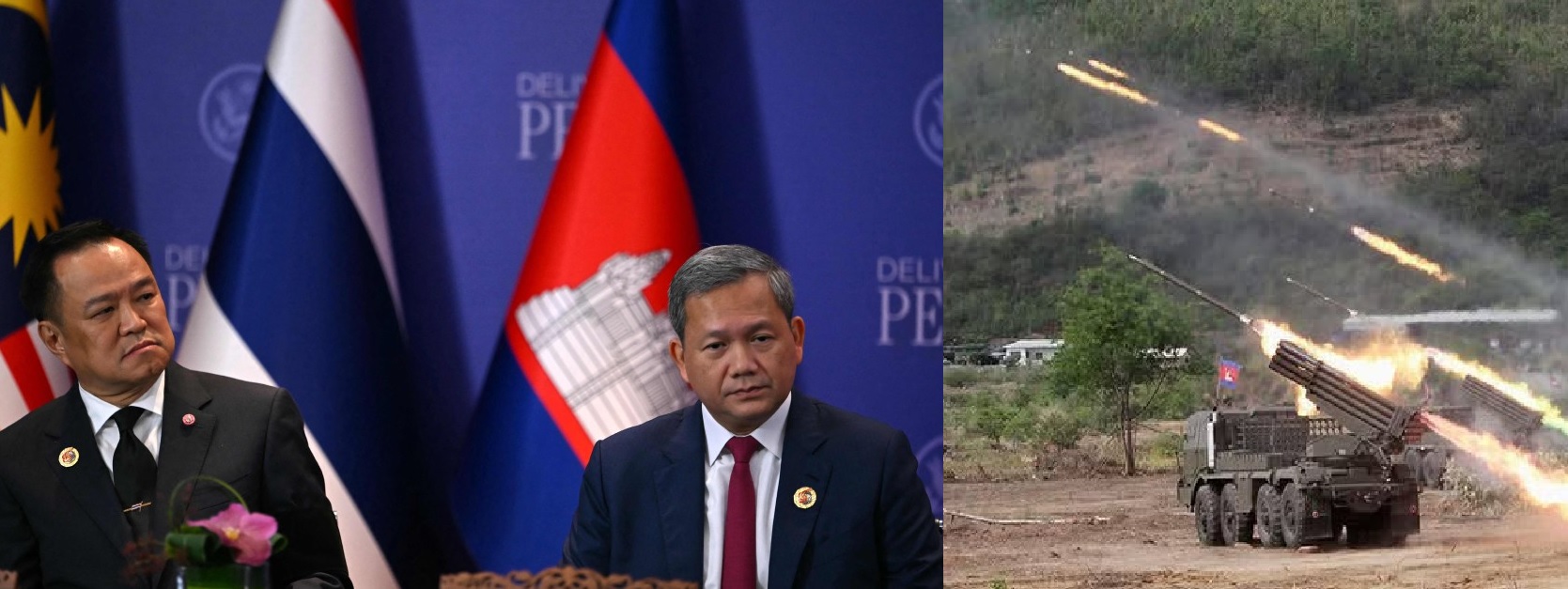
In a sharp reversal just two weeks after signing a peace accord, Thailand has suspended the implementation of its U.S.-brokered peace deal with Cambodia following a landmine explosion that injured two Thai soldiers along their disputed border. The move has reignited old tensions and raised concerns over whether the fragile truce can survive amid deep mistrust and decades of territorial disputes.
The Incident That Sparked the Suspension
The explosion occurred early Sunday morning in Sisaket Province, a region notorious for lingering landmines from past conflicts. According to the Royal Thai Army, a patrol team conducting a border inspection was caught in the blast, leaving one soldier with severe leg injuries and another with shrapnel wounds to the chest.
The Thai government swiftly blamed Cambodian forces for violating the recent peace agreement, suggesting that the mine may have been newly planted rather than a remnant from older skirmishes. Prime Minister Anutin Charnvirakul announced later that day that Thailand would “suspend all commitments” under the peace accord until an investigation determines responsibility and “credible guarantees” are received from Phnom Penh.
The Trump-Brokered Peace Deal
The now-frozen deal — officially called the Kuala Lumpur Peace Accord — was signed on October 26, 2025, in Malaysia, witnessed by former U.S. President Donald Trump, who has been playing an informal mediation role in Southeast Asian conflicts since his departure from office.
The agreement aimed to bring an end to recurring border clashes and called for:
-
A ceasefire and withdrawal of heavy weapons from the frontier.
-
A joint demining operation supervised by ASEAN observers.
-
The release of prisoners of war and reopening of closed border checkpoints.
-
The creation of a bilateral security council to resolve future disputes peacefully.
At the time, both sides hailed the deal as a turning point. Thailand began pulling back tanks and artillery from forward positions, while Cambodia released six detained Thai border guards as a goodwill gesture.
Why Thailand Suspended the Deal
Bangkok claims the landmine attack is a “breach of the spirit and letter” of the accord, citing it as evidence that Cambodian forces have not halted aggressive activities. The Thai Defense Ministry stated that “the demining commitment was not honoured,” and that “no safety assurances can be made until Cambodia provides full transparency.”
For now, Thailand has ordered all peacekeeping cooperation, prisoner exchanges, and border reopening talks to be frozen. The government also recalled its military liaison officers from joint coordination posts set up after the deal.
Phnom Penh, however, denies responsibility, saying the explosion likely involved old mines from past conflicts and accusing Thailand of using the incident as a “political excuse” to delay parts of the agreement. Cambodian Prime Minister Hun Manet called the suspension “an overreaction” and urged Bangkok to return to dialogue rather than “reignite hostility.”
What Both Sides Want
Both nations are presenting starkly different demands in the aftermath of the incident.
Thailand’s Demands:
-
Complete removal of landmines along the border under neutral supervision.
-
Full Cambodian cooperation in investigating the blast.
-
Suspension of any cross-border military activity.
-
Delayed prisoner release until “trust is restored.”
Cambodia’s Position:
-
Immediate resumption of the peace deal’s terms.
-
Deployment of ASEAN observers to oversee demining operations.
-
Reopening of trade checkpoints vital for cross-border commerce.
-
Assurance that Thailand will not resume large-scale troop deployments.
For now, neither side shows signs of backing down. ASEAN has called for “maximum restraint,” while the United States — the informal broker — has urged both sides to “honour the commitments made in Kuala Lumpur.”
Historical Tensions Behind the Border
The Thai-Cambodian border has been volatile for decades, with the most sensitive flashpoint being the Preah Vihear Temple area — a UNESCO World Heritage Site awarded to Cambodia by the International Court of Justice in 1962 but still claimed by Thai nationalists.
Periodic clashes have killed dozens over the years, and both countries have accused each other of laying new mines even after signing the Ottawa Treaty, which bans their use.
Analysts say the landmine blast underscores how deep-rooted distrust and unmarked boundaries continue to endanger any diplomatic breakthrough.
Military Power Comparison
| Category | Thailand | Cambodia |
|---|---|---|
| Active Military Personnel | ~360,000 | ~124,000 |
| Defense Budget (2025) | $5.7 billion | $1.3 billion |
| Main Battle Tanks | 400+ | ~200 |
| Armored Vehicles & Artillery | 1,200+ APCs, 2,600 artillery units | ~480 artillery units |
| Combat Aircraft | ~112 (F-16, Gripen, Alpha Jet) | Minimal operational aircraft |
| Naval Fleet | Frigates, submarines, aircraft carrier | Coastal patrol fleet only |
| Global Firepower Ranking (2025) | 25th | 95th |
Military analysts emphasize that while Thailand enjoys overwhelming firepower and a modernized command structure, Cambodia’s advantage lies in familiarity with terrain and the use of asymmetric tactics in border zones.
Regional Repercussions
The suspension risks destabilizing ASEAN’s peace efforts, especially as the bloc grapples with disputes in the South China Sea. Malaysia and Indonesia, which helped mediate the deal, have expressed concern that the move could “set back months of progress.”
Economically, the freeze threatens cross-border trade worth over $2 billion annually, particularly affecting agricultural flow through provinces such as Sa Kaeo and Banteay Meanchey.
What Lies Ahead
Thailand’s suspension does not necessarily mean the peace deal is dead — but it has certainly placed it in deep freeze. Diplomats suggest Bangkok may be using the pause as leverage to push for stricter verification mechanisms and greater Cambodian accountability.
Whether the two nations can rebuild confidence remains uncertain. What is clear is that without tangible progress in demining and border demarcation, the Kuala Lumpur Peace Accord risks joining the long list of failed ceasefire attempts between the two uneasy neighbours.
About the Author
Aditya Kumar:
Defense & Geopolitics Analyst
Aditya Kumar tracks military developments in South Asia, specializing in Indian missile technology and naval strategy.