Textron Systems Secures AUKUS Contract with Sale of TSUNAMI Autonomous Vessel to U.S. Navy
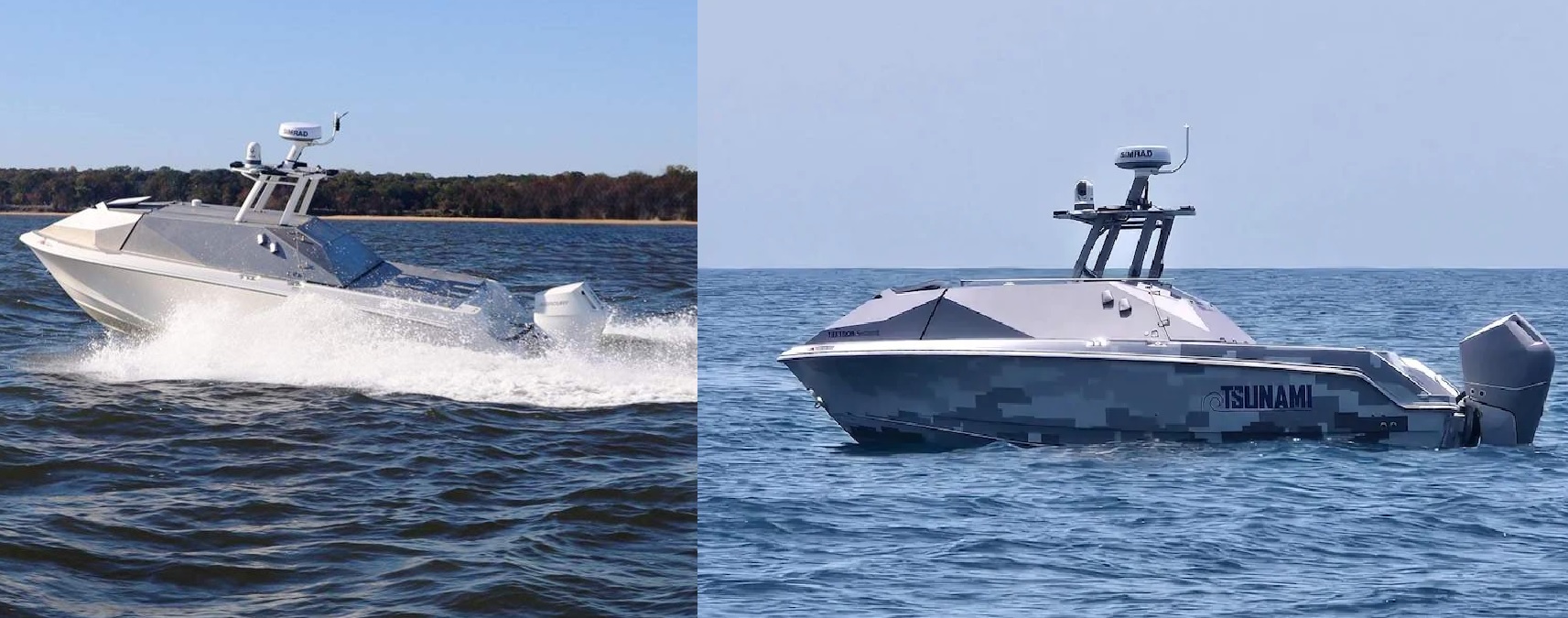
Textron Systems Corporation, a subsidiary of Textron Inc., has announced the sale of a 21-foot TSUNAMI™ autonomous maritime surface vessel to the Naval Information Warfare Center (NIWC) Pacific. This acquisition is a strategic move to support the Maritime Digital Experimentation Federation (MDEF), a high-priority initiative under the AUKUS security partnership between Australia, the United Kingdom, and the United States.
The contract includes the delivery of the TSUNAMI craft alongside comprehensive engineering and training support. These assets will enable the U.S. Navy to conduct distributed testing of interoperability standards across a variety of uncrewed vehicles, ensuring that future maritime operations can be seamlessly coordinated between allied nations.
Strengthening the AUKUS Alliance
The TSUNAMI vessel will serve as a primary testbed for Pillar 2 of the AUKUS agreement, which focuses on advanced capabilities, including artificial intelligence and autonomy. By utilizing the MDEF framework, the U.S. Navy and its partners aim to synchronize digital architectures and communication protocols, allowing uncrewed surface vehicles (USVs) from different nations to operate as a unified fleet.
“The TSUNAMI craft provide the Navy with a rapidly deployable, fully autonomous solution to support their missions,” said David Phillips, Senior Vice President of Air, Land, and Sea Systems at Textron. “Our expertise in designing and fielding trusted autonomous solutions results in a family of small, uncrewed surface vehicles (sUSVs) that are scalable, modular in design, and globally sustainable.”
Technical Specifications & Performance
The TSUNAMI family represents a bridge between commercial manufacturing efficiency and military-grade autonomy. Built on high-performance hulls from the Brunswick Corporation and integrated with Textron’s proven CUSV® (Common Uncrewed Surface Vehicle) control system, the 21-foot variant is designed for high-speed, long-range missions.
| Feature | Specification Details |
| Length | 21 feet (Standard variants range from 14 to 42 ft) |
| Top Speed | 40+ knots |
| Operational Range | 600 to 1,000+ nautical miles |
| Endurance | 20+ hours of continuous operation |
| Payload Capacity | ~1,000 lbs (453.6 kg) |
| Propulsion | Gasoline-powered outboard (Mercury Marine options) |
| Survivability | Fully operational up to Sea State 4 |
| Sensors | Simrad maritime radar, Teledyne FLIR EO/IR camera |
| Interoperability | UMAA compatible; supports NATO STANAG 4586 |
Modular and Attritable Design
A key selling point for the TSUNAMI series is its "attritable" nature—meaning the systems are affordable enough to be lost in high-threat environments without compromising the fleet's overall financial stability. This is achieved by leveraging the mass-production capabilities of the U.S. recreational shipbuilding industry, allowing for rapid scaling and global sustainability.
The vessel features a modular payload bay, allowing operators to swap equipment for diverse roles, including:
-
Intelligence, Surveillance, and Reconnaissance (ISR)
-
Mine Countermeasures (MCM)
-
Electronic Warfare (EW)
-
Logistics support in littoral waters
Expanding Naval Footprint
This sale marks the second major naval order for the TSUNAMI family in recent months, following a previous transaction for a 24-foot variant by the Naval Surface Warfare Center (NSWC) Dahlgren Division. As the U.S. Navy shifts toward a "hybrid fleet" model, the continued integration of the TSUNAMI platform underscores Textron’s leadership in maritime autonomy, drawing on over 40 years of experience in uncrewed vehicle development.
The 21-foot vessel is expected to begin testing immediately, providing critical data that will shape the next generation of autonomous maritime warfare.
✍️ This article is written by the team of The Defense News.