Taiwan’s New Naval Drones Could Tip the Scales Against a Chinese Invasion
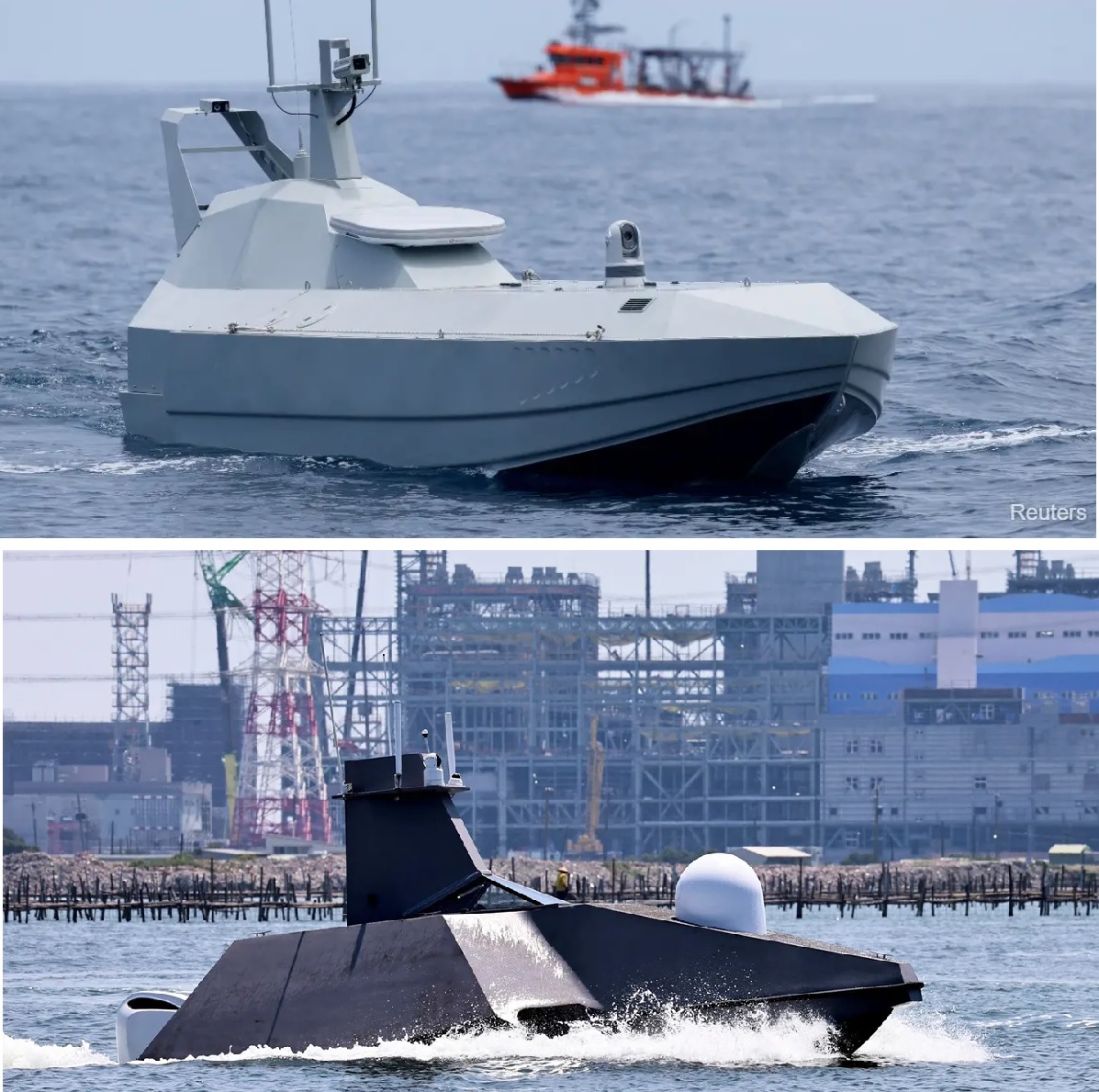
Taiwan is racing to transform its coastal defenses with a fleet of advanced armed uncrewed surface vessels (USVs), a technology that has already proven its value in modern warfare. Drawing heavily on the lessons of the Ukraine–Russia conflict in the Black Sea, these high-speed naval drones are designed to hunt, disrupt, and destroy an invading force long before it reaches Taiwan’s shores.
The urgency is clear: with the People’s Republic of China (PRC) maintaining the world’s largest navy and rehearsing large-scale amphibious operations, Taiwan needs cost-effective tools to counter a numerically superior fleet. USVs offer exactly that — fast, hard-hitting platforms that can operate autonomously or remotely, deliver precision strikes, and force enemy ships into predictable patterns that make them easier targets for Taiwan’s missiles, aircraft, and coastal defenses.
Why These Designs Stand Out
Taiwan’s new USVs are not simple motorboats with explosives; they are purpose-built combat drones packed with stealth features, advanced communications, and multi-role payloads. Key designs include:
-
Kuaiqi – Modeled after Ukraine’s most successful drones, this low-profile vessel uses twin diesel outboards to reach speeds of 43 knots. It can carry a bow-mounted explosive ram for direct strikes, a hangar for quadcopter drones to provide aerial reconnaissance, and six launch tubes for loitering munitions, such as Taiwan’s indigenous Jing Feng type.
-
Endeavour Manta – A sleek trimaran built from stealthy fiber-reinforced plastic. At 8.6 meters long, it has a sail-like mast housing communications systems and can operate with or without a crew. Its design reduces radar detection, allowing it to get close to enemy ships before being spotted.
-
Sea Shark 800 – A larger evolution of Taiwan’s first-generation USV, with fully enclosed twin outboard motors that may provide light armor protection. Its size allows for heavier payloads and potentially longer-range missions.
-
Piranha 9 – A 9-meter stealth attack drone coated in radar-absorbent material. It houses a large central hangar for loitering munitions and is powered by twin water jet systems for rapid maneuverability.
These designs combine speed, stealth, and modular weapons capability — a rare combination for small surface craft. They can swarm enemy formations, strike high-value targets like landing barges or supply ships, and then retreat or self-destruct before interception.
A Strategic Shift in Taiwan’s Defense
The development program, led by the National Chung-Shan Institute of Science & Technology in partnership with multiple private firms, has accelerated dramatically in the past year. Field trials of several prototypes are already underway, and Taiwan is reportedly moving toward mass production to ensure these drones can be deployed in large swarms.
In a real-world scenario, a fleet of these USVs could soften up an invasion force before it reaches the beaches, target vulnerable resupply ships, and force Chinese warships into narrow defensive formations. This would make them easier prey for Taiwan’s shore-based anti-ship missiles like the Hsiung Feng III or U.S.-made Harpoons.
Raising the Stakes for Beijing
Military analysts say these USVs won’t guarantee victory in the event of war, but they could make any attempted invasion far costlier for the PRC. They add an extra layer of uncertainty for Chinese commanders, who would have to plan for hidden, fast-moving threats in addition to Taiwan’s air, missile, and submarine defenses.
In modern warfare, small, smart, and expendable systems can sometimes have a bigger impact than large, expensive platforms. For Taiwan, these naval drones may become the wild card that forces Beijing to think twice before launching a full-scale assault.
✍️ This article is written by the team of The Defense News.