Taiwan’s Deputy Foreign Minister Makes Secret Visit to Israel as Taipei Accelerates ‘T-Dome’ Air-Defense Blueprint
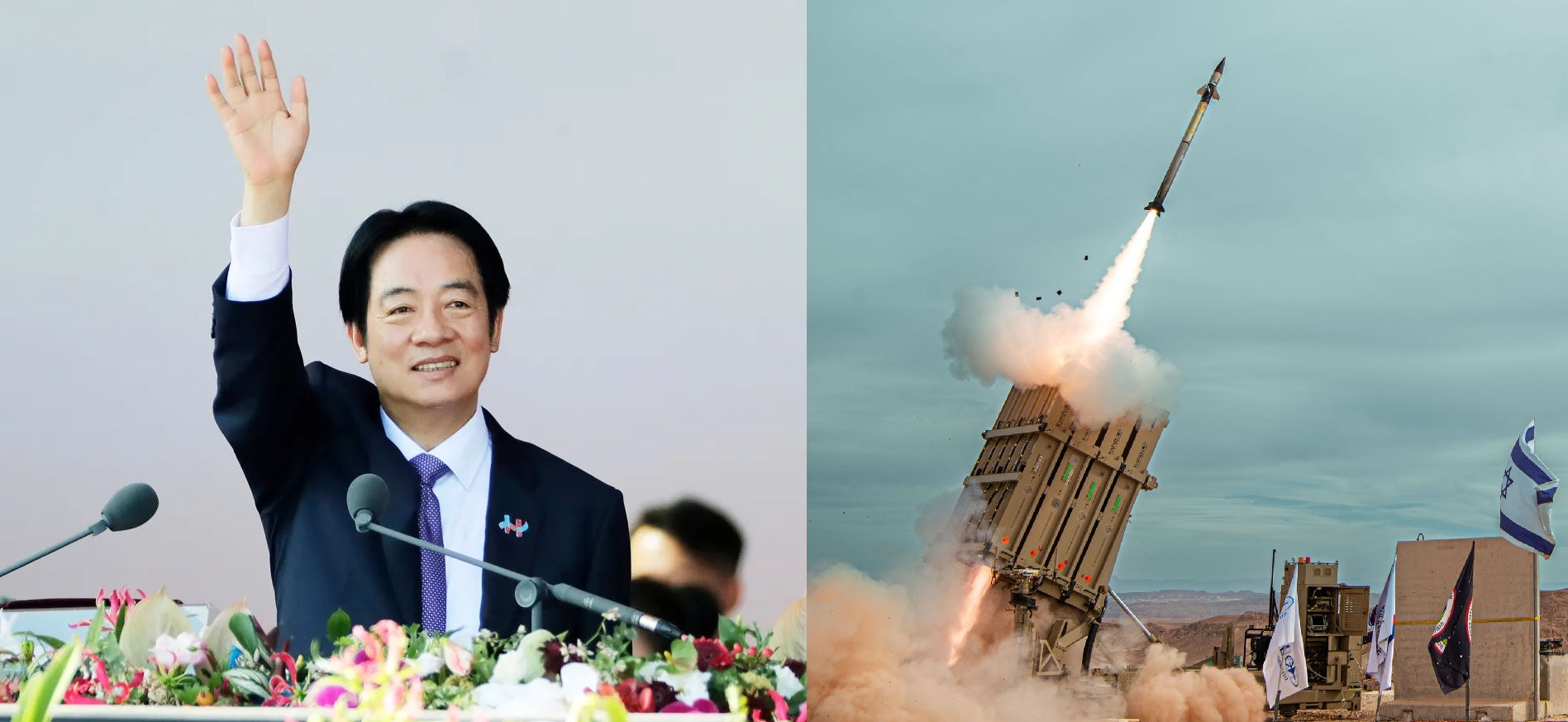
Taiwan’s Deputy Foreign Minister François Wu quietly travelled to Israel in recent weeks to explore deeper security and technology cooperation, according to people briefed on the visit. The discreet trip, first reported by Reuters, underscores a growing though unofficial partnership as Taiwan races to build a multi-layered “T-Dome” air-defense network modeled in part on Israel’s Iron Dome.
A Visit Kept Out of Public View
Sources familiar with the matter say Wu’s visit was intentionally low-profile, involving meetings with Israeli officials, defence technologists and lawmakers. Neither Taipei nor Jerusalem formally announced the trip, reflecting sensitivities surrounding Israel’s complex relationship with China, a major economic partner.
The unpublicised diplomacy highlights expanding practical ties in defence systems, early-warning technologies, drones, cybersecurity, semiconductor cooperation and trade, despite the absence of formal diplomatic relations. Analysts describe this as a “quiet convergence” shaped by strategic necessity.
Taipei Looks to Israel’s Experience
Wu’s visit comes as Taiwan pushes ahead with its T-Dome programme — a multi-layered air-defence shield President Lai Ching-te unveiled in October 2025. Designed to counter rockets, drones, cruise missiles, ballistic threats and saturation attacks, the system aims to integrate:
-
Patriot and Sky Bow long-range interceptors
-
new short- and medium-range interceptors
-
an upgraded radar and sensor network
-
AI-enabled battle-management software inspired by Israeli models
Taipei has openly acknowledged that Israel’s Iron Dome, David’s Sling and Arrow systems offer important lessons for building a defence architecture tailored to Taiwan’s geography and the threat posed by the People’s Liberation Army (PLA).
Strategic Imperatives Drive Cooperation
Taiwan’s defence planners face an increasingly complex environment as the PLA expands its missile arsenal, drone fleet and gray-zone air operations. Military assessments warn that any future conflict could involve large-scale missile volleys, drone swarms and intense electronic warfare, making a unified defensive shield essential for Taiwan’s survival.
For Israel, deeper engagement with Taiwan opens avenues in defence technology, radar algorithms, drone defence and AI-based targeting tools, though cooperation remains politically sensitive due to Israel’s broader ties with Beijing.
Growing but Quiet Exchanges
Despite lacking formal diplomatic relations, Taiwan and Israel have steadily broadened their cooperation through:
-
exchanges on missile defence concepts and command-and-control systems
-
collaboration in cybersecurity and research
-
strengthening links in semiconductors and AI, especially as Israel diversifies its supply lines
-
trade missions in biotech, medical devices and advanced materials
Wu’s visit sought to give greater structure to these channels, enabling both sides to collaborate while avoiding open diplomatic confrontation.
Financing Taiwan’s Air-Defense Transformation
Taipei is aligning the T-Dome initiative with a wider expansion of defence spending. President Lai has pledged to raise military expenditure toward 5% of GDP by 2030, dedicating significant resources to:
-
interceptor procurement
-
radar upgrades
-
drone-defence technologies
-
AI-enabled early-warning systems
Taiwan’s defence ministry describes T-Dome as a “system of systems”, designed to significantly boost interception rates under high-intensity attack scenarios.
Quiet Cooperation Likely to Deepen
Neither government has released details of Wu’s discussions, but further technical delegations, industry-level talks and shared research projects are expected. Still, major public arms deals remain unlikely given Israel’s need to carefully manage its relationship with China.
Even so, the momentum is unmistakable: as tensions rise across the Taiwan Strait, Taipei’s pursuit of a modern air-defense shield — and its growing interest in Israeli expertise — is pushing the two sides into closer, if discreet, strategic alignment.
✍️ This article is written by the team of The Defense News.