Taiwan to Establish First Army Drone Units as China’s Invasion Threat Grows

Taiwan’s military is preparing to form its first dedicated army drone units by the end of this year, a strategic move aimed at strengthening the island’s defenses as tensions with China continue to rise. This decision is part of a wider effort by Taipei to modernize its armed forces and adopt advanced technology, especially in the face of an increasingly assertive Chinese military presence in the Taiwan Strait.
Taiwan’s Defense Minister, Wellington Koo, recently highlighted the importance of this new development. He explained that the initiative follows the country’s marine corps, which has already converted some of its traditional tank and artillery battalions into drone units. The core idea behind this shift is to emphasize asymmetric warfare, where smaller, agile, and innovative systems can effectively counter the sheer numbers and firepower of China’s armed forces.
Wellington Koo summarized the strategy by stating, “It would be best if China wakes up every day feeling like today’s just not the day to invade.” The message is clear — Taiwan aims to make any military adventure by Beijing too risky and uncertain to pursue.
Growing Demand for Long-Range Drones
In recent months, international defense experts have urged Taiwan to focus more on long-range unmanned aerial vehicles (UAVs). In June 2024, the US-based Center for a New American Security (CNAS) stressed that Taiwan and its allies need to close the gap with China’s rapidly expanding drone fleet. Without adequate investment, Beijing could gain a significant advantage in the early stages of any conflict.
To address this, Taiwan has accelerated its drone development programs, primarily led by the state-run National Chung-Shan Institute of Science and Technology (NCSIST). The institute has unveiled several indigenous drone systems, each designed with Taiwan’s specific defensive needs in mind.
Taiwan’s Key Drone Systems
Among the most notable drones in Taiwan’s arsenal is the Chien Hsiang, an advanced anti-radiation loitering munition. This kamikaze-style drone can hunt down and destroy enemy radar systems, a critical capability in modern warfare.
Chien Hsiang Specifications:
-
Type: Loitering munition (kamikaze drone)
-
Range: Up to 1,000 kilometers (621 miles)
-
Speed: 500 to 600 kilometers (310 to 372 miles) per hour during terminal dive
-
Purpose: Seeks and destroys enemy radar and air defense systems
Additionally, NCSIST is developing two more types of kamikaze drones:
-
A lightweight tactical drone similar in role to the US-made Switchblade, suitable for quick, small-scale attacks on enemy personnel and vehicles.
-
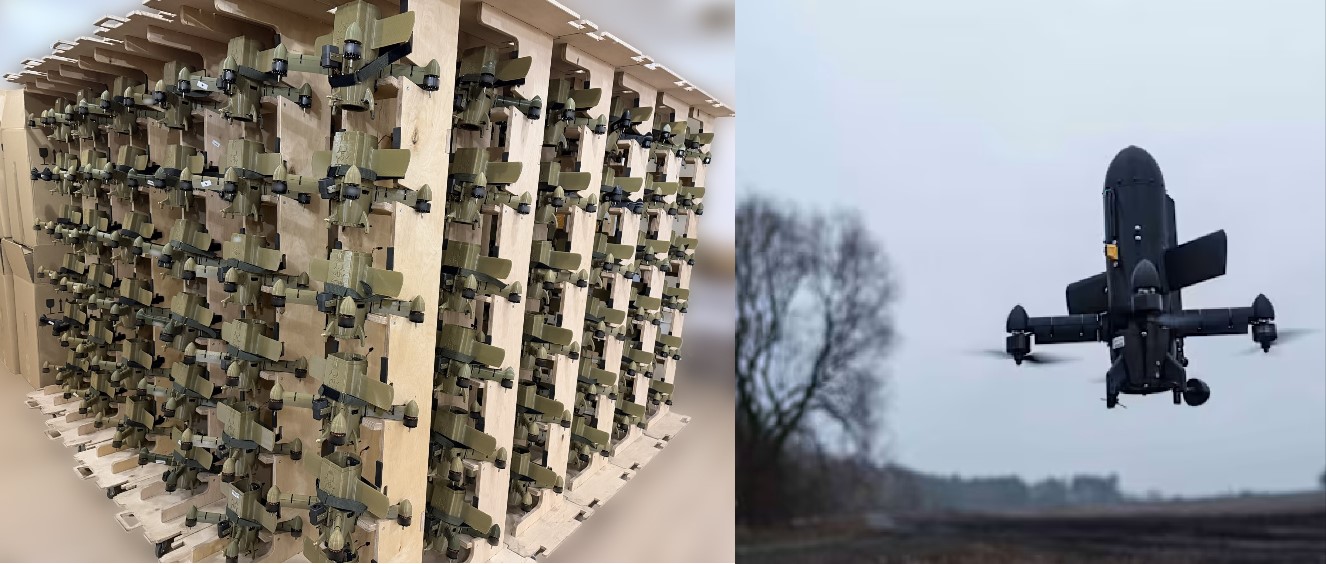
A swarm attack drone, designed to overwhelm enemy defenses by operating in large groups, making it difficult for traditional anti-air systems to respond effectively.
Expanding Unmanned Naval Capabilities
Taiwan isn’t limiting its unmanned systems to the air. Taipei is also planning to integrate unmanned surface vessels (USVs) into its navy. These robotic boats would complement manned ships by performing reconnaissance, surveillance, and even offensive missions without risking the lives of sailors. In a conflict scenario, these vessels could patrol coastal waters, intercept invading forces, or launch coordinated attacks alongside aerial drones.
With China’s military pressure showing no signs of easing, Taiwan’s decision to form army drone units marks a crucial step in modernizing its defensive strategy. By focusing on unmanned and asymmetric warfare systems like long-range drones, loitering munitions, and unmanned naval craft, Taiwan aims to complicate any invasion plan and strengthen its ability to defend itself.
The message to Beijing is unmistakable — Taiwan is preparing for every possibility and investing in smart, modern, and adaptable technologies to secure its future.
✍️ This article is written by the team of The Defense News.