Taiwan Moves to Fit HF-2E Cruise Missile with Mk 41 VLS on New 6,000-ton Class Destroyers
The National Chung-Shan Institute of Science and Technology (NCSIST) is quietly pressing forward on a capability that could reshape how Taiwan fields long-range strike at sea: adapting the indigenous HF-2E land-attack cruise missile for launch from the Mk 41 Vertical Launch System (VLS). The project — part engineering trial, part strategic hedge — leverages two Mk 41 sets Taipei acquired for testing and underlines the island’s ambition to arm a new 6,000-ton class destroyer with survivable, sea-based deep-strike firepower.
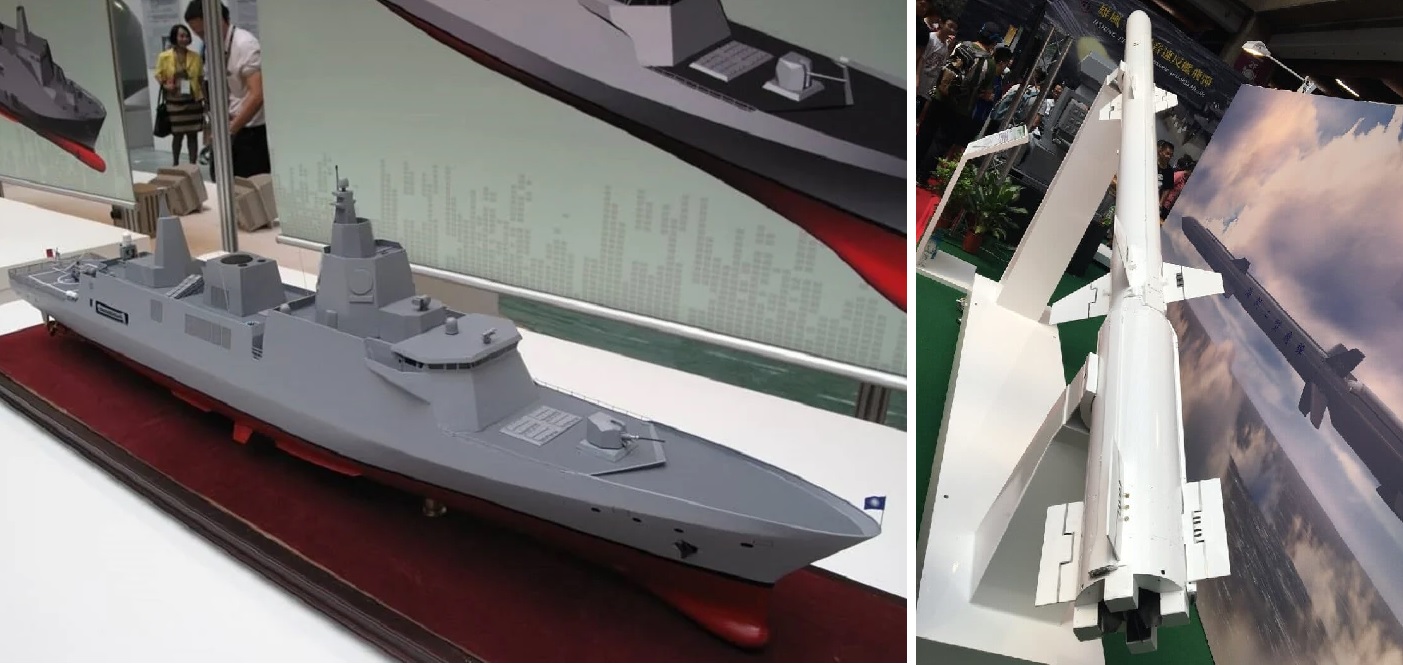
The HF-2E, often described as Taiwan’s indigenous Tomahawk-style cruise missile, is a subsonic, terrain-hugging, GPS/INS-guided weapon designed to strike fixed, high-value targets deep inland. HF‑2E at roughly 6.0 m in length, about 0.5 m in diameter, with a launch weight near 980 kg and a warhead of roughly 200 kg; it is typically described as high‑subsonic (around Mach 0.75–0.85), powered by a turbofan with a solid‑rocket booster for launch, and reported accuracy in the low‑tens of metres (order 10–15 m). Open-source reports suggest the HF-2E variants have ranges from 600 Km to over 2000 Km, with infrared or electro-optical seekers for terminal guidance. Integrating it into the Mk 41 would allow the Republic of China Navy (ROCN) to deploy a true sea-launched land-attack capability, far more survivable than shore-based batteries.
However, turning that concept into operational reality is technically demanding. The Mk 41 system — originally an American design used by U.S. and allied fleets — has strict limits on missile length, diameter, and exhaust flow. Converting a land-based weapon into a ship-launched canisterized missile requires developing new boosters, sealed launch canisters, and software for vertical ejection and ignition. It also demands deep integration with the ship’s combat management system (CMS) for targeting, mission planning, and flight-path control. Taiwan’s two evaluation Mk 41 units are reportedly being used as testbeds for these purposes by NCSIST.
Complicating matters are export-control restrictions. The Mk 41 is a U.S.-origin technology, and while Taipei purchased two systems for testing, further procurement or software access could require Washington’s approval. This constraint might push Taiwan to accelerate the development of an indigenous VLS system, similar in size and function to the Mk 41, to ensure self-reliance.
This initiative aligns with Taiwan’s future destroyer program — a 6,000-ton “New Generation” warship under design for the Republic of China Navy. Defence budgets between 2024 and 2026 have allocated funding for concept development and design studies. The ship is expected to carry advanced AESA radars, air-defence missiles, and strike weapons like the HF-2E in Mk 41 cells. The design reflects Taipei’s ambition to field a multi-role surface combatant capable of air defence, anti-ship warfare, and land-attack missions.
Taiwan’s future destroyer program development timelines:
-
2024–2026: Continued design and Mk 41 integration trials by NCSIST.
-
2027–2029: Prototype testing, booster trials, and combat-system integration.
-
2030–2032: Construction and sea trials of the first 6,000-ton destroyer.
-
Early 2030s: Possible operational deployment if testing and funding remain steady.
If successful, integrating the HF-2E into Mk 41 VLS would give Taiwan a sea-based long-range strike capability, extending its deterrence reach and reducing reliance on vulnerable ground-based launchers. The system would enable distributed maritime strikes, complicating an adversary’s targeting and improving survivability of key assets at sea.
However, such an offensive capability would also raise strategic concerns. A sea-launched land-attack missile changes the regional balance, signalling that Taipei can respond to aggression with precision strikes deep into enemy territory. This deterrent power comes with the risk of miscalculation or escalation, making careful policy management essential.
For now, the NCSIST’s HF-2E Mk 41 project remains in the development and evaluation phase, but it represents one of the most significant advances in Taiwan’s defence modernization plan. If brought to fruition, the combination of indigenous cruise missile technology and U.S.-standard vertical launch architecture could transform Taiwan’s Navy into a far more versatile and survivable maritime strike force.
✍️ This article is written by the team of The Defense News.