Taiwan Moves HF-2E Land-Attack Missile Launchers to East Coast as Chinese Live-Fire Exercises
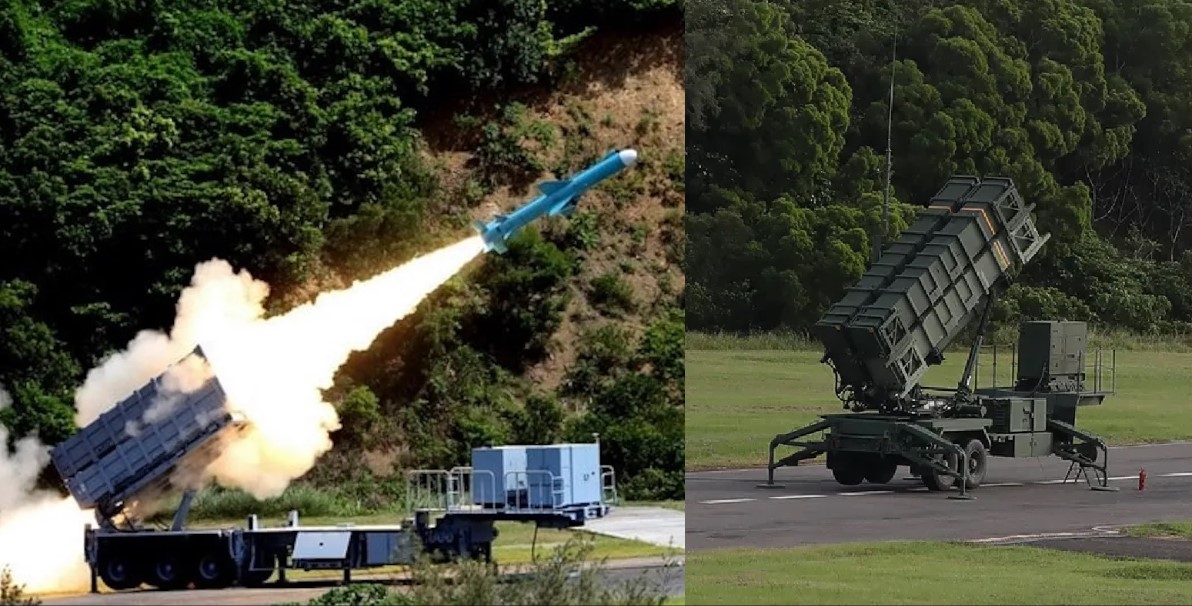
A launcher vehicle linked to Taiwan’s Hsiung Feng IIE (HF-2E) land-attack cruise missile was observed moving along the island’s eastern coast on December 31, according to Taiwanese media reports and open-source imagery circulating online. The sighting, reportedly along routes connecting Hualien and Taitung, comes as China’s People’s Liberation Army (PLA) conducts large-scale live-fire exercises in waters and airspace surrounding Taiwan, underscoring a period of intensified military pressure and elevated alert levels across the island.
Defense analysts say the movement of a system associated with one of Taiwan’s longest-range conventional strike weapons reflects a heightened readiness posture, particularly on the island’s less densely populated eastern flank, which hosts key military infrastructure and is considered more survivable in a high-intensity conflict scenario.
Context of PLA Pressure and Strategic Signaling
The reported deployment activity coincided with ongoing PLA joint drills, which regional observers characterize as part of Beijing’s sustained campaign of military signaling and coercion toward Taipei. In recent years, such exercises have increasingly included live-fire components, missile tests, and multi-domain operations, often timed around political developments or diplomatic engagements involving Taiwan.
Against this backdrop, the appearance of a vehicle linked to the HF-2E missile force has drawn attention not as an isolated event, but as a visible indicator of Taiwan’s efforts to demonstrate deterrence, survivability, and operational mobility under pressure.
The Hsiung Feng IIE: Taiwan’s Primary Land-Attack Cruise Missile
The Hsiung Feng IIE, also known as Brave Wind IIE, is a subsonic, ground-launched land-attack cruise missile developed by Taiwan’s National Chung‑Shan Institute of Science and Technology. Unlike earlier members of the Hsiung Feng family, which were primarily designed for anti-ship roles, the HF-2E is the only variant specifically optimized for land-attack missions.
The program is believed to have begun around 2001, driven by Taipei’s assessment that its existing missile inventory lacked the range and depth required to hold key adversary targets at risk beyond China’s immediate coastal regions. Over time, the HF-2E has emerged as one of Taiwan’s most strategically significant conventional strike systems.
Warhead Options and Mission Profiles
Open-source assessments indicate that the HF-2E typically carries a single high-explosive, semi-armor-piercing warhead weighing approximately 200 to 225 kilograms. Analysts also believe that specialized variants exist, tailored for distinct mission sets.
One such variant is reportedly optimized for attacking hardened bunkers and command centers, while another is assessed to be designed for airfield denial missions. The latter may employ submunitions intended to disable runways, taxiways, and associated infrastructure, complicating sortie generation and recovery operations at targeted bases.
Guidance, Accuracy, and Survivability
The missile’s guidance system is believed to combine inertial navigation with GPS updates, supplemented by terrain contour matching (TERCOM) technology. This configuration enables sustained low-altitude flight, reducing radar visibility and enhancing survivability against air defense systems.
For the terminal phase, several defense assessments suggest the possible use of infrared imaging guidance, allowing target discrimination and final-course correction. Some analysts estimate a pre-terminal accuracy of around 15 meters circular error probable (CEP), a level of precision consistent with modern land-attack cruise missiles.
Technical Characteristics and Performance
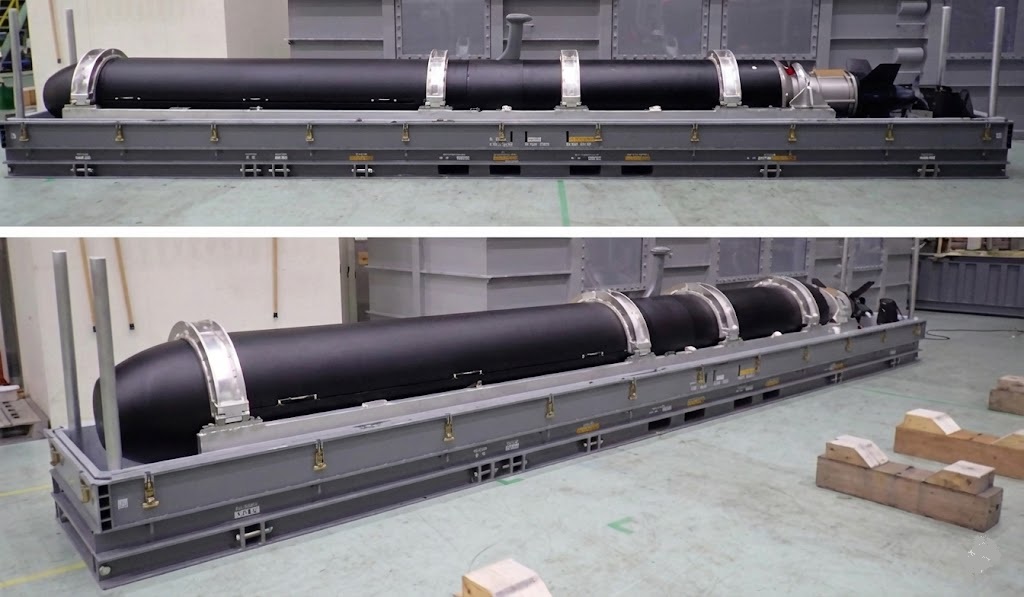
Technically, the HF-2E measures approximately six meters in length, with a body diameter of 0.50 meters. Extended-range variants are assessed to reach about 6.25 meters in length. The launch weight of the standard version is estimated at roughly 980 kilograms, while longer-range configurations may carry payloads in the 400 to 450 kilogram class, depending on mission requirements.
Propulsion consists of a solid-propellant booster used during launch, followed by a locally developed, liquid-fueled turbojet engine that sustains cruise flight. The missile is believed to travel at a subsonic speed of approximately 290 meters per second, balancing range, fuel efficiency, and low-altitude penetration capability.
Operational Implications
The sighting of a vehicle associated with the HF-2E missile force along Taiwan’s eastern road network highlights the island’s emphasis on mobility, dispersal, and concealment—key elements of its broader asymmetric defense strategy. By operating from road-mobile launchers and utilizing rugged terrain, Taiwan aims to complicate adversary targeting and preserve strike capabilities in the early stages of a conflict.
As PLA live-fire drills continue and cross-strait tensions remain elevated, the movement of such systems serves as a reminder that Taiwan is not only monitoring developments closely, but also actively positioning its most capable conventional deterrent assets to signal readiness and resilience.
About the Author
Aditya Kumar:
Defense & Geopolitics Analyst
Aditya Kumar tracks military developments in South Asia, specializing in Indian missile technology and naval strategy.