Sweden and UK Complete “Viking Flame” Trials, Advancing Next-Generation Fighter Survivability Under Project Easyrider
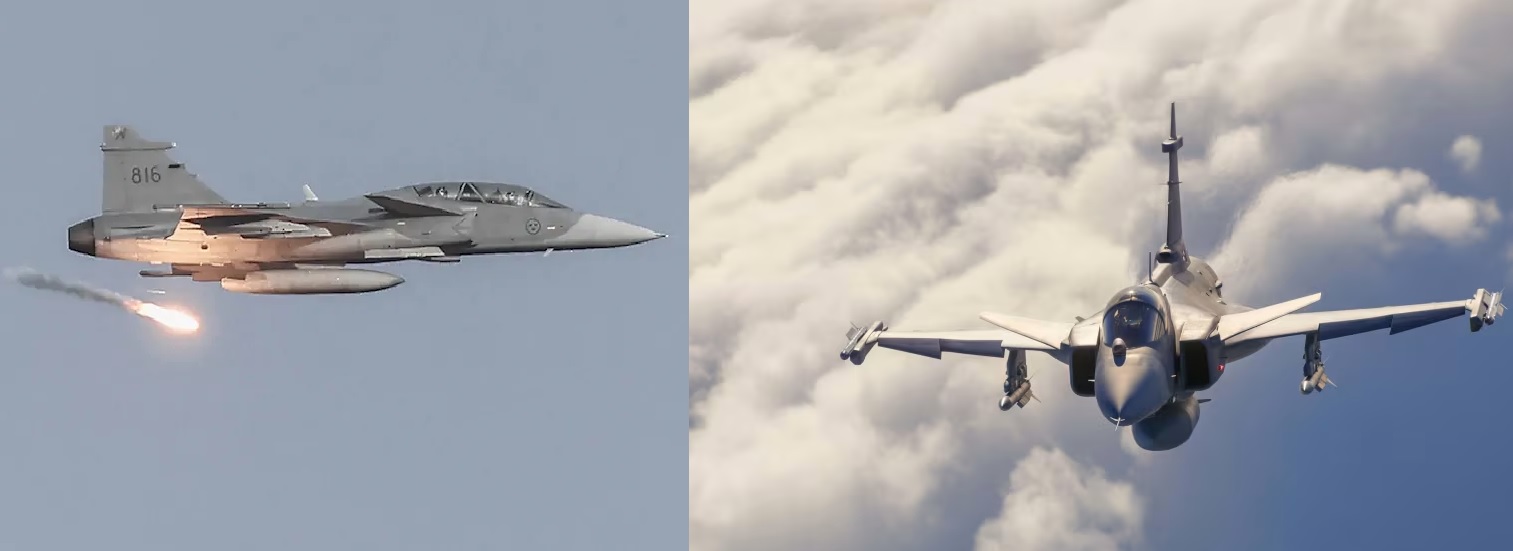
Sweden’s Defence Materiel Administration (FMV), in coordination with UK defence authorities, has concluded an intensive weeklong evaluation of next-generation fighter self-protection systems under the Viking Flame campaign. Conducted in mid-November at RAF Coningsby and surrounding test ranges, the trials marked a major joint push by European partners to gather high-fidelity data on emerging electronic-warfare (EW) and countermeasure technologies.
A Key Step in Preparing NATO Fighters for High-Intensity Threats
Officials described Viking Flame as a significant data-gathering mission, blending radar testing, electronic-attack scenarios, expendable decoy assessments, and simulated near-peer missile threats. The effort aims to strengthen NATO’s preparedness against growing challenges from advanced surface-to-air missile (SAM) systems, long-range radars, and modern infrared-guided weapons.
The campaign is embedded within Project Easyrider, a classified, fast-track survivability initiative led by the UK’s Air and Space Warfare Centre (ASWC) and the Defence Science and Technology Laboratory (DSTL). Easyrider focuses on accelerating the development and validation of aircraft protection systems outside traditional, slow procurement cycles — enabling rapid testing, modification, and integration through modular testbeds and coalition participation.
Gripen Fighters Take Lead Role in Countermeasure Testing
Central to the Viking Flame campaign were two Saab JAS 39 Gripen aircraft from FMV Test & Evaluation (FMV T&E Luft). Operating out of RAF Coningsby, the Gripens served as high-flexibility test platforms due to their modular avionics design, open architecture, and compatibility with advanced EW payloads.
Across the five-day window, the aircraft flew six fully instrumented sorties, each designed to simulate realistic engagement conditions. These included:
-
Radar-guided missile tracking and evasion
-
Electronic attack and jamming maneuvers
-
Live deployment of expendable countermeasures
-
Sensor-fusion and digital warfare software evaluations
-
Tests against ground-based threat emitters replicating near-peer A2/AD networks
Despite adverse weather conditions, all key objectives were met. The resulting data — covering system performance, threat-recognition algorithms, and countermeasure effectiveness — will now serve as a baseline for future NATO-wide survivability upgrades.
Project Easyrider: A New Model for Rapid Air-Defense Development
Project Easyrider is regarded as one of the United Kingdom’s most forward-leaning and progressive defense innovation initiatives. Operating within a classified framework, the program brings together operational fighter pilots, electronic-warfare specialists, software engineers, defence scientists, and international partner nations in a single, fast-moving development ecosystem.
Unlike traditional programs bound by long and rigid procurement cycles, Easyrider employs a rapid-iteration model, integrating experimental systems directly onto frontline aircraft such as the Gripen, the Eurofighter Typhoon, and future combat platforms. Through this approach, the project evaluates a wide spectrum of next-generation survivability technologies, including advanced expendables, Digital RF Memory (DRFM) jammers, new towed-decoy systems, enhanced sensor-fusion algorithms, upgraded threat-recognition software, and sophisticated electronic counter-countermeasure (ECCM) tools.
The Viking Flame campaign stands out as one of the most significant multinational demonstrations conducted under Project Easyrider, underscoring its growing role as a critical testbed for accelerating aircraft protection capabilities across NATO and partner air forces.
A Demonstration of Swedish–British Interoperability
Planning and execution were jointly managed by ASWC, DSTL, FMV, the Swedish Defence Research Institute (FOI), and the Swedish Air Force. The operation highlighted seamless cooperation between Sweden and the UK — especially important as Sweden integrates further into NATO operational frameworks following its move toward full alliance membership.
Officials emphasized that the trials not only tested technology but also validated combined tactical procedures, data-sharing methods, and EW coordination between air forces.
Strengthening NATO’s Edge Amid Expanding A2/AD Challenges
The urgency behind the Viking Flame campaign reflects a shifting security environment. As near-peer adversaries deploy denser radar networks, long-range missile systems, and modern electronic-attack capabilities, NATO air forces face increasing difficulty operating safely across contested airspace.
Validating new self-protection technologies on the Gripen — a combat-proven, NATO-compatible aircraft — provides a powerful foundation for upcoming upgrades across:
-
Eurofighter Typhoon
-
F-35 Lightning II
-
Gripen C/D and Gripen E
-
Future Combat Air Systems (FCAS/GCAP)
The data from Viking Flame may directly influence how these fleets evolve their survivability suites over the coming decade.
A Milestone for Future Air Combat Readiness
The Viking Flame campaign stands as a clear example of how multinational collaboration, rapid engineering cycles, and realistic testing environments can accelerate air-defense modernization. The findings will shape NATO doctrine, improve allied EW coordination, and help ensure air superiority against increasingly complex missile and radar threats.
As one program official noted, the exercise represents “a crucial step toward future-proofing NATO’s air forces for the threat environment of tomorrow.”
About the Author
Aditya Kumar:
Defense & Geopolitics Analyst
Aditya Kumar tracks military developments in South Asia, specializing in Indian missile technology and naval strategy.