Strike Eagle Unleashes AGR-20F: F-15E Rapidly Fielded with Laser-Guided Rockets for Counter-Drone Warfare
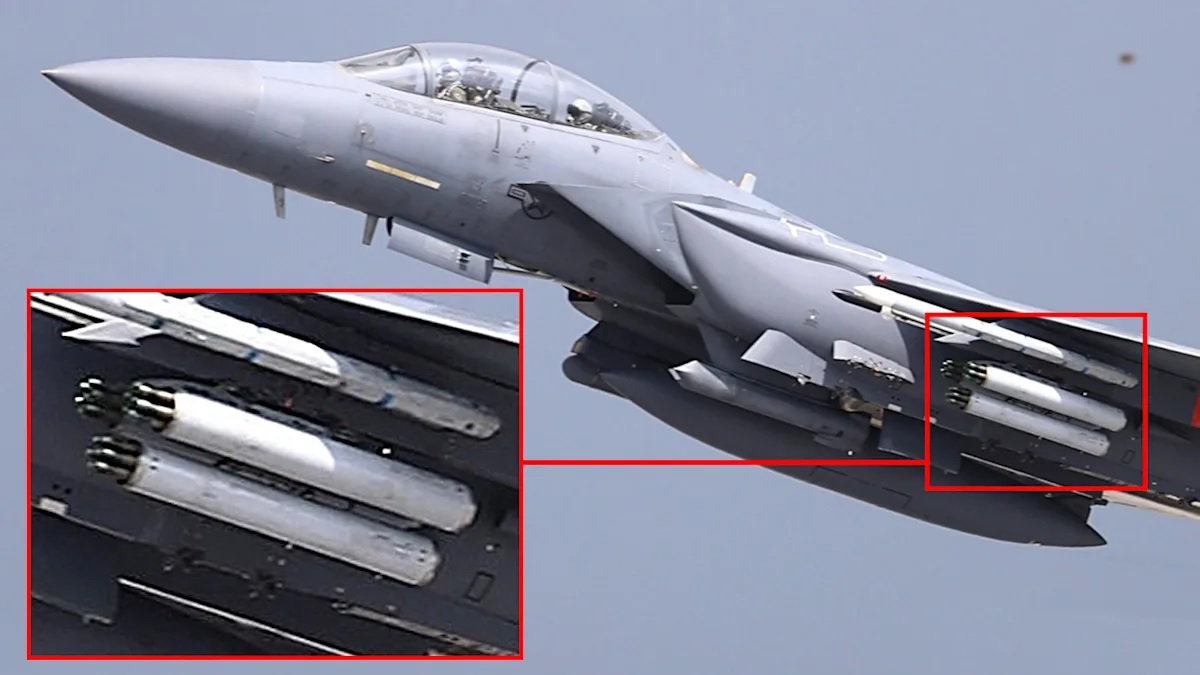
EGLIN AFB, FLORIDA : The U.S. Air Force has given its F-15E Strike Eagle a powerful new edge by integrating the AGR-20F Advanced Precision Kill Weapon System II (APKWS II), a laser-guided rocket designed to counter drones and small, fast-moving threats. What makes this achievement remarkable is the speed: the process went from ground testing to combat deployment in just nine days, redefining what rapid fielding means for modern tactical airpower.
From Test Bench to Battlefield in Record Time
The integration effort, led by the 96th Test Wing and the 53rd Wing at Eglin Air Force Base, was driven by urgent operational needs. Rather than developing new systems, engineers repurposed legacy TER-9A ejector racks and LAU-131 rocket launchers from storage, adapting them for the F-15E. These 1970s-era systems were modernized with a new digital interface that allows the rockets to communicate with the Strike Eagle’s avionics and targeting pod.
This quick-thinking solution avoided years of delay and enabled live-fire testing almost immediately. Within a week of those tests, operational squadrons were already flying with the AGR-20F in combat zones.
Precision Firepower at Low Cost
The AGR-20F is a precision-guided conversion of the classic 70mm Hydra rocket. Each rocket weighs around 30 pounds and offers a 5–7 km standoff range, filling a critical gap between unguided rockets and costly munitions like the GBU-39 Small Diameter Bomb or AGM-65 Maverick.
For the F-15E, the advantage is scale: the Strike Eagle can carry up to 42 AGR-20F rockets in addition to its standard air-to-air missiles. This creates a “weapons truck” profile, allowing a single aircraft to neutralize swarms of drones, light vehicles, or fast-attack boats at a fraction of the cost of larger precision weapons.
Proven Across Land and Sea
Testing covered both land-based targets and maritime scenarios. The rockets performed with precision against moving and static ground targets, simulating drones and light armor. Overwater tests showed the AGR-20F’s ability to hit small boats and fast surface craft, expanding the F-15E’s effectiveness in littoral and coastal strike missions.
The system integrates seamlessly with the jet’s targeting pod, enabling pilots to guide the rockets with pinpoint laser designation. This provides real-time accuracy with minimal collateral risk, even in cluttered or contested airspace.
Strategic Significance
The rapid fielding of the AGR-20F reflects a broader U.S. Air Force strategy: embracing affordable precision munitions to counter the growing threat of low-cost drones and unconventional systems. In recent conflicts, F-15Es faced situations where stocks of expensive air-to-air missiles were strained, highlighting the need for a scalable, economical solution.
The AGR-20F answers that call, giving Strike Eagle units the ability to engage asymmetric threats while preserving larger precision weapons for high-value targets. This ensures both cost efficiency and operational flexibility.
Extending the F-15E’s Relevance
Originally designed for deep strike and interdiction missions, the F-15E now gains a versatile role in counter-drone and asymmetric warfare. By combining old hardware, new digital interfaces, and modern guided rockets, the Air Force has shown how adaptability can breathe new life into legacy platforms.
With AGR-20F rockets already deployed in active theaters, the Strike Eagle has once again proven its value as one of the most flexible and combat-ready aircraft in the U.S. inventory.
✍️ This article is written by the team of The Defense News.