StandardAero Delivers 1,000th J85-5 Engine to U.S. Air Force, Strengthening T-38 Training Fleet Support
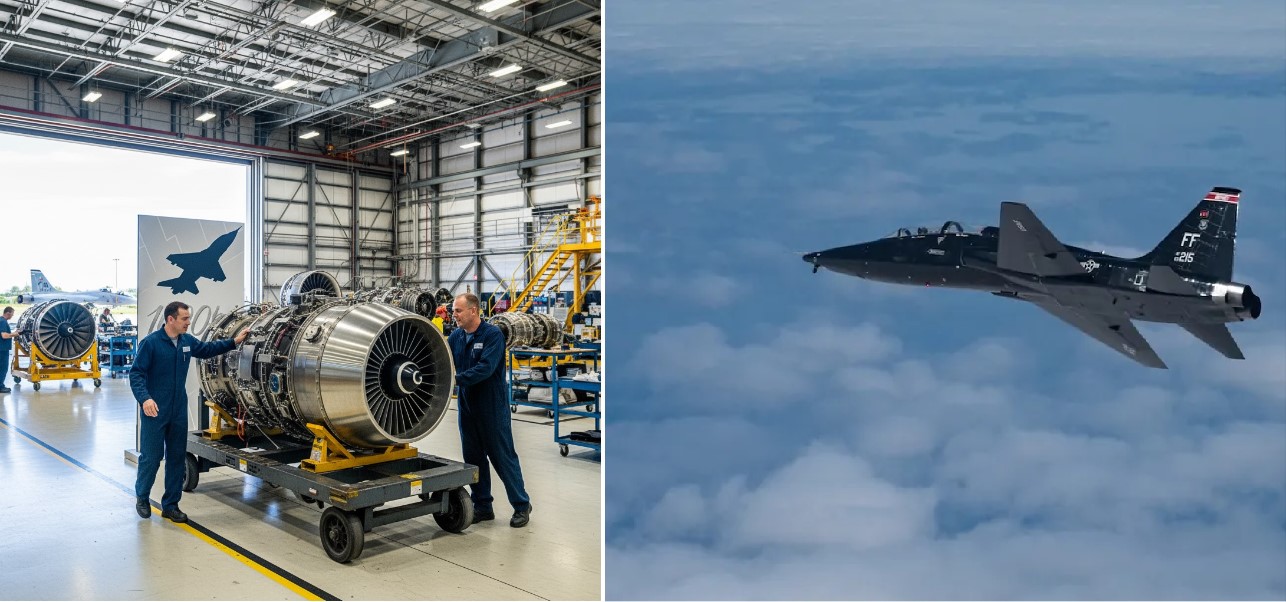
In a landmark achievement for American aerospace sustainment, StandardAero has announced the delivery of its 1,000th GE J85-5 turbojet engine to the United States Air Force (USAF). The milestone comes just five years after the company began supporting the engine under the Engine Regional Repair Center (ERRC) contract, marking a significant step in maintaining the readiness of the USAF’s T-38 Talon training fleet.
The J85-5 engine powers the T-38, a twin-engine supersonic jet trainer that has been a vital component of U.S. and allied pilot training programs for more than six decades. Despite its vintage design, the aircraft remains the backbone of advanced pilot training, bridging the gap between basic flight instruction and modern fighter operations.
A Milestone Rooted in Scale and Precision
All J85-5 engines under this program are serviced at StandardAero’s Port San Antonio facility in Texas — a sprawling 810,000-square-foot site that handles five major military and commercial MRO (Maintenance, Repair, and Overhaul) programs. The facility has become one of the most capable and productive military engine repair centers in the country, with advanced tooling, digital workflow systems, and a growing workforce of skilled technicians.
The company’s Aviation Mechanic Training Program, also located at Port San Antonio, trains over 200 mechanics annually, ensuring a steady stream of qualified professionals to support both military and commercial engine maintenance. This in-house capability not only bolsters the J85-5 program but also strengthens the broader U.S. aerospace sustainment workforce.
Celebrating the 1,000th Engine
To mark the occasion, StandardAero hosted a ceremony at the Tech Port Center in Port San Antonio. The event was led by Greg “Chappy” Chapman, Program Manager for the J85-5 line, and attended by production staff, USAF representatives, and local officials.
Speaking at the event, Rick Pataky, Vice President and General Manager of StandardAero’s Military Division, emphasized the importance of the partnership:
“Supporting the USAF pilot training mission is a tremendous honor. Delivering 1,000 engines in such a short timeframe is a testament to the dedication and collaboration of our entire team.”
Marc Drobny, President of StandardAero’s Military, Helicopter, and Energy Division, highlighted the depth of cooperation between the company and the Air Force’s logistics and propulsion teams:
“This milestone reflects the strength of our partnership with the USAF Propulsion Program Office, the Air Education and Training Command, and the 448th Supply Chain Management Wing. Together, we’ve built a resilient and transparent value chain that supports the entire J85-5 fleet, flight line, and national security.”
A Legacy Engine with a Modern Role
First designed in 1954 by GE Aerospace, the J85-5 remains one of the longest-serving military jet engines in continuous operation. Compact, powerful, and reliable, it originally powered aircraft such as the GAM-72 Green Quail decoy and the Northrop F-5 Freedom Fighter (N156F). Its commercial derivative, the CJ610, went on to power early Learjet models, cementing the engine’s place in both military and civilian aviation history.
Despite its age, the J85-5 continues to play a crucial role in preparing new generations of fighter pilots. The engine’s service life is expected to continue well into the 2040s, with incremental upgrades and overhaul programs ensuring its performance and reliability remain at modern standards.
Expanding MRO Footprint and Capabilities
StandardAero’s work on the J85-5 is part of a broader engine support portfolio that includes the LEAP-1A and LEAP-1B commercial turbofan engines, serviced under the company’s status as a CFM LEAP Premier MRO Provider. The Port San Antonio site has expanded operations since March 2024, enhancing throughput and turnaround times for both military and commercial customers.
Beyond Texas, the company’s Stockton, California facility handles other J85 variants, providing component repair support for the USAF J85 MISTR system since 2013. It also services the J85-21 engine for the U.S. Navy and Foreign Military Sales (FMS) partners — further underscoring StandardAero’s integral role in supporting legacy propulsion systems across multiple services.
Strengthening the Air Force Training Backbone
The delivery of 1,000 overhauled engines represents more than just a production milestone — it symbolizes the health of the U.S. military’s industrial base and its ability to sustain aging yet essential systems. The T-38 Talon remains central to USAF training programs, providing critical flight hours for student pilots before they transition to advanced platforms such as the F-15EX, F-16, and F-35.
By maintaining a reliable pipeline of overhauled J85-5 engines, StandardAero ensures that the Air Force’s training missions continue without disruption. In an era when defense readiness increasingly depends on industrial speed and reliability, such partnerships between the private sector and the military are vital.
StandardAero’s achievement highlights how legacy platforms can continue to serve effectively when supported by modern industrial practices, digitalized maintenance systems, and a dedicated workforce. As the U.S. Air Force gradually transitions to the Boeing-Saab T-7A Red Hawk, the T-38 Talon — and its J85-5 powerplant — will remain in service for at least another decade, bridging the gap between generations of training aircraft.
For now, the delivery of the 1,000th J85-5 engine stands as a clear indicator that America’s aerospace sustainment ecosystem remains strong — ensuring that every aspiring pilot in the T-38 can take off with confidence, powered by an engine that has earned its place in aviation history.
About the Author
Aditya Kumar:
Defense & Geopolitics Analyst
Aditya Kumar tracks military developments in South Asia, specializing in Indian missile technology and naval strategy.