SpaceX Launches Secretive US Military X-37B Spaceplane on Latest Mission
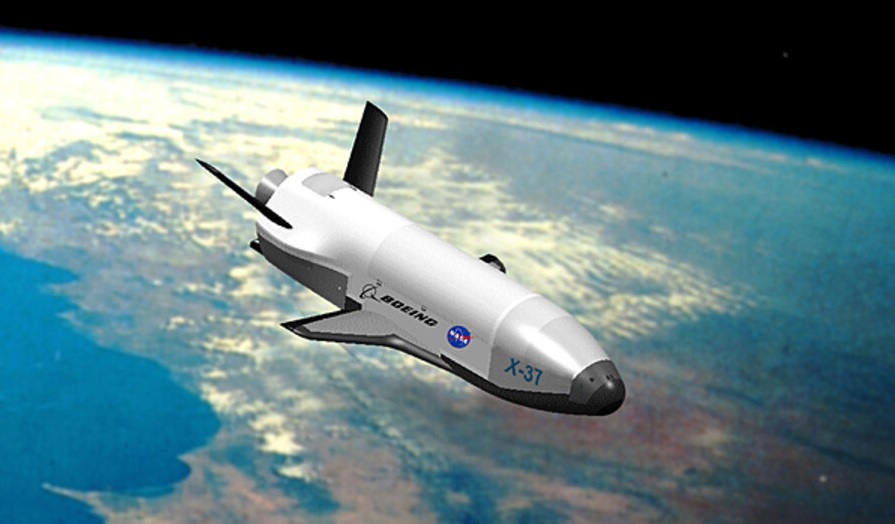
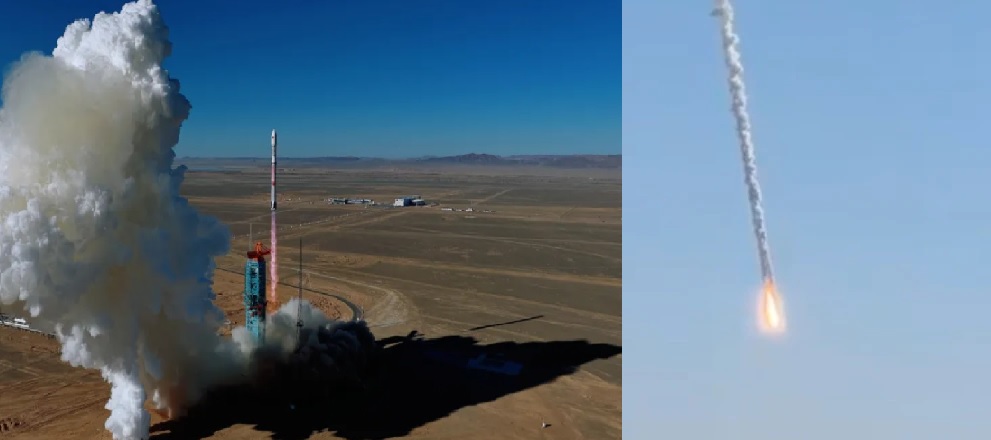
Florida, December 2025 – A SpaceX Falcon 9 rocket successfully lifted off late Thursday night, carrying into orbit the U.S. military’s secretive X-37B spaceplane for its eighth mission. The launch took place from NASA’s Kennedy Space Center in Florida at 11:50 pm local time (0350 GMT Friday), lighting up the night sky as the rocket ascended.
Mission Objectives
The U.S. Space Force, which operates the X-37B, described this new mission – known as OTV-8 (Orbital Test Vehicle-8) – as one focused on advanced technology testing and experimentation. According to officials, the payloads include:
-
Next-generation laser communications systems, aimed at enhancing secure space-based links.
-
The most advanced quantum inertial sensor ever tested in orbit, designed to improve navigation capabilities when GPS is unavailable.
-
Experiments to increase the resilience, efficiency, and security of U.S. space communications architectures.
The mission will also examine new methods for long-duration flight operations, an area where the X-37B has already set records.
About the X-37B Spaceplane
The X-37B Orbital Test Vehicle (OTV), built by Boeing, is an unmanned, reusable spaceplane roughly the size of a small bus. It is 30 feet (9 meters) long, with a 15-foot wingspan, and is powered by deployable solar panels. Its design is reminiscent of NASA’s retired Space Shuttle, though far smaller.
The spacecraft first flew in 2010 and has since become a cornerstone of U.S. military space experimentation. The X-37B can:
-
Stay in orbit for years before autonomously landing on a runway.
-
Test new satellite components, space technologies, and payload systems.
-
Conduct classified missions that remain undisclosed to the public.
So far, two X-37B vehicles exist, which are rotated between missions.
A Record of Long-Duration Missions
The X-37B has consistently extended endurance milestones in space. On its previous mission (OTV-6), the vehicle stayed in orbit for 908 days, breaking its own record for the longest flight of a reusable spacecraft. Earlier missions have tested NASA experiments, satellite systems, and re-entry technologies.
The duration of OTV-8 has not been disclosed, but it is expected to last well over a year, given the vehicle’s capabilities.
Strategic Importance
Beyond technology testing, the X-37B is widely seen as a strategic asset in the new era of space competition. Its ability to stay in orbit for extended periods, maneuver in unpredictable ways, and return safely to Earth allows the U.S. to:
-
Trial classified defense payloads.
-
Demonstrate space resilience against potential adversaries.
-
Lead advancements in on-orbit servicing and reusable spacecraft technology.
The program, once run by the U.S. Air Force, is now under the control of the U.S. Space Force, reflecting the military’s increasing emphasis on securing dominance in space.
While much about the X-37B remains classified, its repeated successes have proven the viability of reusable military spacecraft. With each mission testing advanced technologies like quantum sensors, AI-driven communications, and resilient navigation systems, the X-37B is setting the stage for future space operations where both defense and science intersect.
As global interest in military space assets grows, the X-37B continues to serve as a symbol of U.S. innovation and secrecy in orbit — quietly shaping the future of space warfare and satellite resilience.
✍️ This article is written by the team of The Defense News.