South Korea’s First Commercial Orbital Rocket Crashes Shortly After Liftoff In Brazil
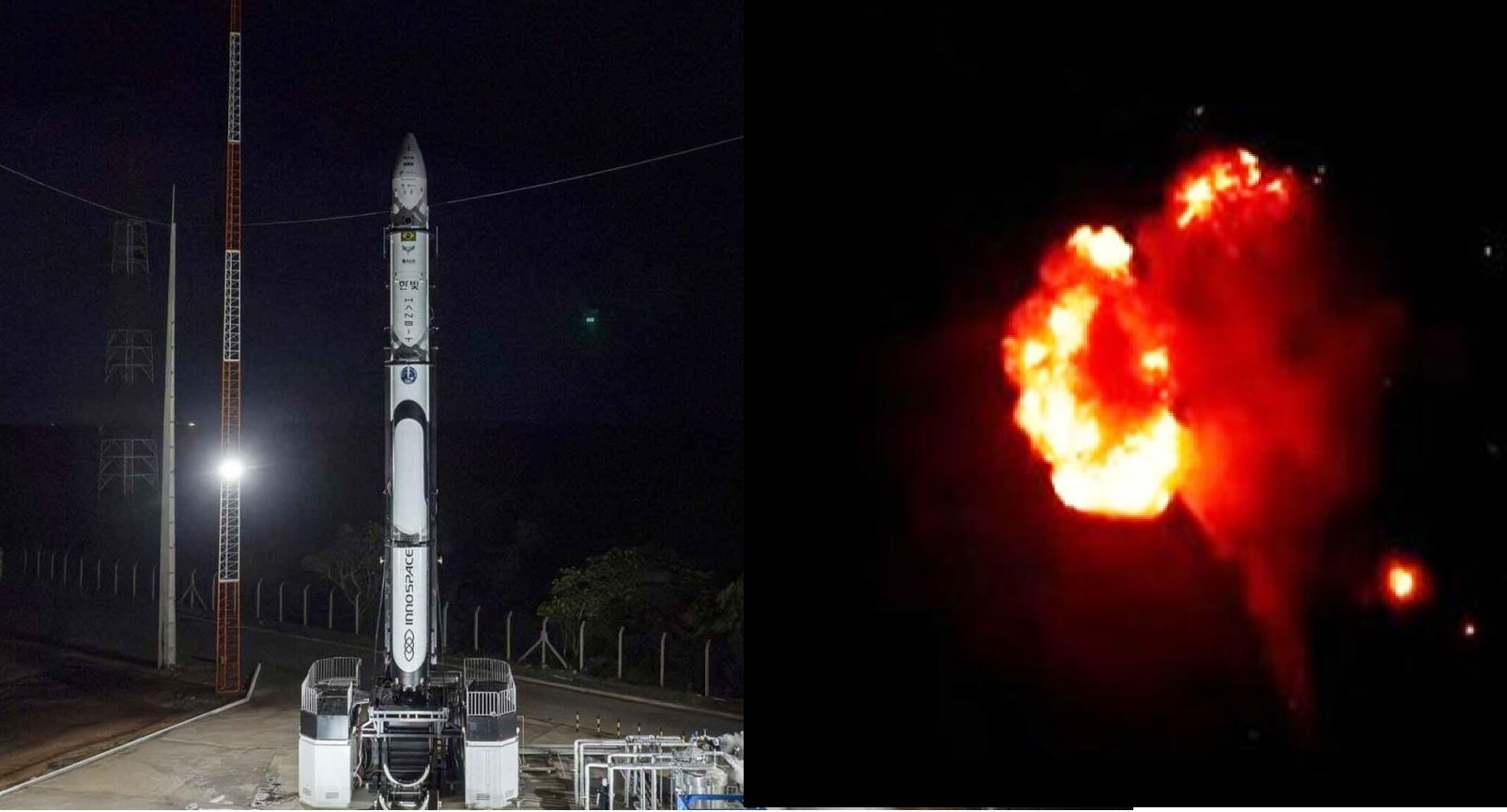
South Korea’s ambitions in the commercial space launch sector suffered a serious setback on Monday, December 23, after the Hanbit-Nano rocket, developed by startup Innospace, crashed moments after liftoff from Brazil’s Alcântara Space Center.
The failure marked the unsuccessful debut orbital mission of what was expected to become South Korea’s first privately developed and operated commercial launch vehicle.
The launch was intended to showcase the country’s growing capabilities in private-sector spaceflight, positioning Innospace as a new entrant in the fast-growing global small-satellite launch market. Instead, the mission ended prematurely, with the rocket failing to reach orbit.
Mission Objectives And Payload Details
The Hanbit-Nano rocket was designed to deploy five nanosatellites into a 300-kilometre low-Earth orbit, a key technical milestone for Innospace’s commercial roadmap. The payloads included satellites from international customers, underscoring the company’s ambition to compete beyond the domestic market.
Standing about 17 metres tall, Hanbit-Nano is a two-stage orbital launch vehicle optimized for lightweight payloads. Its first stage uses hybrid propulsion technology, combining a paraffin-based solid fuel with liquid oxygen, a system the company says offers lower costs and improved operational safety compared with traditional liquid-fuel engines.
Failure Occurs Within Minutes Of Launch
The rocket lifted off during a late-night launch window on December 23 from the Alcântara site, whose near-equatorial location provides efficiency advantages for orbital missions. However, an anomaly was detected shortly after liftoff, disrupting the ascent sequence.
Live footage showed the rocket climbing briefly before the broadcast feed was cut. Brazilian authorities later confirmed that the vehicle fell back to Earth within a designated safety zone near the launch complex.
Officials said no injuries were reported, and no damage occurred outside the restricted launch area. Emergency and security teams were deployed to secure debris and assess the impact site.
Investigation Launched By Company And Authorities
In a statement released after the crash, Innospace confirmed the failure and said it had launched a full technical investigation. The company is analyzing flight telemetry, onboard sensor data, and ground-system information in coordination with Brazilian authorities.
The precise cause of the failure—whether related to propulsion, guidance, staging, or structural systems—has not yet been disclosed.
Pre-Launch Delays Added Pressure
The mission followed several postponements in the weeks leading up to the December 23 launch, stemming from technical inspections, ground-system checks, and weather-related constraints at the coastal spaceport. Despite these challenges, Innospace proceeded after completing what it described as final safety verifications.
Aerospace analysts note that first-time orbital launches frequently face setbacks, particularly when new vehicles transition from suborbital testing to full orbital operations.
Setback For South Korea’s Private Space Ambitions
The failure represents a symbolic blow to South Korea’s emerging private aerospace sector. While the country has successfully launched satellites using government-developed rockets, Hanbit-Nano was positioned as the first fully commercial alternative led by a private company.
Innospace had previously completed a successful suborbital test flight from the same Brazilian facility, raising expectations ahead of the December orbital attempt.
Market Reaction And Path Forward
Following news of the December 23 crash, Innospace shares fell sharply in Seoul trading, reflecting investor concerns over development timelines, reliability, and future launch contracts. The company emphasized that lessons learned from the failure will be incorporated into future missions and reaffirmed its commitment to returning to flight.
For Brazil, the incident highlights both the risks and long-term potential of developing Alcântara Space Center as a global commercial launch hub. Brazilian officials reiterated their support for international launch providers despite the setback.
As investigators work to determine what went wrong on December 23, the findings will be crucial for Innospace’s next launch attempt and for South Korea’s broader goal of establishing a competitive presence in the global commercial space industry.
✍️ This article is written by the team of The Defense News.